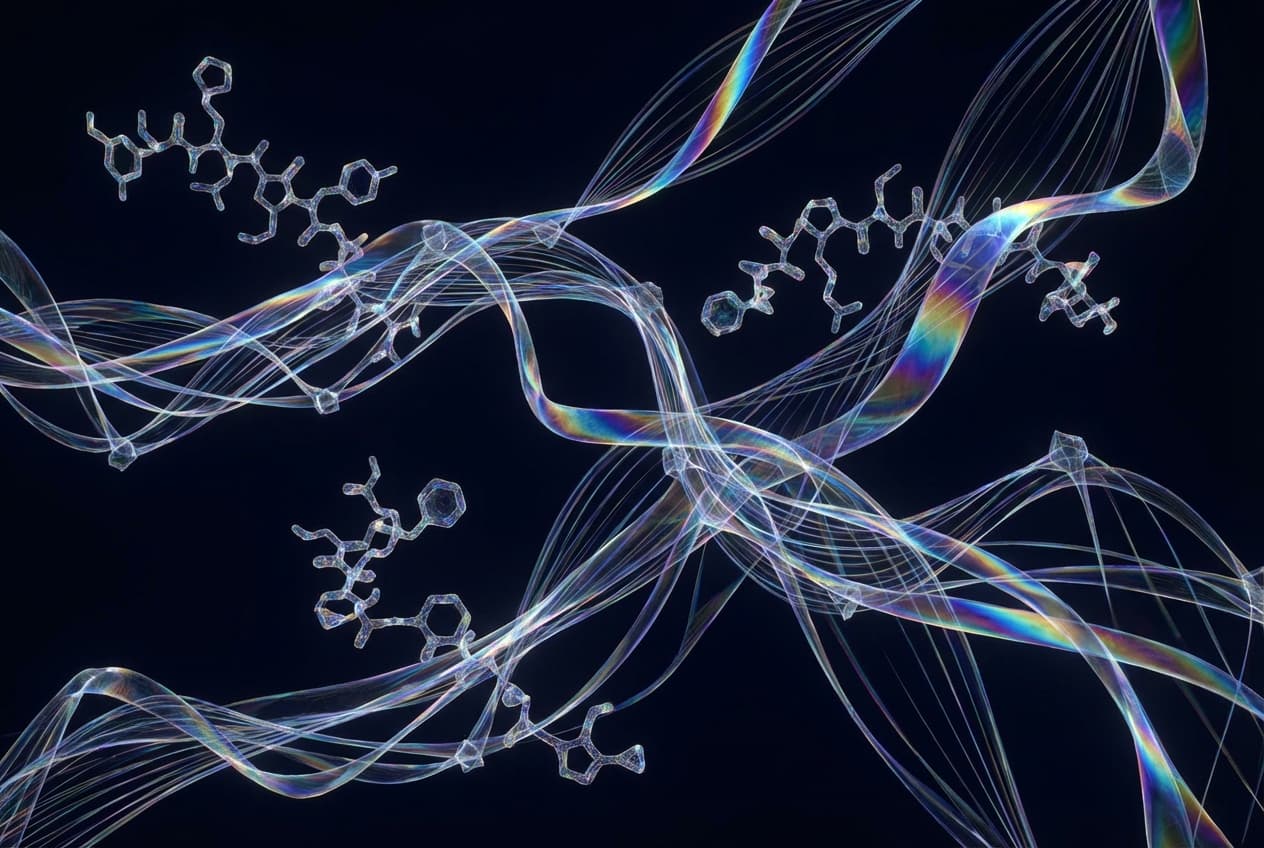
Humanin Peptide: Mitochondrial-Derived Cytoprotective Research
Few discoveries in peptide biology have generated as much quiet excitement among researchers as the identification of humanin — a small signaling molecule that emerges not from the nuclear genome, where most proteins are encoded, but from the mitochondria themselves. For decades, mitochondria were understood primarily as the cell's energy factories. The revelation that these organelles also produce bioactive peptides with far-reaching signaling functions has reshaped how researchers think about cellular survival, aging, and metabolic regulation.
This article provides an overview of humanin's molecular identity, its proposed mechanisms at the cellular level, and what the published research literature tells us about its potential significance across several areas of active scientific inquiry.
Introduction — What Is Humanin and Why Does It Matter for Research?
Humanin is a small peptide — meaning a short chain of amino acids, the building blocks of proteins — consisting of 21 amino acids in its canonical human form. It was first identified in 2001 by Hashimoto and colleagues while searching for factors that could protect neurons (nerve cells) from the cell death associated with Alzheimer's disease. The researchers discovered that humanin was encoded within the mitochondrial genome (the DNA housed inside mitochondria, separate from the cell's nuclear DNA), specifically within the 16S ribosomal RNA gene region.
This was a striking finding. The human mitochondrial genome is extraordinarily compact — it encodes only 37 genes, and for years researchers believed these genes produced only components of the mitochondrial energy machinery. Humanin demonstrated that this genome harbors what are now called mitochondria-derived peptides (MDPs): short signaling molecules with functions extending well beyond energy production.
Humanin belongs to a growing class of mitochondria-derived peptides (MDPs) that includes MOTS-c and SHLP peptides. Research suggests this family represents a previously unrecognized layer of cellular communication originating from an ancient organelle.
Since its discovery, humanin has attracted research interest across multiple domains: neurodegeneration, metabolic function, cardiovascular biology, and the biology of aging (geroscience — the scientific study of the aging process and age-related disease). Its apparent role as a cytoprotective agent — meaning a compound that helps protect cells from damage or death — makes it a compelling subject for researchers investigating how cells survive stress.
Mechanism of Action — How Humanin Works at the Molecular Level
Understanding humanin's biology requires appreciating that it operates through multiple pathways simultaneously. This molecular versatility is part of what makes it an interesting research subject.
Receptor-Mediated Signaling
Humanin exerts many of its documented effects by binding to cell-surface receptors — proteins embedded in the outer membrane of cells that act as molecular "docking stations" for signaling molecules. Published research has identified that humanin interacts with at least two receptor systems:
- 1The tripartite receptor complex: Humanin binds a receptor composed of three components — CNTFR (ciliary neurotrophic factor receptor), WSX-1, and gp130. When humanin docks with this complex, it activates a signaling cascade known as the JAK-STAT pathway (Janus kinase/Signal Transducer and Activator of Transcription) — an intracellular communication relay that regulates cell survival and inflammatory responses.
- 2FPRL1/FPR2: Research has also demonstrated humanin interaction with formyl peptide receptor-like 1, a receptor involved in immune signaling and inflammatory regulation.
Intracellular Mechanisms
Beyond receptor binding, humanin appears to function inside cells as well. Studies have described its interaction with IGFBP-3 (insulin-like growth factor binding protein 3) and Bax — a pro-apoptotic protein, meaning a protein that promotes programmed cell death (apoptosis). Research suggests humanin can bind Bax and inhibit its activity, effectively acting as a molecular brake on unnecessary or premature cell death.
Humanin's ability to modulate apoptosis is particularly relevant in tissues where excessive cell death drives pathology — including neurons in neurodegenerative conditions and cardiomyocytes (heart muscle cells) during ischemia (oxygen deprivation).
Metabolic Signaling
More recent research has implicated humanin in metabolic regulation. Studies indicate it may influence insulin sensitivity (how effectively cells respond to insulin's signal to absorb glucose) and interact with pathways governed by AMPK (AMP-activated protein kinase) — a master metabolic sensor sometimes called the cell's "energy gauge." This metabolic dimension connects humanin research to broader investigations of age-related metabolic decline and to related peptides like MOTS-c, another MDP with well-documented roles in glucose metabolism.
Published Research — Key Studies and Their Findings
The humanin research literature spans over two decades. Below is a summary of particularly significant published studies that have shaped the field.
Neuronal Cytoprotection and the Original Discovery
The foundational humanin study, published by Hashimoto et al. (2001) in PNAS, identified the peptide through a cDNA library screen searching for factors protective against neuronal death induced by familial Alzheimer's disease genes. The researchers demonstrated that humanin could suppress neuronal cell death induced by multiple Alzheimer's-associated insults, including mutant amyloid precursor protein (APP) and presenilin variants.
The original Hashimoto et al. (2001) study (PMID: 11717408) demonstrated that humanin potently suppressed neuronal cell death in in vitro (laboratory dish) models relevant to Alzheimer's disease, establishing its identity as a cytoprotective peptide encoded within the mitochondrial genome.
Subsequent work from the same group characterized the receptor systems involved and showed that a synthetic analog, HNG (humanin with a glycine substitution at position 14), demonstrated significantly enhanced potency compared to the native peptide — a finding with practical implications for research applications.
Cardiovascular Cytoprotection
A notable study by Muzumdar et al. (2010), published in Biochemical and Biophysical Research Communications (PMID: 20637183), investigated humanin's role in cardiac tissue. The research demonstrated that humanin administration reduced myocardial infarct size (the area of heart tissue death following a simulated heart attack) in rodent models. The proposed mechanism involved attenuation of cardiomyocyte apoptosis, consistent with humanin's known interactions with pro-apoptotic proteins.
This research placed humanin within a broader conversation about ischemia-reperfusion injury — the paradoxical cell damage that can occur when blood flow is restored to oxygen-deprived tissue — and added cardiovascular biology to the growing list of systems where humanin's cytoprotective effects have been studied.
Circulating Humanin Levels and Aging
Perhaps the most directly relevant research for geroscience investigators comes from studies examining how humanin levels change with age. Kim et al. (2018), publishing in Aging (PMID: 29706614), conducted a cross-sectional study measuring circulating humanin levels in human subjects across different age groups, as well as in mouse models. Their analysis demonstrated that plasma humanin levels decline with advancing age — a finding that has prompted researchers to ask whether this decline contributes to increased cellular vulnerability in older organisms.
Published data from Kim et al. (2018) indicates that circulating humanin concentrations decrease significantly with age in both human subjects and animal models. Research suggests this age-associated decline may represent a measurable biomarker of mitochondrial signaling capacity.
The same study noted that centenarians (individuals who live to 100 or beyond) and their offspring showed relatively preserved humanin levels compared to age-matched controls — an intriguing correlation that has fueled ongoing longevity research, though causality remains to be established.
Metabolic Research Findings
Conte et al. (2019), publishing in GeroScience (PMID: 30443733), examined humanin in the context of metabolic function and insulin sensitivity in aging models. The research suggested that humanin modulates glucose metabolism through interactions with insulin signaling pathways, and that reduced humanin signaling may contribute to age-associated insulin resistance (reduced cellular responsiveness to insulin).
This metabolic dimension is particularly compelling when considered alongside research on MOTS-c — the other well-characterized mitochondria-derived peptide — which also demonstrates significant metabolic regulatory activity. Research suggests these two MDPs may function as complementary arms of a mitochondrial-derived metabolic signaling system, though the full picture of their interaction remains under investigation.
Neuroprotection Beyond Alzheimer's Models
Research has extended humanin's neuroprotective profile beyond Alzheimer's disease models. A study published in the Journal of Neuroscience Research examined humanin's effects in models of retinal ganglion cell death — the type of neuronal loss associated with glaucoma. Published data indicated that humanin reduced retinal cell death in these models, suggesting its cytoprotective mechanisms may be relevant across multiple neuronal subtypes and disease contexts.
4 compounds bundled · Save 15%
Practical Research Information — Solubility, Storage, and Stability
For researchers incorporating humanin into their laboratory protocols, understanding its physical and chemical properties is essential for obtaining reproducible results.
Solubility
Humanin is generally water-soluble, which simplifies reconstitution compared to more hydrophobic peptides. It can typically be dissolved in sterile water or phosphate-buffered saline (PBS) — a buffer solution that maintains stable pH, mimicking physiological conditions. At higher concentrations, brief sonication (ultrasonic agitation) or gentle warming may facilitate complete dissolution. As with most peptides, researchers should avoid repeated freeze-thaw cycles of the stock solution, as this can accelerate degradation.
Storage Recommendations
| Condition | Recommendation |
|---|---|
| Long-term storage (lyophilized/freeze-dried) | −20°C or −80°C, desiccated |
| Working solution (aqueous) | 4°C, use within 7–14 days |
| Avoid | Repeated freeze-thaw cycles; prolonged room temperature exposure |
| Reconstitution solvent | Sterile water or PBS (pH 7.0–7.4) |
Lyophilized (freeze-dried) humanin — the form in which most research-grade peptides are supplied — is considerably more stable than aqueous solutions and should be stored with desiccant to prevent moisture absorption. Upon reconstitution, aliquoting (dividing into small single-use portions) before freezing is strongly recommended.
Stability Considerations
Like most small peptides, humanin is subject to proteolytic degradation — breakdown by enzymes called proteases that cleave peptide bonds. This is relevant both in storage conditions and in experimental design. Researchers designing in vitro (cell culture) experiments should consider that cell culture media may contain proteolytic activity. The synthetic analog HNG demonstrates improved stability compared to native humanin and has been widely used in published research for this reason. Researchers should confirm the specific analog or variant they are working with, as potency and stability characteristics may differ.
Research Considerations — What Researchers Should Know
The Analog Question
Humanin research has generated a number of analogs — synthetic variants with modifications to the amino acid sequence designed to improve potency, stability, or receptor selectivity. The most widely studied is HNG (S14G-humanin), in which the amino acid serine at position 14 is replaced with glycine. Published studies have consistently shown HNG to have substantially greater biological activity than native humanin in many assay systems. Researchers should carefully review the literature relevant to their model system to determine which form is most appropriate for their research protocol.
Connection to the Broader MDP Family
Humanin does not exist in isolation — it is part of an emerging family of mitochondria-derived peptides that includes MOTS-c (mitochondrial open reading frame of the 12S rRNA type-c) and the more recently characterized SHLP peptides (small humanin-like peptides). Research suggests these MDPs may form an interconnected signaling network emanating from the mitochondrial genome, with distinct but potentially complementary functions.
Researchers with interests in mitochondrial biology, metabolic signaling, or the biology of aging may find it productive to examine MOTS-c alongside humanin, as published data indicates meaningful overlap in the biological contexts where both peptides demonstrate activity.
Model System Considerations
The majority of humanin research to date has been conducted in in vitro (cell culture) and in vivo rodent models. Cross-species translation of findings always requires careful interpretation. Researchers should be thoughtful about extrapolating findings from rodent or cell culture systems when designing experiments in other model organisms or contexts.
Biomarker Research Potential
The documented decline in circulating humanin with age, combined with the correlation observed in centenarian studies, has prompted interest in humanin as a potential biomarker (a measurable biological indicator) of aging trajectories and mitochondrial health. Standardized, validated measurement methods for circulating humanin — including ELISA-based assays (enzyme-linked immunosorbent assays, a standard laboratory detection technique) — are commercially available and have been employed in published research, making this a potentially tractable area for clinical research groups.
Related Compounds in Research
Researchers investigating humanin often find value in parallel examination of:
- MOTS-c: A mitochondria-derived peptide with well-characterized roles in glucose metabolism and exercise response
- SS-31 (Elamipretide): A synthetic tetrapeptide designed to target the inner mitochondrial membrane and has been studied extensively in models of mitochondrial dysfunction and ischemia-reperfusion injury
- SHLP2 and SHLP6: Members of the small humanin-like peptide family, with emerging published data suggesting cytoprotective and metabolic activity
Together, these compounds represent a research toolkit for investigators interested in mitochondrial signaling, cellular resilience, and the biology of aging.
Disclaimer
For research purposes only. Not for human consumption.
The information presented in this article is intended solely for educational and research purposes. Humanin and related compounds discussed herein are research peptides and are not approved by the FDA or any equivalent regulatory authority for use as drugs, dietary supplements, or for any clinical, therapeutic, or human consumption purpose. Nothing in this article constitutes medical advice, and no claims are made regarding the ability of any compound described to treat, cure, or prevent any disease or condition in humans or animals. All referenced research was conducted under appropriate scientific and institutional frameworks. Researchers working with these compounds should adhere to all applicable institutional, ethical, and regulatory guidelines governing peptide research in their jurisdiction.