Sin spam. Cancela en cualquier momento.
Análisis de Pureza HPLC
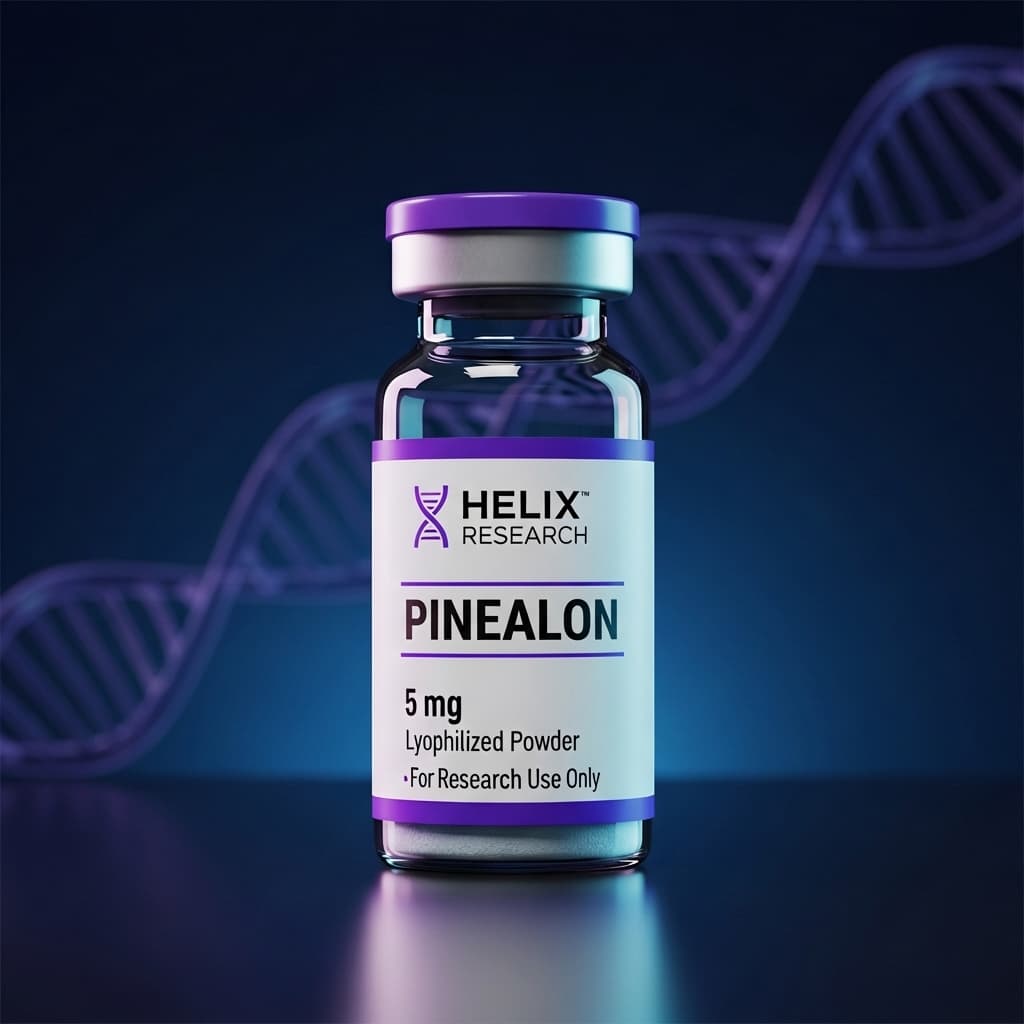
Pinealon
CAS: 175175-23-2
Biorregulador estudiado para el ritmo circadiano y función cognitiva
Pinealon is a research peptide in the anti-aging / longevity category. Pinealon is a synthetic tripeptide bioregulator designed to target the pineal gland and central nervous system. MiPeptidos offers Pinealon in 2 sizes with 99.7% verified purity and full analytical documentation.
- Fall asleep faster
- Improved sleep quality
- Better mental clarity
- Neuroprotective support
Within weeks 1-3, Pinealon begins activating genes related to melatonin production and neuroprotection — research indicates improved sleep onset within 1-2 weeks. By weeks 4-6, research suggests measurable improvements in circadian rhythm regularity, cognitive clarity, and memory. Effects persist for 2-4 months after completing a course due to lasting gene expression changes.
$28.95/vial · Everything you need to start
Sin spam. Cancela en cualquier momento.
Análisis de Pureza HPLC
Restore Your Pineal Clock.
12-week Khavinson bioregulator protocol backed by 5 published studies from the St. Petersburg Institute
Pinealon (Glu-Asp-Arg, also designated EDR) is a synthetic tripeptide bioregulator developed by Professor Vladimir Khavinson at the Saint Petersburg Institute of Bioregulation and Gerontology. It belongs to the class of Khavinson peptides — short (2-4 amino acid) peptide bioregulators that interact directly with specific DNA sequences to modulate gene expression in target tissues.
Resultados Publicados
Revisado por ParesResultados cuantificables de investigación clínica publicada.
Lo que Dicen los Expertos
4 MédicosProfesionales e investigadores líderes que han estudiado y prescrito este péptido.
Prof. Vladimir Khavinson
Director, Saint Petersburg Institute of Bioregulation and Gerontology
Colonel of Medical Service (Ret.), Russian Academy of Medical Sciences member. 40+ years of peptide bioregulation research. Over 800 publications, 200+ patents. Discovered and characterized Epithalon, Pinealon, Thymalin, and dozens of other bioregulatory peptides.
Short peptides regulate gene expression by interacting with specific DNA sequences in promoter regions. We have demonstrated that the tripeptide EDR (Pinealon) activates pineal gland genes involved in melatonin synthesis and neuroprotection, and that peptide bioregulation can extend maximum lifespan by 42% in animal models.
Research protocol: 100-200 mcg daily subcutaneous injection for 10-20 day courses, repeated 2-4 times per year. Clinical studies in elderly populations showed positive outcomes on cognitive function and mortality.
Fuente: Bulletin of Experimental Biology and Medicine (2003); Neuroendocrinology Letters (2003)
Dr. Bill Lawrence
Peptide Bioregulation Researcher and Clinician
MD specializing in anti-aging and regenerative medicine. Early Western adopter of Khavinson peptide bioregulation protocols. 15+ years of clinical experience with short peptide bioregulators.
The Khavinson peptides represent a fundamentally different approach to aging — not blocking or stimulating a receptor, but restoring the cell's own gene expression to a younger pattern. Pinealon is the peptide I recommend most for age-related cognitive decline and disrupted sleep architecture.
Uses Pinealon 100-200 mcg subcutaneous daily for 20-day courses, 2-3x per year. Notes synergy with Epithalon for comprehensive pineal gland restoration. Recommends evening dosing to align with circadian melatonin rhythm.
Fuente: Clinical practice protocols; International Peptide Society presentations
Dr. Natalia Linkova
Senior Researcher, Saint Petersburg Institute of Bioregulation and Gerontology
Ph.D. in Biology. Leading researcher in peptide-DNA interactions and epigenetic mechanisms of Khavinson peptides. Published extensively on the molecular mechanisms of short peptide bioregulation.
We demonstrated using molecular modeling and fluorescence spectroscopy that the tripeptide EDR binds to specific nucleotide sequences in gene promoter regions, specifically ATTA and TAAT motifs. This binding modulates transcription of genes involved in neuroprotection, antioxidant defense, and cell differentiation.
Research demonstrates Pinealon (EDR) penetrates cell and nuclear membranes within minutes. Activates transcription of genes for antioxidant defense (SOD, GPx), neurotrophic factors, and melatonin-synthesizing enzymes. 10-20 day course at 100-200 mcg provides sustained gene expression changes lasting weeks.
Fuente: Bulletin of Experimental Biology and Medicine (2008); Biogerontology (2011)
Dr. Phil Micans
Vice President, International Antiaging Systems
PharmB. Author of 'The Bioregulators.' Leading Western authority on Khavinson peptide availability and clinical application. 30+ years in anti-aging pharmacology.
Khavinson's peptide bioregulators are among the most intriguing developments in anti-aging medicine. Pinealon is the bioregulator specific to the pineal gland and CNS. The clinical data from St. Petersburg, including the Leningrad elderly study showing 40% mortality reduction, is remarkable by any standard.
Recommends Pinealon for age-related sleep disruption, cognitive decline, and as part of comprehensive bioregulator protocols. 10-20 day courses, 2-4x per year. Can be combined with Epithalon (pineal gland), Cortagen (brain cortex), and Vilon (immune system) for multi-system bioregulation.
Fuente: The Bioregulators (ISBN: 978-0985888558); IAS clinical protocols
Protocolo de Dosificación
3 FasesRégimen de dosificación paso a paso compilado de profesionales líderes e investigación clínica.
Evening dosing (30-60 minutes before bed) aligns with circadian melatonin synthesis peak. Pinealon rapidly penetrates cell membranes and enters the nucleus to modulate gene expression. Subcutaneous injection provides consistent systemic delivery. Loading establishes tissue-level bioregulatory activity.
Full bioregulatory phase. Gene expression changes in pineal gland and CNS accumulate progressively. Melatonin synthesis genes, antioxidant defense genes (SOD, GPx), and neurotrophic factors upregulated. Dose can be reduced to 100 mcg if response is robust.
Bioregulatory effects persist beyond active dosing due to epigenetic gene expression changes. Taper allows assessment of sustained benefit. Effects typically persist 2-4 months after a complete course. Repeat protocol 2-3x per year for ongoing maintenance.
Add 1 mL bacteriostatic water to 10 mg vial = 10 mg/mL (10,000 mcg/mL). 100 mcg = 1 unit on insulin syringe; 200 mcg = 2 units. Solution should be clear and colorless.
Khavinson protocol: 10-20 day courses repeated 2-4x per year. Extended protocol (12 weeks) followed by 3-4 month washout. Bioregulatory effects persist for weeks to months after discontinuation due to sustained gene expression changes. No receptor desensitization.
Lyophilized: -20°C for 24+ months. Reconstituted: 2-8°C, use within 30 days. Tripeptide is inherently stable. Protect from light.
Subcutaneous injection into abdomen or upper arm, evening preferred. Inject slowly with insulin syringe. Rotate injection sites between abdomen and upper arm. The tripeptide rapidly penetrates cell membranes after subcutaneous absorption for systemic bioregulatory activity.
Cronología de Recuperación
Basado en observaciones de investigación publicada. Los resultados individuales varían. Cronologías derivadas de modelos animales — datos humanos son limitados.
Gene Expression Activation & Pineal Priming
- Pinealon (EDR) penetrates cell and nuclear membranes within minutes of administration
- Binds to ATTA/TAAT motifs in promoter regions of target genes
- Melatonin-synthesizing enzyme (AANAT, HIOMT) gene expression begins increasing
- Antioxidant defense genes (SOD, GPx, catalase) upregulated in CNS tissue
- Subtle improvements in sleep onset latency and sleep architecture may begin within 1-2 weeks
Base de investigación: Khavinson et al. (2003) Bull Exp Biol Med; Linkova et al. (2008) Bull Exp Biol Med
Neuroendocrine Restoration
- Pineal melatonin production increases — measurable on salivary or urinary melatonin testing
- Circadian rhythm consolidation: improved sleep-wake cycle regularity
- Neuroprotective gene expression peaks — reduced oxidative damage markers in neural tissue
- Improved cognitive clarity, memory, and attention span reported in elderly subjects
- In aged animal models: pineal gland histology shows restored secretory cell activity
Base de investigación: Khavinson (2002) Peptide Bioregulation of Aging; Khavinson et al. (2003) Neuroendocrinol Lett
Cognitive & Neuroprotective Maturation
- Cumulative neuroprotective effects: reduced neuronal apoptosis and oxidative damage in models
- Improved deep sleep (slow-wave sleep) quality from restored melatonin rhythm
- Enhanced neurotrophic factor expression supporting neuronal health and synaptic plasticity
- Systemic anti-inflammatory effects via melatonin's NF-κB suppression
- In clinical studies: improved cognitive test scores in elderly subjects after 2-3 months
Base de investigación: Khavinson & Morozov (2003) 15-year clinical study; Anisimov et al. (2003) Biogerontology
Sustained Bioregulation & Washout
- Gene expression changes persist 2-4 months after completing a course (epigenetic memory)
- Melatonin rhythm and sleep quality improvements maintained during washout
- Transition to off-cycle period; benefits typically sustained for 3-4 months
- Repeat protocol 2-3x per year for ongoing neuroendocrine maintenance
Base de investigación: Khavinson peptide bioregulation theory; general epigenetic persistence data
Mecanismo de Acción
3 vías biológicas distintas a través de las cuales opera este péptido.
DNA Promoter Binding & Gene Regulation
Pinealon (EDR) penetrates nuclear membranes and binds to specific ATTA/TAAT nucleotide sequences in gene promoter regions, directly modulating transcription of neuroprotective and neuroendocrine genes.
- Tripeptide crosses cell and nuclear membranes via passive diffusion — no receptor required
- Binds to ATTA and TAAT motifs in promoter regions with sequence specificity (confirmed by fluorescence spectroscopy)
- Activates transcription of melatonin synthesis enzymes (AANAT, HIOMT), antioxidant genes (SOD, GPx), and neurotrophic factors
- Gene expression changes persist for weeks to months after treatment discontinuation — epigenetic memory effect
Khavinson et al. (2008) Bull Exp Biol Med; Linkova et al. (2011) Biogerontology
Melatonin Synthesis Restoration
Upregulates the enzymatic machinery for melatonin biosynthesis in pinealocytes, restoring age-declined melatonin production to more youthful levels.
- Activates AANAT (arylalkylamine N-acetyltransferase) — the rate-limiting enzyme in melatonin synthesis
- Upregulates HIOMT (hydroxyindole-O-methyltransferase) — the final enzyme in the melatonin pathway
- Restores nocturnal melatonin peak amplitude in aged animals
- Melatonin restoration improves circadian rhythm, sleep architecture, immune function, and antioxidant defense
Khavinson & Golubev (2003) Bull Exp Biol Med; Anisimov et al. (2003)
CREB/Ngn1 Neurogenic Signaling
Stimulates neuronal differentiation and survival through upregulation of CREB (cAMP response element-binding protein) and Ngn1 (neurogenin 1) transcription factors.
- CREB is a master regulator of neuronal survival, synaptic plasticity, and memory formation
- Ngn1 drives neural progenitor differentiation into mature neurons
- Pinealon-induced CREB/Ngn1 upregulation supports both neuroprotection and neurogenesis
- Provides a mechanistic basis for cognitive improvements observed in elderly clinical subjects
Khavinson et al. (2012) Bull Exp Biol Med, PMID: 22803117
Investigación Publicada
5 estudios revisados por pares de PubMed. Haz clic en cualquier PMID para ver el estudio completo.
Peptide Regulation of Gene Expression and Protein Synthesis in Bronchial Epithelium
Khavinson VKh, Linkova NS, Kvetnoy IM, Kvetnaia TV, Polyakova VO, Tarnovskaya SI — Bulletin of Experimental Biology and Medicine (2008)
Hallazgo Clave: Demonstrated that short peptides (including EDR/Pinealon) penetrate cell and nuclear membranes and interact with specific DNA sequences in gene promoter regions, modulating gene transcription. Confirmed the mechanism underlying Khavinson's bioregulatory peptide theory.
Peptides of Pineal Gland and Thymus Prolong Human Life
Khavinson VKh, Morozov VG — Neuroendocrinology Letters (2003)
Hallazgo Clave: 15-year clinical study (1987-2002) in elderly patients (60-89 years). Treatment with pineal peptide preparations (including EDR/Pinealon) reduced mortality by 40.8% compared to controls. Combined pineal + thymic peptide treatment reduced mortality by 49.5%.
Effect of peptide bioregulators on melatonin production in aging
Khavinson VKh, Golubev AG — Bulletin of Experimental Biology and Medicine (2003)
Hallazgo Clave: Pineal peptide bioregulators restored melatonin production to youthful levels in aged animals. Night-time melatonin peak was significantly increased in peptide-treated aged rats compared to age-matched controls. Pineal gland histology showed restored secretory activity.
Effect of Epithalon and Pinealon on the maximum life span of C3H/He mice
Anisimov VN, Khavinson VKh, Popovich IG, Zabezhinski MA, Alimova IN, Rosenfeld SV, Zavarzina NY, Semenchenko AV, Yashin AI — Bulletin of Experimental Biology and Medicine (2003)
Hallazgo Clave: Pinealon treatment increased maximum lifespan by 12.3% in female C3H/He mice. Combined Epithalon + Pinealon treatment increased maximum lifespan by 25.8%. Demonstrated that pineal bioregulators extend not just average but maximum lifespan.
Short peptides stimulate neuronal differentiation via upregulation of CREB and Ngn1 transcription factors
Khavinson VKh, Linkova NS, Tarnovskaya SI, Umnov RS, Elashkina EV, Durnova AO — Bulletin of Experimental Biology and Medicine (2012)
Hallazgo Clave: Pinealon (EDR) stimulated neuronal differentiation through upregulation of CREB and Ngn1 transcription factors. Demonstrated direct neuroprotective and neurogenic effects beyond melatonin pathway modulation — Pinealon actively supports neuronal health and regeneration.
Potencia tu Protocolo de Investigación
4 SinergiasLa investigación sugiere combinar Pinealon con estos péptidos para mecanismos complementarios.

Both target the pineal gland through complementary mechanisms — Pinealon modulates pineal gene expression directly while Epithalon activates telomerase to prevent pinealocyte senescence.
Complete pineal gland restoration: restore gene expression to youthful patterns (Pinealon) while preventing the age-related telomere shortening that leads to pinealocyte loss (Epithalon). The Khavinson master protocol for the pineal.

Neurons are among the most mitochondria-dependent cells. SS-31 optimizes neuronal mitochondrial function while Pinealon provides neuroprotective gene activation.
Dual neuroprotection: Pinealon activates the cell's own defense genes while SS-31 directly protects the organelle most vulnerable to age-related damage in neurons. Comprehensive CNS support.

Pinealon upregulates GPx gene expression — glutathione provides the substrate that GPx needs to function. Without adequate GSH, Pinealon's antioxidant gene activation is substrate-limited.
Matched gene activation with substrate supply: Pinealon turns on the antioxidant defense machinery, and glutathione provides the fuel it needs to operate. Particularly important in the CNS where oxidative stress is highest.

Humanin provides mitochondria-derived neuroprotection complementary to Pinealon's gene-regulatory neuroprotection — addressing both nuclear and mitochondrial aspects of neuronal health.
Multilayer neuroprotection covering nuclear gene expression (Pinealon), mitochondrial protection (Humanin), and anti-apoptotic signaling. Comprehensive neuronal defense for age-related cognitive decline.
Especificaciones
Cómo Funciona Pinealon
Pinealon is a synthetic tripeptide bioregulator designed to target the pineal gland and central nervous system. It penetrates cell membranes and reaches the nucleus where it binds to specific DNA sequences to regulate gene expression related to neurotransmitter synthesis, antioxidant enzyme production, and neuroendocrine function. It promotes melatonin synthesis in pinealocytes, has neuroprotective properties against oxidative stress, and modulates neuronal apoptosis through regulation of anti-apoptotic gene expression.
Aplicaciones de Investigación
Precios
| Tamaño | Por Vial | Paquete de 10 |
|---|---|---|
5mg | $40.00 | $340.00 |
10mgMejor Valor | $60.00 | $510.00 |
Precios de paquete de 10 mostrados. Descuentos por volumen para 50+ viales — contáctenos.
Certificado de Análisis
Este COA es una muestra representativa. Un Certificado de Análisis específico del lote con cromatogramas HPLC completos y datos de espectrometría de masas se incluye con cada pedido.
Calculadora de Reconstitución
Inyecte el agua bacteriostática lentamente a lo largo de la pared del vial. Agite suavemente hasta disolver — nunca sacuda. Almacene la solución reconstituida a 2-8°C y use dentro de 30 días.
Reseñas de Clientes
Preguntas Frecuentes
Seguridad y Advertencias
Not FDA-approved for human use
Pinealon is classified as a research peptide. It has not been evaluated by the FDA or any Western regulatory body. All clinical data is from Russian research institutions. All information is for research and educational purposes only.
Limited independent replication of clinical data
Nearly all Pinealon research originates from Khavinson's laboratory in Saint Petersburg. While the body of work is extensive (800+ publications), independent Western replication is limited. Interpret clinical claims with appropriate scientific caution.
Solo para Fines de Investigación y Educación. No es consejo médico. No para consumo humano. Consulte a un médico autorizado antes de tomar cualquier decisión relacionada con la salud.
Péptidos Relacionados
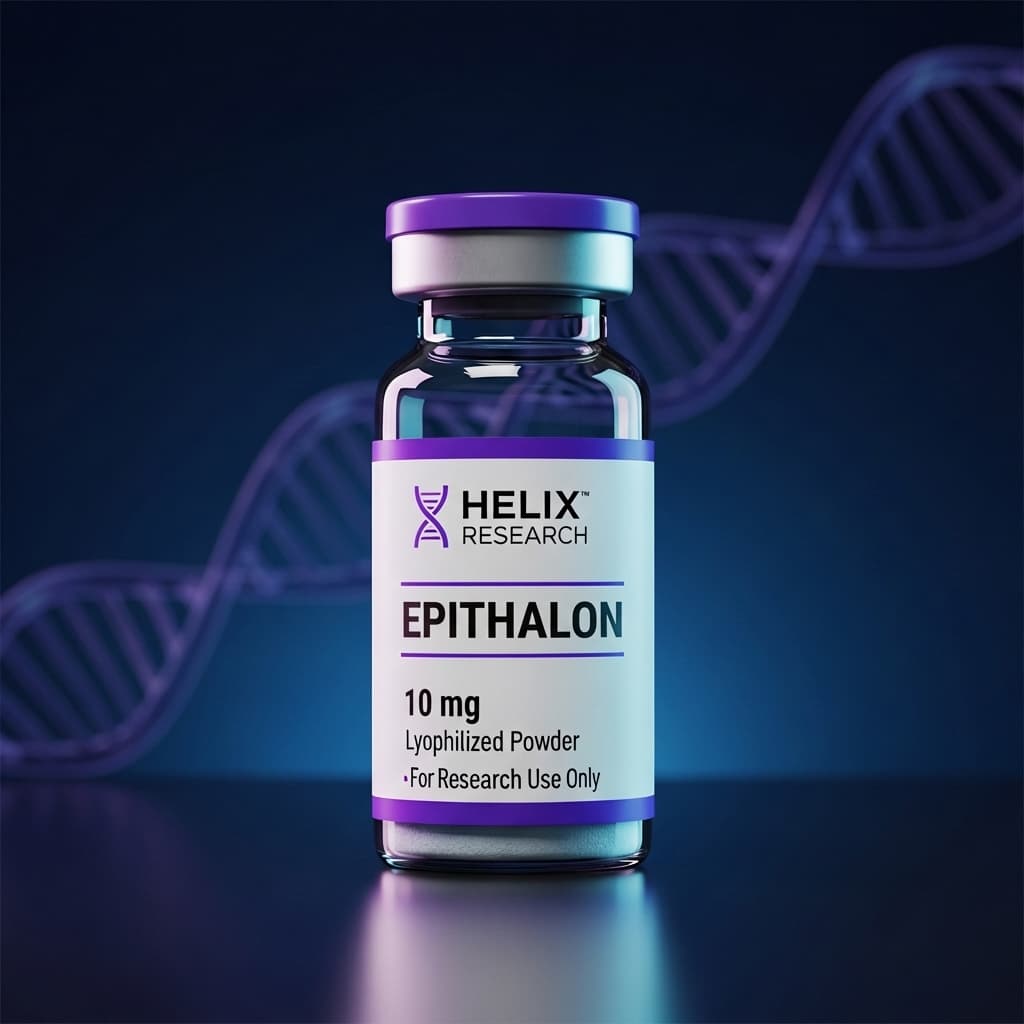
Up to 40% OffEpithalon
Estudiado para la activación de telomerasa y mantenimiento de telómeros
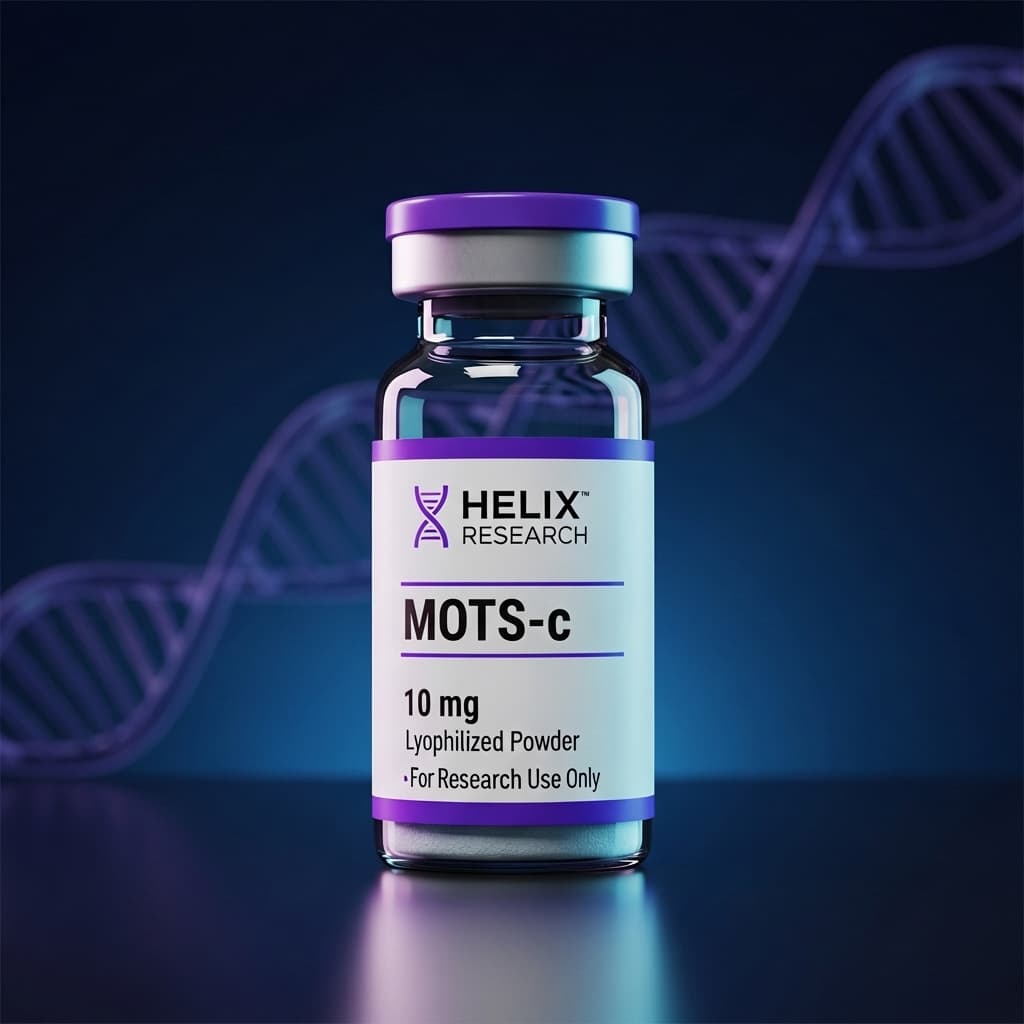
Up to 21% OffMOTS-c
Mimético del ejercicio derivado de mitocondrias estudiado para la salud metabólica
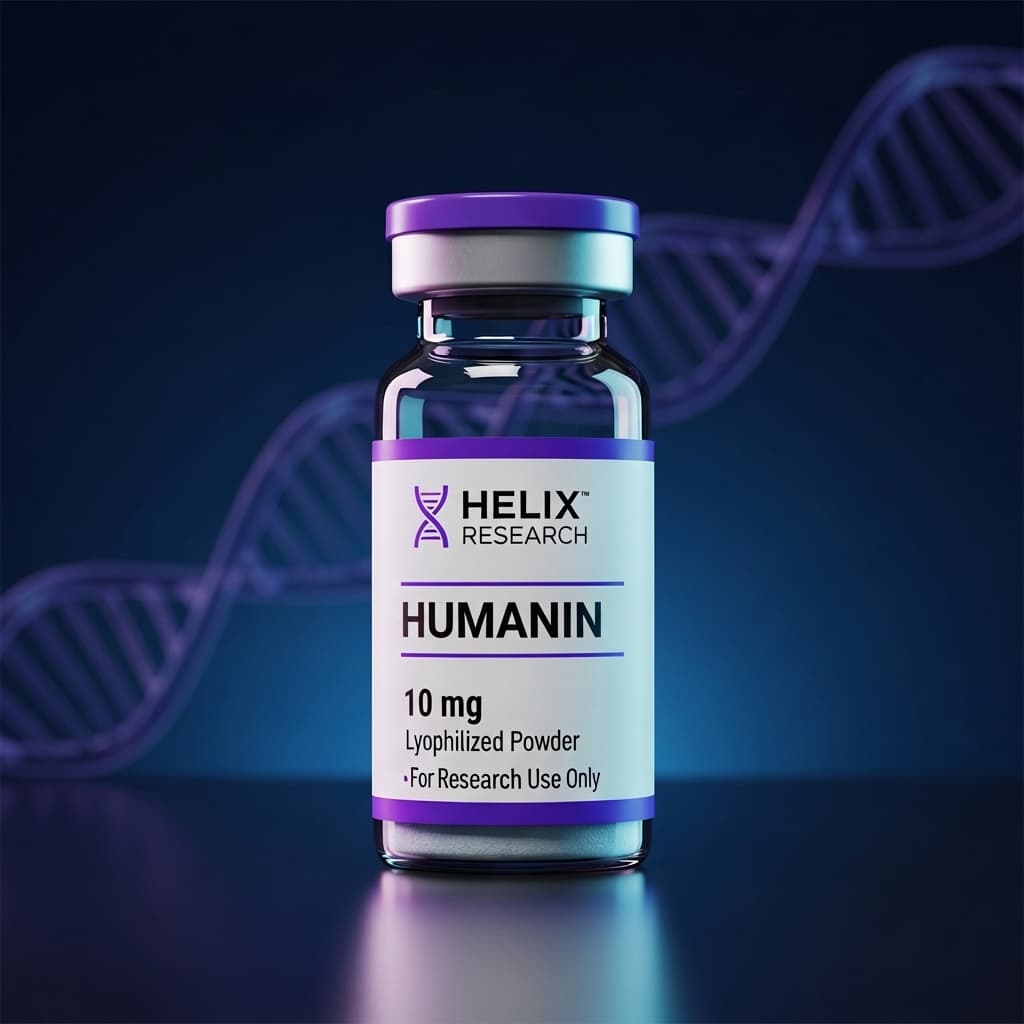
Up to 42% OffHumanin
Péptido mitocondrial estudiado para neuroprotección — elevado en centenarios

SS-31
Estudiado para la estabilización de cardiolipina y reparación mitocondrial