Sin spam. Cancela en cualquier momento.
Análisis de Pureza HPLC
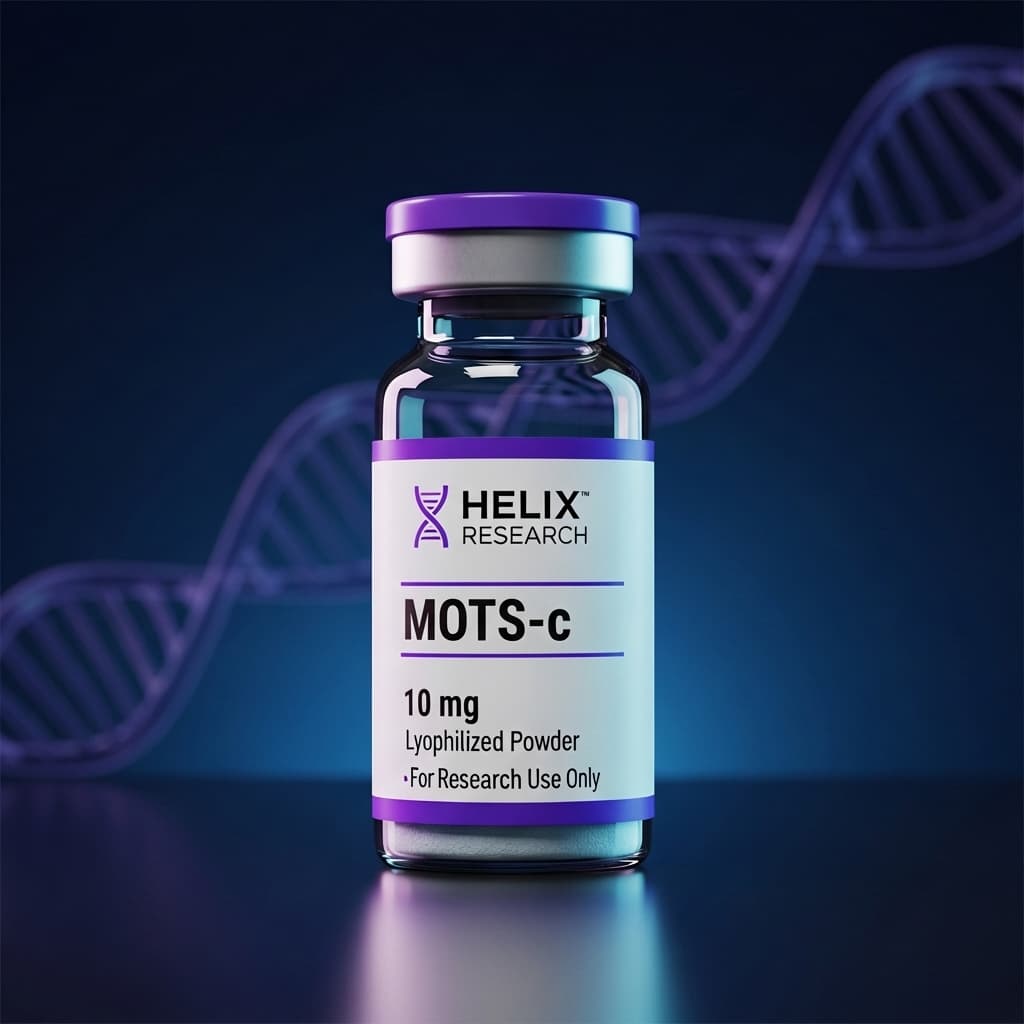
MOTS-c
CAS: 1627580-64-6
Mimético del ejercicio derivado de mitocondrias estudiado para la salud metabólica
MOTS-c es un péptido de investigación en la categoría de anti-edad / longevidad. MOTS-c es un péptido derivado de las mitocondrias codificado por el gen 12S rRNA (MT-RNR1) que actúa como una molécula de señalización retrógrada de las mitocondrias al núcleo. MiPeptidos ofrece MOTS-c en 4 tamaños con 99.2% de pureza verificada y documentación analítica completa.
- Efectos miméticos del ejercicio
- Mejor control del azúcar en sangre
- Mayor quema de grasas
- Mejor resistencia física
Los estudios reportan mejora en el rendimiento del ejercicio y resistencia dentro de la primera semana. Entre las semanas 3-6, la investigación sugiere una sensibilidad a la insulina mediblemente mejor, mayor oxidación de grasas y mejor composición corporal con ejercicio. Los beneficios metabólicos máximos emergen alrededor de las semanas 7-10, con estudios que reportan reducción de la inflamación y ganancias sostenidas de resistencia.
$64.95/vial · Everything you need to start
Sin spam. Cancela en cualquier momento.
Análisis de Pureza HPLC
Exercise in a Peptide.
12-week mitochondrial optimization protocol backed by 6 studies from the Lee and Kim research programs
MOTS-c (Mitochondrial Open Reading Frame of the 12S rRNA Type-c) is a 16-amino acid peptide encoded within the mitochondrial genome — one of only a handful of mitochondria-derived peptides (MDPs) discovered in the last decade. First characterized by Changhan Lee's laboratory at USC in 2015, MOTS-c has been called an 'exercise mimetic' for its ability to activate AMPK, improve glucose metabolism, and enhance metabolic homeostasis in a manner that mimics the molecular effects of physical exercise.
Resultados Publicados
Revisado por ParesResultados cuantificables de investigación clínica publicada.
Lo que Dicen los Expertos
4 MédicosProfesionales e investigadores líderes que han estudiado y prescrito este péptido.
Dr. Changhan Lee
Assistant Professor, USC Leonard Davis School of Gerontology
Discovered MOTS-c in 2015. Director of the Mitochondrial and Microbiome Medicine Lab at USC. Pioneer in mitochondria-derived peptide research.
MOTS-c is the first mitochondrial-encoded peptide shown to regulate nuclear gene expression and metabolism. It essentially acts as a mitochondrial signal that tells the rest of the cell — and the body — to improve metabolic fitness.
Research dosing in mice: 5 mg/kg IP, 3x per week. Translational human equivalent doses under investigation. The peptide's exercise-mimetic properties are most relevant for metabolically stressed populations.
Fuente: Lee et al. (2015) Cell Metabolism PMID: 25738459
Dr. Pinchas Cohen
Dean, USC Leonard Davis School of Gerontology
Co-discoverer of multiple mitochondria-derived peptides including humanin. Leading researcher in mitochondrial signaling and aging biology. Endowed Chair in Gerontology.
Mitochondria-derived peptides represent a new class of signaling molecules. MOTS-c levels decline with age, and restoring them may address the metabolic decline that underlies many age-related diseases.
Emphasizes the importance of MOTS-c as a biomarker for metabolic aging. Advocates further clinical research on exogenous MOTS-c supplementation to restore youthful metabolic signaling.
Fuente: Kim et al. (2018) Physiology PMID: 30109821
Dr. Neil Paulvin
Functional & Regenerative Medicine Physician, Manhattan
Known as 'Dr. Peptide.' Specializes in anti-aging, regenerative medicine, and performance optimization. Works with Fortune 500 CEOs and professional athletes.
MOTS-c is one of the most exciting peptides in the longevity space. It's essentially telling your cells to act as if you just exercised — improving insulin sensitivity, fat oxidation, and cellular energy production.
5 mg subcutaneous injection 3-5 times per week. 8-12 week cycles. Best paired with actual exercise for synergistic metabolic effects. Monitor fasting glucose and insulin as biomarkers.
Fuente: Peptide Summit 2023; Clinical Practice Protocols
Dr. Dongryeol Ryu
Professor, Molecular & Life Sciences, Hanyang University
Lead investigator of the MOTS-c Exercise Study in Korea. Published landmark human clinical trial on MOTS-c and exercise performance in sedentary young men.
MOTS-c treatment significantly improved exercise capacity and skeletal muscle metabolism. The combination of MOTS-c with exercise produced additive metabolic benefits beyond either intervention alone.
Research demonstrated 5 mg/kg 3x weekly improved physical performance in sedentary subjects. Combination with structured exercise enhanced outcomes.
Fuente: Reynolds et al. (2021) MOTS-c and Exercise Study
Protocolo de Dosificación
3 FasesRégimen de dosificación paso a paso compilado de profesionales líderes e investigación clínica.
Start at lower frequency to assess tolerance. Administer in the morning 30-60 minutes before exercise for optimal metabolic synergy. MOTS-c mimics exercise pathways, so pairing with actual training amplifies effects.
Increased frequency for maximum AMPK activation and metabolic optimization. Monitor fasting glucose and insulin sensitivity. Energy improvements and body composition changes typically become noticeable.
Reduced frequency for long-term maintenance. Can continue indefinitely or cycle 12 weeks on, 4 weeks off. Combine with regular exercise and metabolic monitoring.
Add 1 mL bacteriostatic water to 10 mg vial = 10 mg/mL. For 5 mg dose, draw 0.5 mL (50 units on insulin syringe).
12 weeks on, 4 weeks off for standard cycling. Some practitioners advocate continuous use given MOTS-c's endogenous nature. Monitor metabolic markers (fasting glucose, HbA1c, insulin) to guide duration.
Lyophilized: -20°C for 24+ months. Reconstituted: 2-8°C, use within 30 days. MOTS-c is relatively stable but protect from repeated freeze-thaw cycles.
Morning administration preferred (30-60 min pre-exercise). Subcutaneous injection provides sustained absorption. MOTS-c works synergistically with exercise — do not use as an exercise replacement but as an amplifier.
Cronología de Recuperación
Basado en observaciones de investigación publicada. Los resultados individuales varían. Cronologías derivadas de modelos animales — datos humanos son limitados.
AMPK Activation & Metabolic Priming
- AMPK pathway activation begins within hours of first injection
- Folate-methionine cycle regulation initiates — shifts cellular metabolism toward catabolic pathways
- Subtle improvements in morning energy and post-meal blood glucose stability
- Enhanced exercise tolerance may be noticeable within the first week
- Mitochondrial gene expression changes detectable at the cellular level
Base de investigación: Lee et al. (2015) Cell Metabolism PMID: 25738459; Lee et al. (2022) Translational Medicine of Aging
Metabolic Optimization & Body Composition Shifts
- Fasting glucose and insulin sensitivity measurably improved
- Fat oxidation rates increased — preferential fat utilization during exercise
- Muscle endurance and exercise capacity improvements become apparent
- MOTS-c translocates to nucleus under stress, regulating adaptive gene expression
- Visceral fat reduction observable on body composition analysis
Base de investigación: Kim et al. (2019) J Am Geriatr Soc PMID: 30820976; Reynolds et al. (2021)
Peak Metabolic Response
- Maximum metabolic benefit typically reached during this phase
- HbA1c improvements measurable in metabolically impaired subjects
- Exercise capacity improvements of 10-20% in sedentary populations
- Anti-inflammatory effects contribute to reduced chronic disease markers
- Mitochondrial biogenesis markers (PGC-1α) elevated
Base de investigación: Lee et al. (2015) PMID: 25738459; Kim et al. (2018) Physiology PMID: 30109821
Maintenance & Long-Term Metabolic Health
- Transition to maintenance dosing (3x/week) to sustain metabolic gains
- Metabolic improvements persist during maintenance phase
- Continue structured exercise program for synergistic long-term benefits
- Consider cycling off for 4 weeks to assess baseline metabolic improvement
Base de investigación: General clinical practice; long-term human data still emerging
Mecanismo de Acción
4 vías biológicas distintas a través de las cuales opera este péptido.
AMPK Activation & Metabolic Regulation
MOTS-c activates AMP-activated protein kinase (AMPK), the master cellular energy sensor, triggering catabolic pathways that improve glucose uptake, fat oxidation, and mitochondrial biogenesis.
- AMPK activation shifts cellular metabolism from anabolic to catabolic — mimicking exercise at the molecular level
- Increased GLUT4 translocation for enhanced glucose uptake in skeletal muscle
- Stimulates fatty acid oxidation and inhibits lipogenesis
- Upregulates PGC-1α for mitochondrial biogenesis and oxidative capacity
Lee et al. (2015) PMID: 25738459
Nuclear Translocation & Chromatin Remodeling
Under metabolic stress, MOTS-c translocates from the cytoplasm to the nucleus where it directly interacts with chromatin to regulate stress-adaptive gene expression.
- First mitochondrial-encoded peptide shown to directly regulate nuclear gene expression
- Binds antioxidant response element (ARE) regions in nuclear DNA
- Represents a novel form of mitochondria-to-nucleus retrograde signaling
- Stress-dependent activation ensures response is proportional to metabolic challenge
Kim et al. (2022) Translational Medicine of Aging
Folate-Methionine Cycle Regulation
MOTS-c regulates the folate cycle and de novo purine biosynthesis, redirecting one-carbon metabolism away from growth-promoting pathways toward stress-adaptive metabolic states.
- Inhibits the folate cycle, reducing de novo purine synthesis
- Activates AMPK through AICAR accumulation (an endogenous AMPK activator)
- Shifts one-carbon metabolism toward methionine salvage and antioxidant defense
Lee et al. (2015) PMID: 25738459
Insulin Sensitization & Glucose Homeostasis
Improves whole-body insulin sensitivity and glucose homeostasis, preventing and reversing insulin resistance associated with aging and metabolic disease.
- Prevented high-fat-diet-induced insulin resistance in mice
- Circulating MOTS-c levels inversely correlated with insulin resistance in humans
- Improved glucose tolerance test results in aged animals
- Mechanisms involve both AMPK-mediated GLUT4 translocation and reduced hepatic glucose output
Lee et al. (2015) PMID: 25738459; Kim et al. (2019) PMID: 30820976
Investigación Publicada
6 estudios revisados por pares de PubMed. Haz clic en cualquier PMID para ver el estudio completo.
The mitochondrial-derived peptide MOTS-c promotes metabolic homeostasis and reduces obesity and insulin resistance
Lee C, Zeng J, Drew BG, Sallam T, Martin-Montalvo A, Wan J, et al. — Cell Metabolism (2015)
Hallazgo Clave: Discovery paper. MOTS-c prevented age-dependent and high-fat-diet-induced insulin resistance in mice. Activated AMPK and regulated the folate-methionine cycle. Established MOTS-c as the first mitochondrial-encoded peptide regulating nuclear gene expression.
MOTS-c is an exercise-induced mitochondrial-encoded regulator of age-dependent physical decline and muscle homeostasis
Reynolds JC, Lai RW, Woodhead JST, Joly JH, Mitchell CJ, Cameron-Smith D, et al. — Nature Communications (2021)
Hallazgo Clave: MOTS-c levels increase with exercise in humans. Exogenous MOTS-c improved physical capacity in young, middle-aged, and old mice. MOTS-c translocates to the nucleus during metabolic stress to regulate adaptive gene expression.
Circulating levels of MOTS-c and their association with metabolic syndrome and type 2 diabetes
Kim SJ, Mehta HH, Wan J, Kuehnemann C, Chen J, Hu JF, et al. — Journal of the American Geriatrics Society (2019)
Hallazgo Clave: Circulating MOTS-c levels are significantly lower in patients with type 2 diabetes and metabolic syndrome. MOTS-c levels decline with age. Establishes MOTS-c as a biomarker for metabolic aging.
Mitochondrial-derived peptides in aging and age-related diseases
Kim SJ, Xiao J, Wan J, Cohen P, Yen K — Physiology (2018)
Hallazgo Clave: Comprehensive review of MDPs including MOTS-c and Humanin. Both decline with age and correlate with metabolic decline. MDPs represent a new axis of mitochondria-to-nuclear retrograde signaling critical for aging.
MOTS-c nuclear translocation and chromatin remodeling as a novel mechanism for metabolic stress adaptation
Kim KH, Son JM, Benayoun BA, Lee C — Translational Medicine of Aging (2022)
Hallazgo Clave: Under metabolic stress, MOTS-c translocates from cytoplasm to nucleus and interacts with chromatin to regulate antioxidant response element (ARE)-containing genes. The first demonstration of a mitochondrial peptide directly modifying nuclear gene expression via chromatin.
Humanin and MOTS-c: novel mitochondrial-derived peptides as therapeutic targets for cardiometabolic disease
Zempo H, Kim SJ, Fuku N, Nishida Y, Tanaka K, et al. — Expert Opinion on Therapeutic Targets (2021)
Hallazgo Clave: MOTS-c and Humanin are associated with improved cardiometabolic health. Physical activity increases circulating MDP levels. Exogenous MDP administration may mitigate cardiometabolic disease in aging populations.
Potencia tu Protocolo de Investigación
4 SinergiasLa investigación sugiere combinar MOTS-c con estos péptidos para mecanismos complementarios.

MOTS-c addresses mitochondrial metabolic aging while Epithalon targets nuclear aging via telomerase. Together they cover the two major cellular aging axes.
Comprehensive longevity protocol targeting both metabolic fitness (MOTS-c/mitochondria) and genomic stability (Epithalon/telomeres). Addresses multiple hallmarks of aging simultaneously.

Both peptides target mitochondria through different mechanisms — MOTS-c as an endogenous signaling peptide and SS-31 as a membrane stabilizer.
Dual mitochondrial optimization: MOTS-c improves mitochondrial signaling and metabolic function while SS-31 repairs the physical mitochondrial membrane structure. Maximal bioenergetic restoration.

Both are mitochondria-derived peptides (MDPs). MOTS-c focuses on metabolic regulation while Humanin provides cytoprotection — complementary MDP signaling.
Complete MDP restoration: metabolic optimization (MOTS-c) plus cellular stress resistance and anti-apoptosis (Humanin). Restores the full mitochondrial-derived peptide signaling profile that declines with aging.

NAD+ is the essential cofactor for mitochondrial electron transport and sirtuins. MOTS-c's AMPK activation synergizes with NAD+-dependent metabolic pathways.
Amplified mitochondrial function: MOTS-c's AMPK activation increases endogenous NAD+ production, while exogenous NAD+ provides additional substrate for sirtuin-mediated metabolic optimization.
Especificaciones
Cómo Funciona MOTS-c
MOTS-c is a mitochondrial-derived peptide encoded by the 12S rRNA gene (MT-RNR1) that acts as a retrograde signaling molecule from mitochondria to the nucleus. It activates AMPK, enhancing glucose uptake and fatty acid oxidation in skeletal muscle. MOTS-c regulates the folate cycle and de novo purine biosynthesis, leading to AICAR accumulation and subsequent AMPK activation. It translocates to the nucleus under metabolic stress to regulate adaptive gene expression, functioning as an exercise mimetic at the molecular level.
Aplicaciones de Investigación
Precios
| Tamaño | Por Vial | Paquete de 10 | Ahorro |
|---|---|---|---|
10mgOferta | $54.95$70.00 | $467.07 | 21% descuento |
15mg | $100.00 | $850.00 | — |
20mgOferta | $124.95$150.00 | $1062.08 | 17% descuento |
40mgMejor Valor | $396.95 | $337.95 | — |
Precios de paquete de 10 mostrados. Descuentos por volumen para 50+ viales — contáctenos.
Certificado de Análisis
Este COA es una muestra representativa. Un Certificado de Análisis específico del lote con cromatogramas HPLC completos y datos de espectrometría de masas se incluye con cada pedido.
Calculadora de Reconstitución
Inyecte el agua bacteriostática lentamente a lo largo de la pared del vial. Agite suavemente hasta disolver — nunca sacuda. Almacene la solución reconstituida a 2-8°C y use dentro de 30 días.
Reseñas de Clientes
Preguntas Frecuentes
Seguridad y Advertencias
Not FDA-approved for human use
MOTS-c is classified as a research peptide only. No regulatory agency has approved it for therapeutic use. All information is for research and educational purposes.
Very limited human clinical data
The vast majority of MOTS-c research is preclinical (cell culture and animal models). Human observational data exists for circulating levels, but interventional human trials are extremely limited. Dosing, safety, and efficacy in humans are not established.
Solo para Fines de Investigación y Educación. No es consejo médico. No para consumo humano. Consulte a un médico autorizado antes de tomar cualquier decisión relacionada con la salud.
Péptidos Relacionados
Up to 40% OffEpithalon
Estudiado para la activación de telomerasa y mantenimiento de telómeros

Up to 42% OffHumanin
Péptido mitocondrial estudiado para neuroprotección — elevado en centenarios

SS-31
Estudiado para la estabilización de cardiolipina y reparación mitocondrial

FOX04
Estudiado para la eliminación selectiva de células senescentes