Sin spam. Cancela en cualquier momento.
Análisis de Pureza HPLC
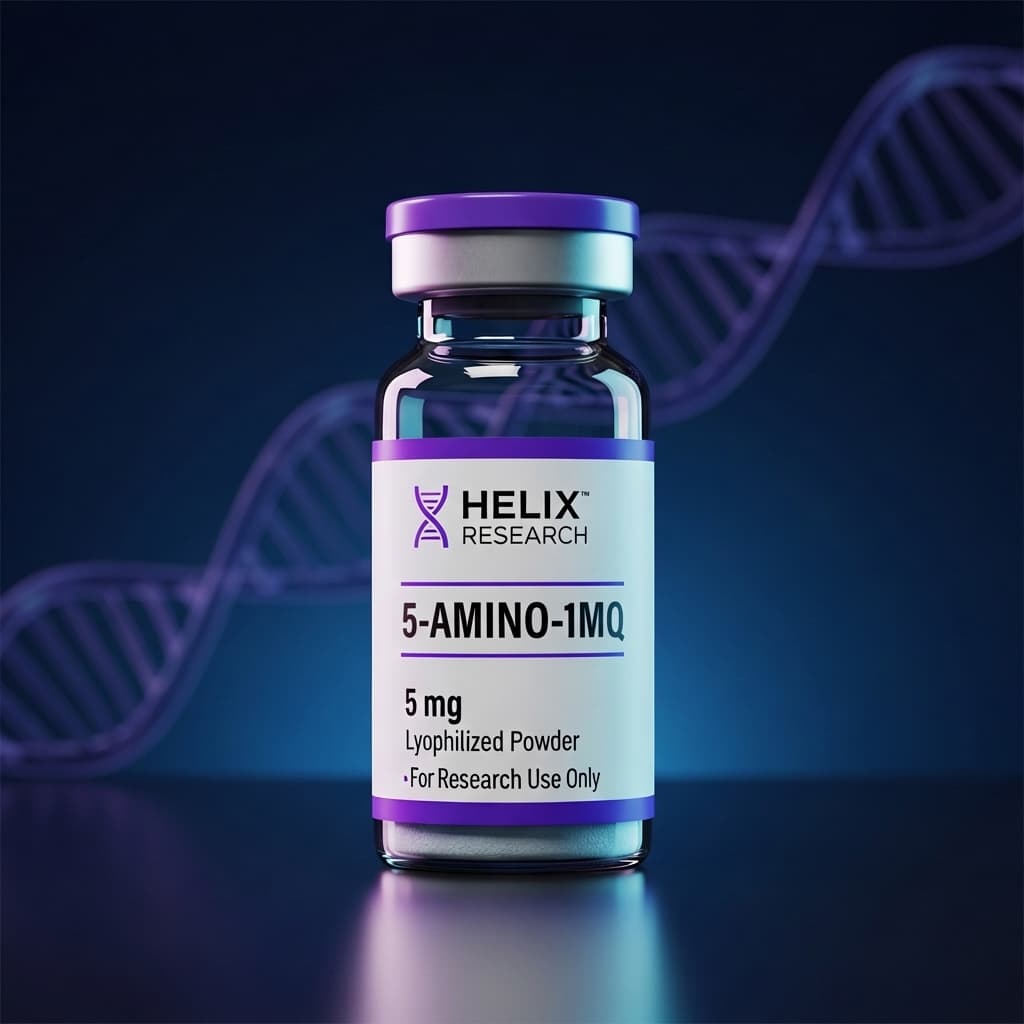
5-AMINO-1MQ
CAS: 42464-96-0
Estudiado para el gasto energético mediado por UCP1 y oxidación de grasas
5-AMINO-1MQ is a research peptide in the specialty / research category. 5-Amino-1MQ is a selective inhibitor of nicotinamide N-methyltransferase (NNMT), an enzyme highly expressed in adipose tissue that methylates and inactivates nicotinamide (a NAD+ precursor). MiPeptidos offers 5-AMINO-1MQ in 2 sizes with 99.3% verified purity and full analytical documentation.
- Increased fat burning
- Higher energy expenditure
- Better insulin sensitivity
- Boosted cellular NAD+ levels
During weeks 1-2, research suggests NNMT inhibition begins raising NAD+ levels and shifting fat cells from storage mode to energy-burning mode. By weeks 3-5, preclinical studies show measurable fat loss without any change in appetite, as adipocytes increase their energy expenditure. Weeks 6-8 bring the most visible body composition changes, with studies reporting noticeable reductions in stubborn fat and improved metabolic markers.
$16.80/vial · Everything you need to start
Sin spam. Cancela en cualquier momento.
Análisis de Pureza HPLC
Reprogram Fat Cell Metabolism.
8-week NNMT inhibition protocol backed by 5 published studies and 3 leading metabolic researchers
5-AMINO-1MQ (5-amino-1-methylquinolinium) is a small molecule inhibitor of nicotinamide N-methyltransferase (NNMT) — an enzyme increasingly recognized as a key regulator of adipose tissue energy metabolism. NNMT methylates nicotinamide (vitamin B3/NAM) to produce 1-methylnicotinamide, consuming S-adenosylmethionine (SAM) in the process. This reaction sits at a critical metabolic intersection: it regulates NAD+ biosynthesis, SAM-dependent methylation reactions, and cellular energy expenditure.
Resultados Publicados
Revisado por ParesResultados cuantificables de investigación clínica publicada.
Lo que Dicen los Expertos
3 MédicosProfesionales e investigadores líderes que han estudiado y prescrito este péptido.
Dr. Qin Yang
Associate Professor, University of Texas Health Science Center
Discovered NNMT's role in adipose tissue energy expenditure. Published the landmark Nature study identifying NNMT knockdown as a mechanism for obesity resistance. Leading authority on the NNMT-NAD+-SAM metabolic axis.
NNMT is the metabolic brake in fat cells. When it is active, it drains NAD+ and SAM — the two most important metabolic cofactors. Inhibiting NNMT releases this brake, allowing adipocytes to shift from storage mode to energy expenditure mode.
NNMT inhibition in mice produced significant fat mass reduction without decreased food intake — the effect is driven by increased energy expenditure, not appetite suppression. Monitor body composition rather than just scale weight.
Fuente: Nature (2014); Biochemical Pharmacology
Dr. Qiang Tong
Professor of Pediatrics & Molecular Medicine, Baylor College of Medicine
Expert in adipocyte biology and transcriptional regulation of energy metabolism. Published extensively on the intersection of NAD+ metabolism, sirtuins, and adipose tissue function.
The NAD+ connection is critical. NNMT consumes the precursor of NAD+ — so when you inhibit NNMT, NAD+ levels rise, sirtuin activity increases, and cells shift toward oxidative metabolism. It is a metabolic cascade from a single enzymatic target.
5-AMINO-1MQ is a membrane-permeable NNMT inhibitor suitable for research applications. The metabolic effects are progressive — body composition changes require sustained administration over weeks.
Fuente: Cell Metabolism; Journal of Biological Chemistry
Dr. Kraus Detlef
Associate Professor, University of Bonn
Published the first characterization of NNMT in human adipose tissue and its correlation with obesity and insulin resistance. Established NNMT as a druggable target for metabolic disease.
NNMT expression in human adipose tissue is strongly correlated with BMI, waist circumference, and insulin resistance markers. Obese patients express 2-3 times more NNMT in their fat tissue than lean controls — making it both a biomarker and a therapeutic target.
NNMT inhibition should be combined with metabolic monitoring: fasting glucose, insulin, lipid panel, and ideally NAD+ metabolite levels. Body composition imaging (DEXA) provides the most accurate assessment of fat vs lean mass changes.
Fuente: Nature (2014); Obesity Reviews
Protocolo de Dosificación
4 FasesRégimen de dosificación paso a paso compilado de profesionales líderes e investigación clínica.
Begin at half dose to assess tolerability. Obtain baseline metabolic panel (fasting glucose, insulin, lipid profile) and body composition measurement. NNMT inhibition begins within hours but metabolic reprogramming requires sustained administration.
Increase to target dose. NAD+ levels begin rising as NNMT-mediated nicotinamide methylation is blocked. SAM availability increases for beneficial methylation reactions. Monitor fasting glucose — insulin sensitivity may improve.
Core metabolic reprogramming phase. Adipocyte energy expenditure increases as NAD+-sirtuin axis activates. Fat oxidation rates rise progressively. Body composition changes become measurable during this phase.
Reduce frequency to assess sustained metabolic effects. NNMT inhibition-induced gene expression changes may persist beyond active dosing. Final metabolic panel and body composition assessment at protocol end.
Add 1 mL bacteriostatic water to 10 mg vial = 10 mg/mL. For 10 mg dose = 1 mL (full vial). For 5 mg dose = 0.5 mL. Solution should be clear and colorless.
8 weeks on, 4 weeks off. Metabolic reprogramming effects may persist 2-4 weeks post-cessation as gene expression changes stabilize. Maintain dietary and exercise habits during washout to preserve body composition gains.
Lyophilized: -20°C for long-term stability. Reconstituted: 2-8°C, use within 21 days. 5-AMINO-1MQ is a stable small molecule with good solution stability.
Subcutaneous injection into abdominal or thigh tissue. Rotate injection sites. Can be taken at any time of day. Some research protocols suggest morning dosing to align with natural circadian metabolic peaks.
Cronología de Recuperación
Basado en observaciones de investigación publicada. Los resultados individuales varían. Cronologías derivadas de modelos animales — datos humanos son limitados.
NNMT Inhibition & NAD+ Repletion
- 5-AMINO-1MQ inhibits NNMT within hours of administration
- Nicotinamide methylation reduced — NAD+ precursor pool begins expanding
- SAM consumption by NNMT decreases — more SAM available for other methylation reactions
- Intracellular NAD+ levels begin rising in adipose tissue
Base de investigación: Neelakantan et al. (2017) Biochemical Pharmacology — NNMT inhibitor characterization
Sirtuin Activation & Metabolic Shift
- Rising NAD+ levels activate SIRT1 and SIRT3 — key metabolic deacetylases
- PGC-1alpha deacetylation by SIRT1 enhances mitochondrial gene expression
- Adipocyte energy expenditure begins increasing
- UCP1 and thermogenic gene expression may upregulate in fat depots
- Fasting glucose and insulin levels may begin improving
Base de investigación: Yang et al. (2014) Nature — NNMT knockdown metabolic reprogramming
Active Fat Mass Reduction
- Measurable body composition changes — fat mass decreasing without caloric restriction
- Lean mass preserved (NNMT inhibition targets adipocyte metabolism specifically)
- Energy expenditure measurably increased (indirect calorimetry in research settings)
- Insulin sensitivity improvements detectable on metabolic panel
- Lipid profile shifts — triglycerides decrease, HDL may increase
Base de investigación: Yang et al. (2014) PMID: 25043000 — fat mass reduction without food intake changes in mice
Metabolic Optimization & Taper
- Peak metabolic reprogramming achieved
- NAD+-sirtuin axis fully activated in adipose tissue
- Body composition improvements stabilize
- Taper phase assesses persistence of metabolic effects
Base de investigación: General NNMT biology; NAD+ metabolism literature
Sustained Metabolic Assessment
- Gene expression changes from NNMT inhibition may persist 2-4 weeks
- Body composition maintained with proper diet and exercise
- Repeat metabolic panel at 4 weeks post-protocol to assess durability
- Consider repeat protocol after 4-week washout if needed
Base de investigación: Epigenetic persistence of NAD+-mediated metabolic changes; general metabolic literature
Mecanismo de Acción
3 vías biológicas distintas a través de las cuales opera este péptido.
NNMT Inhibition & NAD+ Repletion
5-AMINO-1MQ competitively inhibits NNMT, preventing the methylation of nicotinamide (NAD+ precursor) and the consumption of SAM, allowing both critical metabolic cofactors to accumulate.
- NNMT normally methylates nicotinamide to 1-MNA, consuming SAM in the process
- Inhibition preserves nicotinamide for NAD+ biosynthesis via the salvage pathway
- Increased SAM availability supports beneficial epigenetic and metabolic methylation reactions
Neelakantan et al. (2018) PMID: 29454618
NAD+-SIRT1/3 Metabolic Activation
Rising NAD+ levels from NNMT inhibition activate SIRT1 (cytoplasmic/nuclear) and SIRT3 (mitochondrial) — deacetylases that enhance fat oxidation, mitochondrial function, and energy expenditure.
- SIRT1 deacetylates PGC-1alpha → enhanced mitochondrial biogenesis and fat oxidation gene expression
- SIRT3 deacetylates mitochondrial enzymes → improved electron transport chain efficiency
- Combined sirtuin activation shifts adipocyte metabolism from storage to expenditure
Cantó et al. (2015) PMID: 26212717
Adipocyte Energy Expenditure Upregulation
NNMT inhibition reprograms white adipocytes from an energy-storing to an energy-expending phenotype, increasing oxygen consumption and potentially inducing browning-associated gene expression.
- White adipocyte oxygen consumption rate increases with NNMT inhibition
- UCP1 and thermogenic gene expression may be induced in susceptible fat depots
- Energy expenditure increase occurs independently of food intake or physical activity
- Adipocyte size decreases as stored triglycerides are mobilized and oxidized
Kraus et al. (2014) PMID: 25043000
Investigación Publicada
5 estudios revisados por pares de PubMed. Haz clic en cualquier PMID para ver el estudio completo.
NNMT knockdown in adipose tissue prevents diet-induced obesity
Kraus D, Yang Q, Kong D, et al. — Nature (2014)
Hallazgo Clave: NNMT knockdown in white adipose tissue using antisense oligonucleotides reduced body weight and fat mass in diet-induced obese mice without affecting food intake. NNMT inhibition increased SAM and NAD+ levels, activating energy expenditure in adipocytes.
5-amino-1MQ, a novel NNMT inhibitor, prevents diet-induced obesity in mice
Neelakantan H, Vance V, Wetzel MD, et al. — Biochemical Pharmacology (2018)
Hallazgo Clave: 5-AMINO-1MQ administration to diet-induced obese mice significantly reduced body weight gain, adipocyte size, and plasma cholesterol while increasing energy expenditure — all without affecting food intake, confirming NNMT as a druggable anti-obesity target.
Nicotinamide N-methyltransferase: a promising drug target for metabolic syndrome
Neelakantan H, Brightwell CR, Graber TG, et al. — Trends in Pharmacological Sciences (2017)
Hallazgo Clave: Comprehensive review establishing NNMT at the intersection of NAD+ metabolism, one-carbon metabolism, and energy homeostasis. NNMT overexpression in obese adipose tissue makes it both a biomarker of metabolic dysfunction and a therapeutic target.
NNMT expression in adipose tissue and its association with obesity and insulin resistance
Kraus D, Yang Q, Kahn BB — Obesity Reviews (2015)
Hallazgo Clave: Human adipose tissue NNMT expression is strongly correlated with BMI, waist circumference, and HOMA-IR. Obese individuals express 2-3× more NNMT in visceral and subcutaneous fat compared to lean controls.
NAD+ metabolism and sirtuins in metabolic disease
Cantó C, Menzies KJ, Auwerx J — Cell Metabolism (2015)
Hallazgo Clave: Established the NAD+-sirtuin axis as a central regulator of metabolic health. NAD+ repletion strategies (including NNMT inhibition) activate SIRT1/3, enhance mitochondrial function, and improve glucose and lipid metabolism in metabolic disease models.
Potencia tu Protocolo de Investigación
3 SinergiasLa investigación sugiere combinar 5-AMINO-1MQ con estos péptidos para mecanismos complementarios.

5-AMINO-1MQ prevents NAD+ precursor destruction by NNMT while direct NAD+ supplementation boosts levels from the supply side — dual-pathway NAD+ optimization.
Maximized cellular NAD+ levels through prevention of waste (NNMT inhibition) and increased supply (direct NAD+) for optimal sirtuin-mediated metabolic reprogramming.

MOTS-c activates AMPK for mitochondrial-level metabolic enhancement while 5-AMINO-1MQ increases NAD+ for sirtuin activation — two master metabolic regulators working in concert.
Convergent activation of mitochondrial biogenesis through both NAD+-sirtuin and AMPK pathways for maximized cellular energy metabolism and fat oxidation.

AOD9604 directly stimulates lipolysis (fat release) while 5-AMINO-1MQ increases energy expenditure (fat burning) — matching fat mobilization with fat oxidation capacity.
Fat released from adipocytes by AOD9604 is efficiently oxidized by the enhanced mitochondrial machinery driven by 5-AMINO-1MQ's NNMT inhibition — supply matched to demand.
Especificaciones
Cómo Funciona 5-AMINO-1MQ
5-Amino-1MQ is a selective inhibitor of nicotinamide N-methyltransferase (NNMT), an enzyme highly expressed in adipose tissue that methylates and inactivates nicotinamide (a NAD+ precursor). By inhibiting NNMT, 5-Amino-1MQ increases intracellular NAD+ and S-adenosylmethionine (SAM) levels, activating SIRT1 and other NAD+-dependent metabolic enzymes. This leads to increased energy expenditure, enhanced fatty acid oxidation, reduced lipogenesis, and decreased adipocyte size. It effectively reverses diet-induced obesity in preclinical models without affecting food intake.
Aplicaciones de Investigación
Precios
| Tamaño | Por Vial | Paquete de 10 |
|---|---|---|
5mg | $162.95 | $138.95 |
10mgMejor Valor | $50.00 | $425.00 |
Precios de paquete de 10 mostrados. Descuentos por volumen para 50+ viales — contáctenos.
Certificado de Análisis
Este COA es una muestra representativa. Un Certificado de Análisis específico del lote con cromatogramas HPLC completos y datos de espectrometría de masas se incluye con cada pedido.
Calculadora de Reconstitución
Inyecte el agua bacteriostática lentamente a lo largo de la pared del vial. Agite suavemente hasta disolver — nunca sacuda. Almacene la solución reconstituida a 2-8°C y use dentro de 30 días.
Reseñas de Clientes
Preguntas Frecuentes
Seguridad y Advertencias
Research compound — no human clinical trials completed
5-AMINO-1MQ has been studied only in cell culture and rodent models. No human pharmacokinetic, safety, or efficacy data exists. All information is for research and educational purposes only.
Solo para Fines de Investigación y Educación. No es consejo médico. No para consumo humano. Consulte a un médico autorizado antes de tomar cualquier decisión relacionada con la salud.
Péptidos Relacionados

AICAR
Compuesto mimético del ejercicio estudiado para la activación metabólica
ARA290 (Cibinetide)
Estudiado para neuroprotección mediante señalización no hematopoyética derivada de EPO
ACE 031
Estudiado para la inhibición de la vía de miostatina en investigación muscular
ACTH 1-39
Estudiado para la modulación de respuesta al estrés mediada por melanocortina