Sin spam. Cancela en cualquier momento.
Pureza por lote, justo donde los investigadores la buscan.
Cada compuesto incluido muestra su resultado HPLC, referencia de lote y fecha de prueba para que el research brief esté respaldado por evidencia analítica real.
BPC 157
Pureza (HPLC)
TB500
Pureza (HPLC)
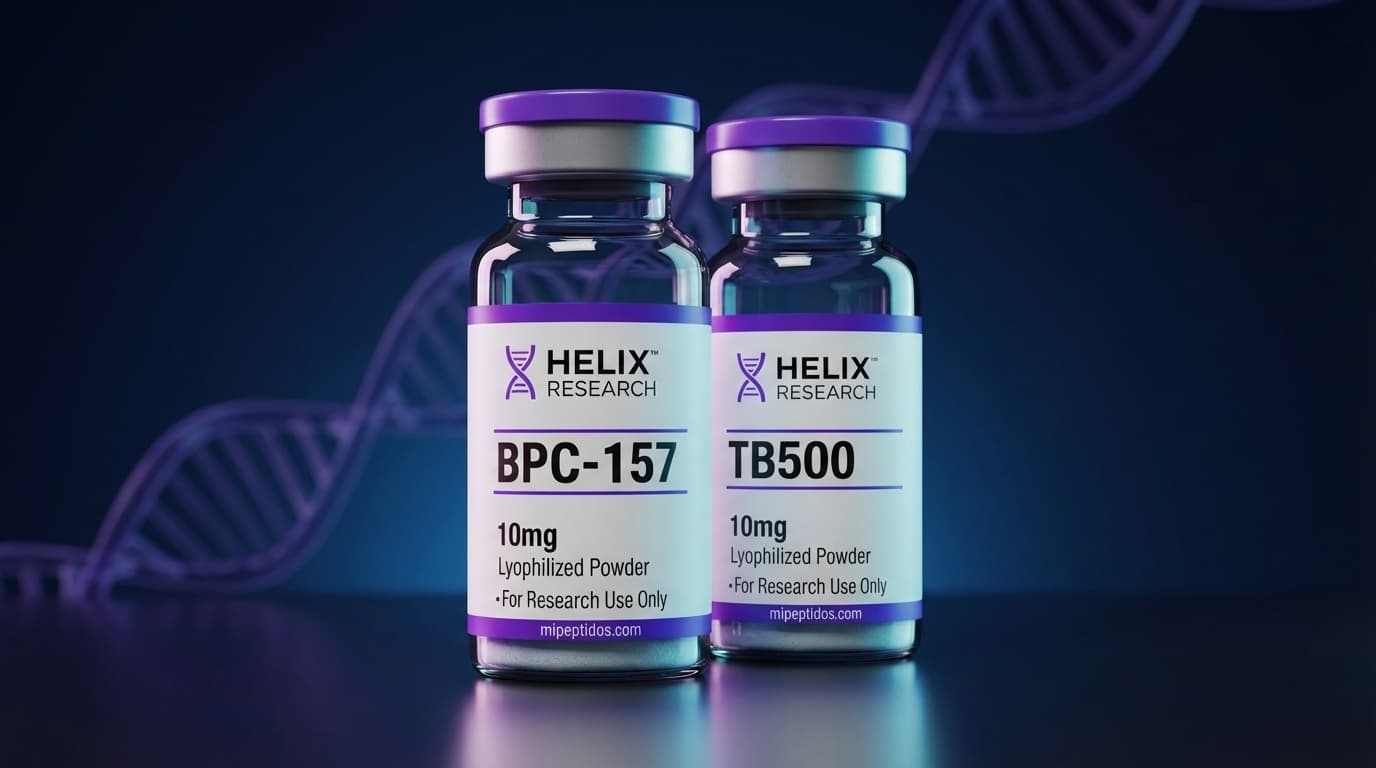
Tissue Repair Research Kit
Pairs two of the most frequently co-studied repair compounds in published literature
Los dos péptidos de reparación tisular más citados en investigación publicada, agrupados para estudio comparativo.
Solo para Uso en Investigación. Estos kits están destinados únicamente para fines de investigación en laboratorio. No para consumo humano. Los resúmenes públicos reflejan literatura publicada y documentación analítica, no instrucciones de uso humano ni claims terapéuticos.
Construido desde investigación publicada, no desde suposiciones.
Cada kit público ahora abre con la prueba: estudios citados, PMIDs, señales rastreadas y documentación por lote en cada componente.
Mediciones, marcadores y lecturas comunes asociadas con esta línea de investigación en la literatura publicada.
Qué hay dentro del kit, a nivel estructural
Detalles químicos clave tomados de cada compuesto incluido para que la página se sienta como un perfil de investigación real, no como una tarjeta genérica de bundle.
BPC 157
CAS: 137525-51-0BPC-157 is a synthetic 15-amino acid fragment derived from human gastric body protection compound. It promotes angiogenesis by upregulating VEGF and its receptor VEGFR2, activates the FAK-paxillin pathway to enhance cell migration and wound closure, and modulates the nitric oxide system. It also interacts with the dopaminergic system and has cytoprotective effects on gastrointestinal mucosa, tendons, ligaments, and other connective tissues.
TB500
CAS: 77591-33-4 (Thymosin Beta-4); 885340-08-9 (synthetic TB-500 fragment)TB-500 (synthetic thymosin beta-4) is studied for its role in actin dynamics, a core process that helps cells migrate, reorganize, and respond to repair signals. Published literature has examined its interaction with angiogenic signaling, inflammatory pathways, and tissue-remodeling biology across multiple preclinical models. The active region LKKTETQ is considered central to its actin-binding activity.
Parámetros de estudio publicados
Rangos de dosis, intervalos y rutas de administración citados típicamente en la literatura para los compuestos de este kit.
Both peptides can be administered together in the same injection session. Published protocols reference fasted morning administration for BPC-157. TB500 can be dosed twice weekly at higher amounts.
BPC 157
Morning, fastedTB500
reported study windowsEstos son parámetros de estudio resumidos a partir de literatura citada y diseños de investigación. Se presentan solo como contexto de investigación, no como instrucciones ni recomendaciones de uso humano.
Investigación Publicada
Papers revisados por pares que respaldan los compuestos y la lógica de combinación de este kit.
Pentadecapeptide BPC 157 enhances the growth hormone receptor expression in tendon fibroblasts
Chang CH, Tsai WC, Lin MS, Hsu YH, Pang JHS
Published data demonstrated BPC-157 upregulated GH receptor expression in tendon fibroblasts, contributing to tendon-repair biology signaling cascades in cell culture studies.
PMID: 24871572
Thymosin beta-4 promotes angiogenesis, wound healing, and hair follicle development
Philp D, Goldstein AL, Kleinman HK
In peer-reviewed research, TB500 demonstrated promotion of angiogenesis and acceleration of dermal wound closure through enhanced endothelial cell migration in animal models.
PMID: 15313781
Stable gastric pentadecapeptide BPC 157 in trials for inflammatory bowel disease
Sikiric P, Seiwerth S, Rucman R, et al.
Published studies observed BPC-157 engagement of the NO system and cytoprotective pathways, with significant tissue-protective effects documented across multiple organ systems.
PMID: 17072048
Thymosin beta-4 activates integrin-linked kinase and promotes cardiac cell migration, survival and cardiac repair
Bock-Marquette I, Saxena A, White MD, DiMaio JM, Srivastava D
Literature demonstrates TB500 activation of ILK signaling, promoting cellular survival and migration pathways relevant to repair-signaling research mechanisms in published cardiac models.
PMID: 15378064
Lo que suelen seguir los investigadores
Mediciones, marcadores y lecturas comunes asociadas con esta línea de investigación en la literatura publicada.
Lo observado en la literatura
Una vista en lenguaje claro de cómo suelen desarrollarse las ventanas de estudio, los marcadores y los cambios reportados dentro de esta línea de investigación.
Acute Inflammatory Response Phase
Angiogenesis & Vascular Remodeling
Fibroblast Activation & Collagen Deposition
Tissue Remodeling & Maturation
Structural Integration & Strengthening
Protocol Completion & Sustained Integrity
Manejo y documentación
Detalles de manejo del material y documentación por lote que respaldan flujos de trabajo de investigación más limpios.
Water Volume
2 mL bacteriostatic water per 10mg vial
Concentration
5 mg/mL (5000 mcg/mL) — each 0.1 mL = 500 mcg
Storage
Refrigerate at 2-8°C after reconstitution. Stable for up to 30 days. Do not freeze.
Por qué estos compuestos se combinan en la literatura
Resúmenes en lenguaje claro de los mecanismos y combinaciones publicadas que hacen que este kit tenga sentido para investigación real.
Published research shows BPC-157 promotes angiogenesis (new blood vessel formation) at injury sites and upregulates growth factor expression, supporting the repair-signaling research cascade (PMID: 29356623).
Studies demonstrate TB500 (Thymosin Beta-4) promotes cellular migration to injury sites and exhibits inflammatory-pathway properties, facilitating more efficient repair-signaling research (PMID: 20816543).
In research models, BPC-157 and TB500 operate through complementary mechanisms — vascular support and cell migration respectively — which is why this combination appears frequently in repair biology-focused literature.
Qué Incluye Este Kit
2 péptidos, cada uno con documentación COA individual
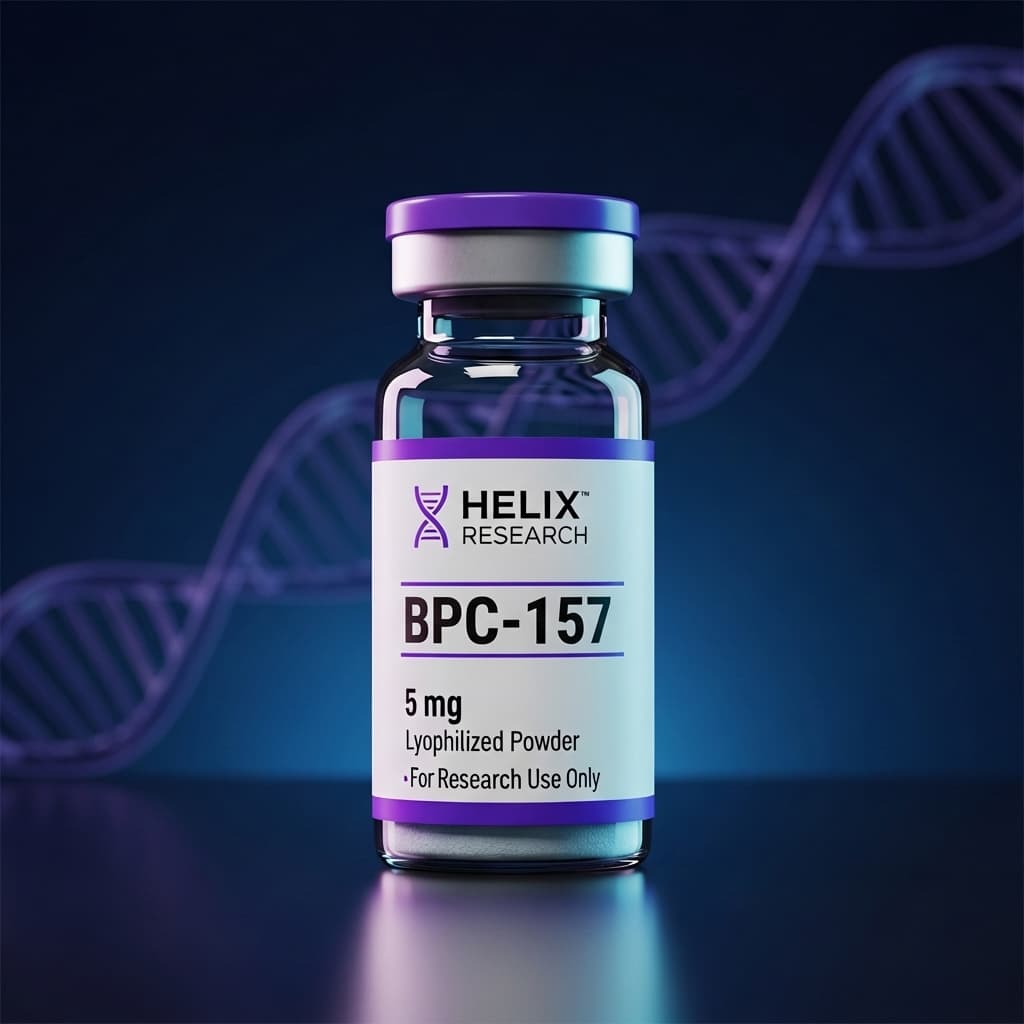
BPC 157
$74.95Tendon, ligament, and muscle repair biology · Gastrointestinal ulcer and IBD research · Neuroprotection and nerve regeneration
BPC-157 is a synthetic 15-amino acid fragment derived from human gastric body protection compound.
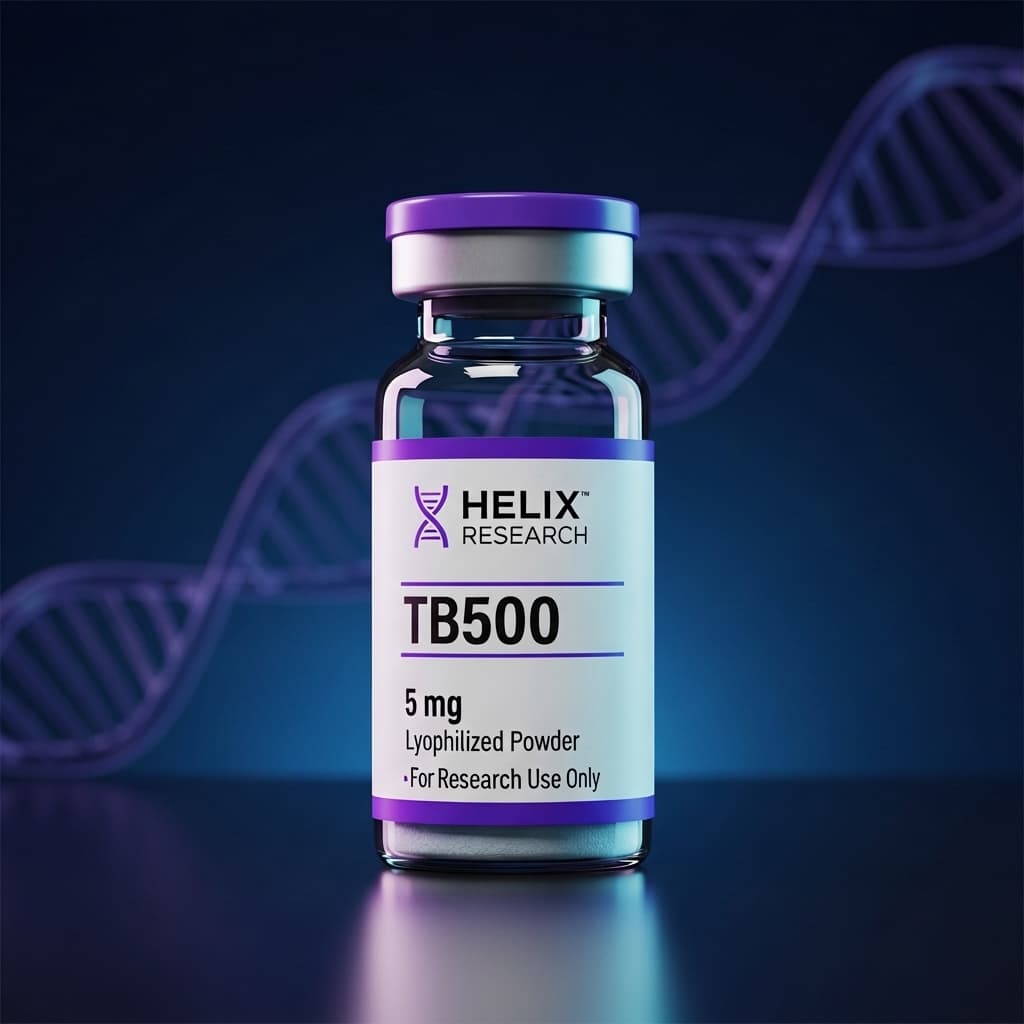
TB500
$58.95Dermal wound-repair biology models · Cardiac injury and migration signaling research · Inflammatory pathway and remodeling studies
TB-500 (synthetic thymosin beta-4) is studied for its role in actin dynamics, a core process that helps cells migrate, reorganize, and respond to repair signals.
Profundiza en los péptidos dentro del kit
Selección de artículos ligada directamente a los compuestos de este kit, para que el investigador pase del bundle a la literatura, el mecanismo y el manejo específico de cada péptido.
BPC-157 vs BPC/TB-500 Combo: Research Evidence
Comprehensive research guide covering mechanism, studies, and practical info for BPC-157 vs BPC TB500 combo.
Healing & Recovery Peptides: Research Guide
Comprehensive research guide covering mechanism, studies, and practical info for healing peptides.
BPC-157 + TB-500: Healing Stack Research
Second most popular stack. Directly promotes combo products. Comprehensive research guide covering mechanism of action, published studies, and practical.
TB-500 in Wound Healing Research
Evidence-focused content. Builds authority in healing category. Comprehensive research guide covering mechanism of action, published studies, and.
BPC-157: Mechanism & Applications
A comprehensive review of BPC-157, covering its origin, mechanism, preclinical research, and tissue repair applications.
TB500 vs BPC-157: Which Healing Peptide?
Detailed comparison of TB500 and BPC-157 for tissue repair research. Examines mechanisms, evidence, and combinations.
Kits de Investigación Relacionados
Kit Comparador de Vía Incretínica
Activación de receptor único vs. dual — los compuestos de los ensayos STEP y SURPASS
2 peptides · Investigación Metabólica
Kit Comparador Triple de Incretinas
Agonistas únicos, duales y triples — los tres compuestos estudiados en los ensayos STEP, SURPASS y NEJM Fase 2
3 peptides · Investigación Metabólica
Kit de Estudio de Vías Nootrópicas
Tres péptidos estudiados para regulación positiva de BDNF, señalización ansiolítica y plasticidad sináptica
3 peptides · Neurociencia
Comienza tu Investigación
Get the complete Tissue Repair Research Kit at $117.83 — save $16.07 versus purchasing each compound separately. Full COA documentation included with every vial.
Solo para Uso en Investigación. Estos kits están destinados únicamente para fines de investigación en laboratorio. No para consumo humano. Los resúmenes públicos reflejan literatura publicada y documentación analítica, no instrucciones de uso humano ni claims terapéuticos.