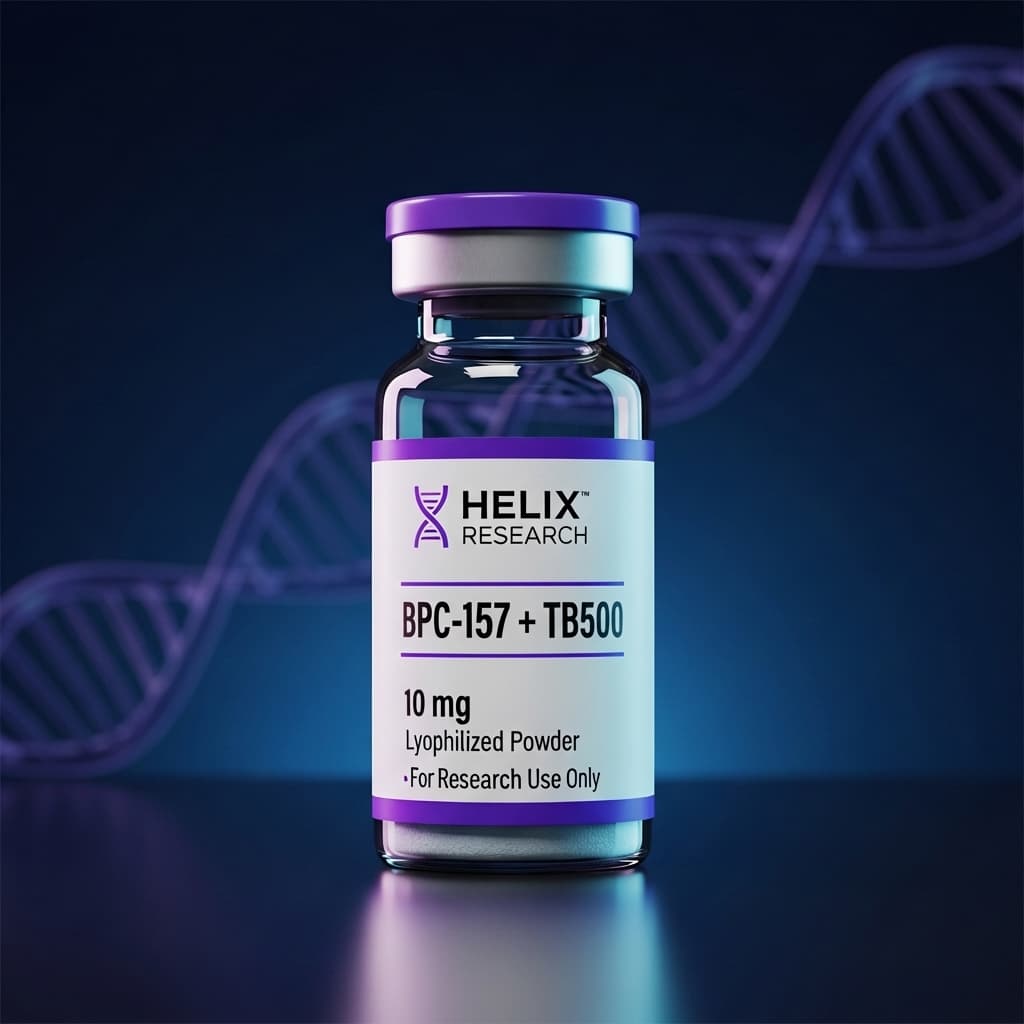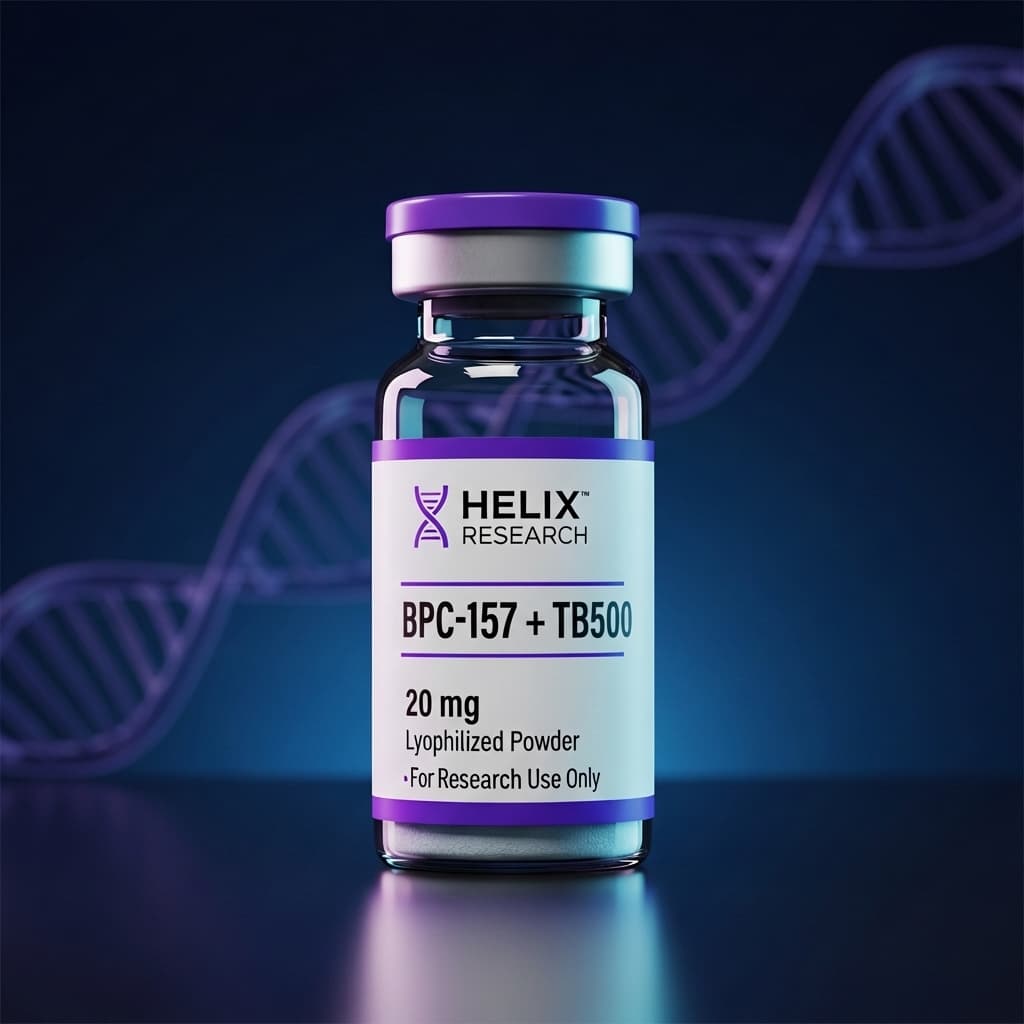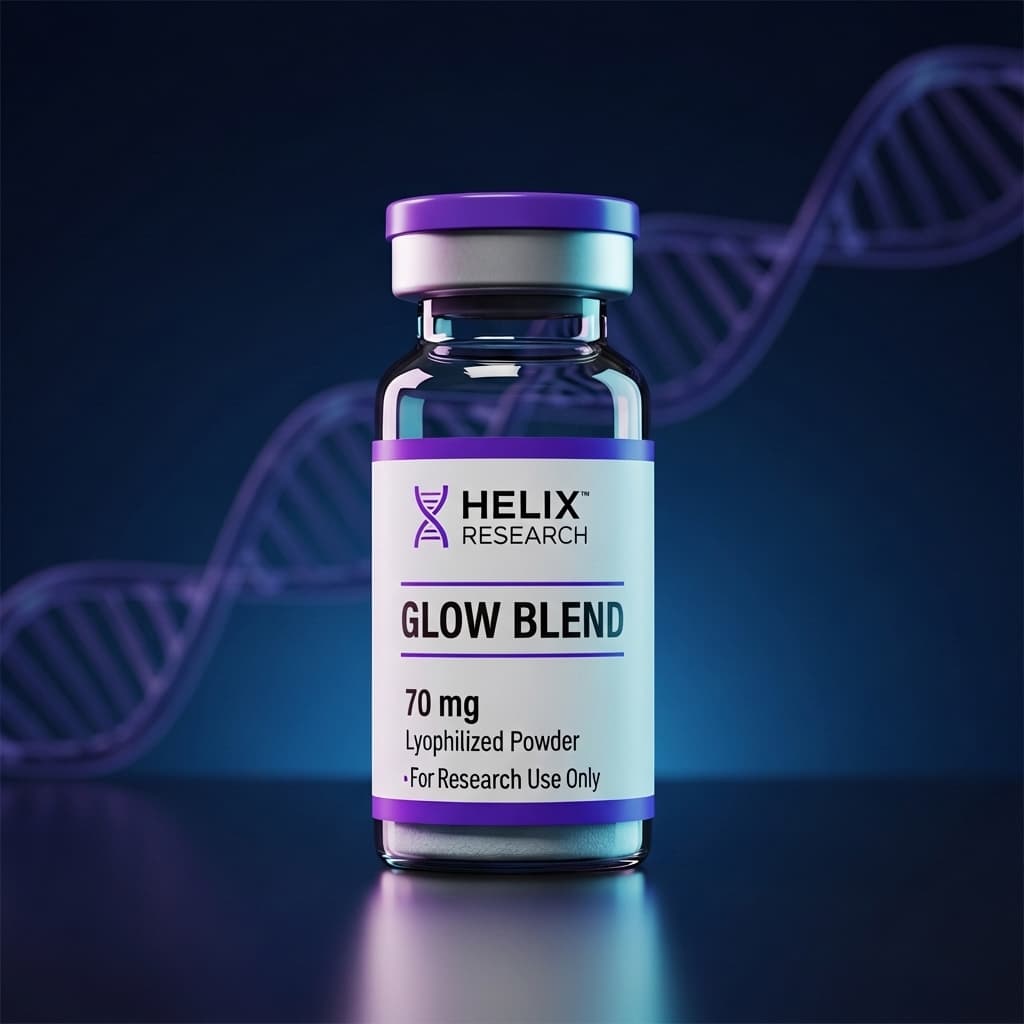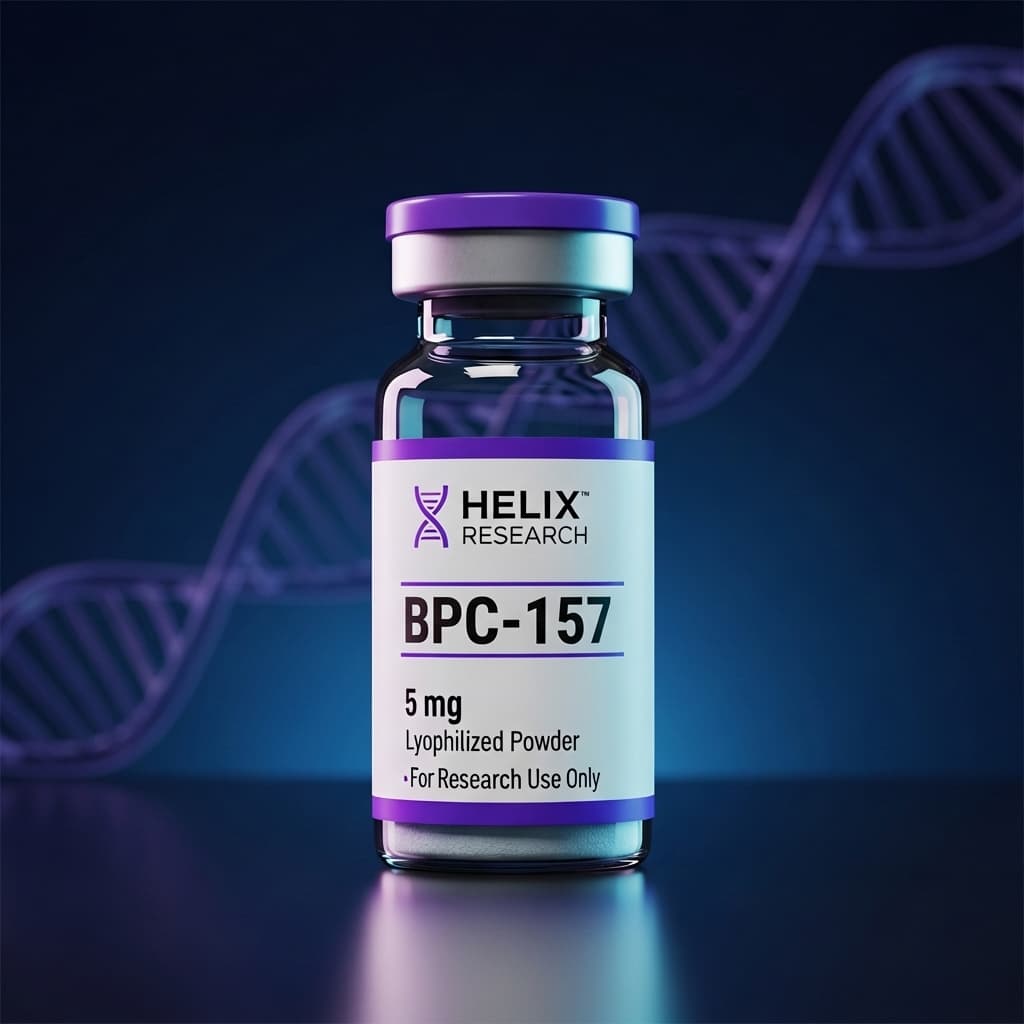
BPC 157
CAS: 137525-51-0
BPC 157 is a research peptide in the healing / recovery category. BPC-157 is a synthetic 15-amino acid fragment derived from human gastric body protection compound. MiPeptidos offers BPC 157 in 3 sizes with 99.4% verified purity and full analytical documentation.
The BPC-157 Healing Protocol
Doctor-Backed Tissue Repair & Recovery Regimen
BPC-157 (Body Protection Compound-157) is a synthetic pentadecapeptide derived from a naturally occurring protein in human gastric juice. It is one of the most extensively studied peptides in tissue repair research, with over 100 published studies demonstrating consistent healing effects across tendons, ligaments, muscles, the GI tract, and the nervous system.
What makes BPC-157 unique is its remarkable acid stability — surviving 24+ hours in gastric juice at pH 2.0 — and its ability to work through multiple repair pathways simultaneously: angiogenesis (VEGF), cell migration (FAK-paxillin), nitric oxide modulation, growth hormone receptor upregulation, and neurotransmitter system regulation.
This protocol synthesizes dosing guidance from leading practitioners including Dr. William Seeds, Dr. Elizabeth Yurth, and Dr. Andrew Huberman, alongside findings from 11 peer-reviewed studies. All information is for research and educational purposes only.
Research Outcomes
Quantifiable results from published studies. Primarily from animal models — human data noted where available.
Dosing Protocol
Establishes tissue-level concentration during the acute healing window. Up to 600 mcg/day for severe injuries per Dr. Seeds.
Reduced dose as healing progresses. Meaningful functional gains become apparent. Rotate injection sites.
For chronic conditions or long-term remodeling. Oral viable for GI-focused protocols at higher doses.
Add 2 mL bacteriostatic water to 5 mg vial = 2,500 mcg/mL. 250 mcg = 10 units on insulin syringe; 500 mcg = 20 units.
Standard: 4-8 weeks on, 2-4 weeks off. Extended: up to 90 days continuous, then 30-day washout for receptor sensitivity.
Lyophilized: -20°C for 24+ months. Reconstituted: 2-8°C, use within 30 days. Protect from light.
BPC-157 is uniquely acid-stable (survives 24+ hours at pH 2.0). Oral dosing is viable but requires 3-10x higher doses. Subcutaneous provides superior systemic bioavailability.
Healing Timeline
Based on published research observations. Individual results vary. Timelines derived from animal models — human data is limited.
Inflammation Response & Repair Initiation
- Gene expression changes begin within 2 minutes of treatment
- Mucosal healing within 3-5 days in gastric models
- Measurable reduction in inflammatory markers within 3-7 days
- Early angiogenesis (blood vessel formation) initiates by days 4-7
- Nerve injuries show detectable axonal sprouting within 1-2 weeks
Research basis: Seiwerth et al. (2021) Frontiers in Pharmacology; Chang et al. (2011) J Applied Physiology
Active Structural Repair
- Tendon fibroblast migration increased up to 2.3-fold
- Growth hormone receptor expression increased up to 7-fold
- Improved tendon-to-bone junction integrity and collagen organization
- Ligament-transected animals show measurably greater tensile strength
- Muscle recovery with functional gait improvements
Research basis: Chang et al. (2014) Molecules; Staresinic et al. (2003) J Orthop Research
Tissue Maturation & Strengthening
- Treated tendons approach normal tissue strength by 6-8 weeks
- Enhanced bone callus formation in fracture models
- Collagen transitions from Type III to stronger Type I
- Progressive biomechanical strength gains continue
- Improved nerve electrophysiological parameters
Research basis: Gwyer et al. (2019) Cell Tissue Research; Vasireddi et al. (2025) HSS Journal
Long-Term Remodeling
- Tendon and ligament remodeling continues 3-6 months
- Tissue healing stabilizes; improved resilience
- Transition to maintenance dosing or cycling off
- Consider adding GHK-Cu for remodeling phase support
Research basis: General tissue biology; human timelines unestablished
Mechanism of Action
6 distinct biological pathways through which this peptide operates.
VEGF Upregulation & Angiogenesis
Stimulates VEGF and VEGFR2, driving new blood vessel formation to deliver nutrients and oxygen to damaged tissue.
- Upregulates VEGFR2 — more receptors means cells are more sensitive to growth signals
- Produces appropriately modulated angiogenesis in living tissue
- Critical for hypovascular tissues like tendons and ligaments
Brcic et al. (2009) PMID: 20388964
FAK-Paxillin Signaling
Activates Focal Adhesion Kinase and paxillin complexes for cell migration, adhesion, and spatial organization during healing.
- Dose-dependent phosphorylation of FAK and paxillin
- Up to 2.3-fold increase in tendon fibroblast migration
- The primary mechanism behind tendon and wound healing effects
Chang et al. (2011) PMID: 21030672
Nitric Oxide Modulation
Bidirectional NO regulator — counteracts both NO-excess and NO-deficiency states depending on physiological context.
- Activates eNOS through both VEGF-dependent and Src-caveolin pathways
- Dilates blood vessels to improve flow to injured tissue
- Supports angiogenesis, vasodilation, and vascular stability simultaneously
Seiwerth et al. (2021) PMID: 34267654
Growth Hormone Receptor Upregulation
Increases GHR expression up to 7-fold, amplifying the body's existing repair capacity rather than replacing it.
- 7-fold GHR increase by day 3 at optimal concentration
- Activates JAK2 phosphorylation for enhanced proliferation
- Dose-dependent and time-dependent effect
Chang et al. (2014) PMID: 25415472
GI Cytoprotection
Provides broad cytoprotective effects across the GI tract. Stable in gastric acid for 24+ hours — unique among peptides.
- 65.5% ulcer inhibition — outperforms famotidine
- Counteracts NSAID damage to stomach, intestine, liver, and brain
- Phase II clinical trials completed for ulcerative colitis
Xue et al. (2004) PMID: 15052688
Brain-Gut Axis Modulation
Modulates dopaminergic, serotonergic, GABAergic, and opioid systems as a brain-gut axis mediator.
- Increases dopamine and serotonin release in specific brain regions
- Counteracts amphetamine, haloperidol, and diazepam disturbances
- Maintains GI integrity while producing corresponding CNS effects
Sikiric et al. (2016) PMID: 27138887
What the Experts Say
Dr. William Seeds
Founder, SSRP Institute
40+ years in cellular and molecular medicine. Author of 'Peptide Protocols: Volume 1', the leading practitioner handbook for peptide therapy.
“I've been amazed at how BPC-157 improves recovery in athletes. Peptides offer physicians nearly miraculous opportunities in the treatment and prevention of illness, injury, and disease.”
400-600 mcg/day subcutaneous injection for tissue repair. Standard protocol: 250-500 mcg daily in the morning, 4-8 week cycles.
Source: Peptide Protocols: Volume 1 (ISBN: 978-0578624358)
Dr. Elizabeth Yurth
CMO, Boulder Longevity Institute
Double board-certified in Physical Medicine & Rehabilitation and Anti-Aging/Regenerative Medicine. 30+ years in sports and spine orthopedics.
“BPC-157 is not only immune modulatory, it actually helps improve collagen function. Our gut makes a peptide called BPC — it's really good for the gut, unlike anti-inflammatory drugs which destroy the gut.”
Subcutaneous injection preferred (once daily). Oral form requires 2-3x daily dosing. Can be taken long-term. Source only from compounding pharmacies.
Source: Wellness Mama Podcast Ep. 674; JJ Virgin Podcast Ep. 813
Dr. Andrew Huberman
Professor of Neurobiology, Stanford University
Ph.D. in Neuroscience. Host of Huberman Lab, one of the most popular science podcasts globally.
“BPC-157 encourages cell turnover and migration, assists healing through new vasculature promotion, and upregulates growth hormone. It is quite safe with low lethality.”
300-500 mcg a few times per week, cycled on and off. Start with minimum effective dose. CRITICAL: Avoid if you have an existing tumor or cancer.
Source: Huberman Lab Podcast: Benefits & Risks of Peptide Therapeutics (April 2024)
Dr. Predrag Sikiric
Professor of Pharmacology, University of Zagreb
The world's leading BPC-157 researcher. Discovered and characterized BPC-157. 30+ years of published research, dozens of peer-reviewed papers.
“Only BPC 157 regimens were consistently effective in all tested ulcer models. The beneficial effect appears to be related to strong endothelial protection.”
Research doses: 10 mcg/kg to 10 pg/kg intraperitoneally. Effective via IP, oral, and topical routes at same dose range.
Source: Multiple peer-reviewed publications (University of Zagreb)
Synergistic Combinations
Peptides that complement BPC 157 through different healing pathways.
BPC-157 provides localized repair and angiogenesis while TB-500 delivers systemic anti-inflammatory and cell migration properties.
BPC-157 activates growth factor pathways and NO system. TB-500 promotes actin regulation and cell migration through separate receptor interactions.
The most widely used peptide combination. Accelerates recovery across musculoskeletal injuries more comprehensively than either alone.
GHK-Cu addresses the remodeling phase that BPC-157 initiates but doesn't fully drive.
BPC-157 drives angiogenesis and initial repair. GHK-Cu drives collagen synthesis, elastin production, and organized tissue remodeling.
Comprehensive coverage from initial repair through long-term tissue reorganization. GHK-Cu activates 4,000+ genes related to tissue repair.
Combines tissue repair (BPC-157) with immune system activation (TA1) for post-surgical or immune-compromised contexts.
BPC-157 targets tissue via VEGF and FAK pathways. TA1 enhances T-cell differentiation, dendritic cell maturation, and NK cell activity.
Optimizes both physical healing and immune function simultaneously. Ideal for recovery protocols requiring immune support.
KPV manages inflammation, allowing BPC-157's regenerative mechanisms to work more efficiently.
BPC-157 drives repair and angiogenesis. KPV inhibits NF-kB inflammatory signaling and reduces pro-inflammatory cytokines.
Balances inflammation needed for healing initiation with the resolution needed for tissue remodeling.
Published Research
8 peer-reviewed studies from PubMed. Click any PMID to view the full study.
The promoting effect of pentadecapeptide BPC 157 on tendon healing involves tendon outgrowth, cell survival, and cell migration
Chang CH, Tsai WC, Lin MS, Hsu YH, Pang JH — Journal of Applied Physiology (2011)
Key Finding: BPC-157 significantly accelerated tendon outgrowth, improved fibroblast survival under oxidative stress, and increased migration up to 2.3-fold through FAK-paxillin pathway activation.
Gastric pentadecapeptide BPC 157 accelerates healing of transected rat Achilles tendon and in vitro stimulates tendocytes growth
Staresinic M, Sebecic B, Patrlj L, et al. — Journal of Orthopaedic Research (2003)
Key Finding: Increased load at failure, Young's modulus, and Achilles Functional Index. Effective at 10 mcg/kg, 10 ng/kg, or 10 pg/kg body weight — spanning a million-fold dose range.
Pentadecapeptide BPC 157 Enhances the Growth Hormone Receptor Expression in Tendon Fibroblasts
Chang CH, Tsai WC, Hsu YH, Pang JH — Molecules (2014)
Key Finding: BPC-157 increased GHR expression up to 7-fold by day 3. Growth hormone then activated JAK2 phosphorylation, enhancing cell proliferation in a dose-dependent manner.
Stable Gastric Pentadecapeptide BPC 157 and Wound Healing
Seiwerth S, Brcic L, Vuletic LB, et al. — Frontiers in Pharmacology (2021)
Key Finding: Gene expression changes begin at 2 minutes (7 genes). Effective across burn wounds, diabetic wounds, and excisional wounds via IP, oral, and topical routes.
Protective effects of pentadecapeptide BPC 157 on gastric ulcer in rats
Xue XC, Wu YJ, Gao MT, et al. — World Journal of Gastroenterology (2004)
Key Finding: 65.5% ulcer inhibition — outperforming famotidine (60.8%) across all three ulcer models tested.
Brain-gut Axis and Pentadecapeptide BPC 157: Theoretical and Practical Implications
Sikiric P et al. — Current Neuropharmacology (2016)
Key Finding: BPC-157 modulates dopaminergic, serotonergic, GABAergic, and opioid systems. Counteracts amphetamine disturbances and diazepam tolerance.
Emerging Use of BPC-157 in Orthopaedic Sports Medicine: A Systematic Review
Vasireddi N, Hahamyan H, Salata MJ, et al. — HSS Journal (2025)
Key Finding: Systematic review of 35 studies. 58% of patients reported improvement lasting 6+ months after intraarticular injection. Improved load-to-failure across muscle, tendon, ligament, and bone models.
Gastric pentadecapeptide body protection compound BPC 157 and its role in accelerating musculoskeletal soft tissue healing
Gwyer D, Wragg NM, Wilson SL — Cell and Tissue Research (2019)
Key Finding: All studies investigating BPC 157 demonstrated consistently positive and prompt healing effects for various injury types. Particularly promising for hypovascular tissues.
Safety & Warnings
Important safety information from published research and expert guidance.
Not FDA-approved for human use
Classified as a research peptide only. Banned by WADA since 2022. All information is for research and educational purposes.
Cancer risk from angiogenic properties
VEGF upregulation can theoretically increase blood flow to existing tumors. Dr. Huberman: 'Avoid BPC-157 if you have an existing tumor, or cancer, or are concerned about cancer.'
Contraindicated with active cancer or pregnancy
Complete absence of safety data in these populations. No studies have evaluated fetal, neonatal, or oncological effects.
Extremely limited human clinical data
Only three pilot studies in humans. Most evidence from rodent models. No one knows the definitively safe dose for humans.
Source quality is critical
Unregulated peptides may contain LPS contamination, heavy metals, or inaccurate dosing. Source only from verified suppliers with COA documentation.
Cycling recommended for receptor sensitivity
4-8 weeks on, 2-4 weeks off. Limit continuous use to 90 days followed by 30-day washout.
For Research & Educational Purposes Only. This protocol information is compiled from published studies and expert commentary for educational reference. It is not medical advice. Not for human consumption. All peptides are sold for laboratory research use only. Consult a licensed physician before making any health-related decisions.
How BPC 157 Works
BPC-157 is a synthetic 15-amino acid fragment derived from human gastric body protection compound. It promotes angiogenesis by upregulating VEGF and its receptor VEGFR2, activates the FAK-paxillin pathway to enhance cell migration and wound closure, and modulates the nitric oxide system. It also interacts with the dopaminergic system and has cytoprotective effects on gastrointestinal mucosa, tendons, ligaments, and other connective tissues.
Research Applications
Pricing
| Size | Per Vial | 10-Pack |
|---|---|---|
2mg | $8.95 | $64.95 |
5mg | $13.95 | $101.95 |
10mgBest Value | $22.95 | $167.95 |
Prices shown per vial from 10-pack. Volume discounts available for 50+ vials — contact us.
HPLC Purity Analysis
Certificate of Analysis
This COA is a representative sample. A batch-specific Certificate of Analysis with full HPLC chromatograms and mass spectrometry data is included with every MiPeptidos order.
Reconstitution Calculator
Inject bacteriostatic water slowly along the vial wall. Gently swirl until dissolved — never shake. Store reconstituted solution at 2-8°C and use within 30 days.
Download Product Brochure
Get our detailed BPC 157 product brochure with specifications, research applications, HPLC analysis data, and reconstitution guide. Available in English and Spanish.
Researcher Reviews
Frequently Asked Questions
Specifications
Sequence
Gly-Glu-Pro-Pro-Pro-Gly-Lys-Pro-Ala-Asp-Asp-Ala-Gly-Leu-Val (15 amino acids)
Research Use Only. This product is intended for laboratory research purposes only. Not for human consumption. Handle with appropriate safety precautions.
Related Peptides
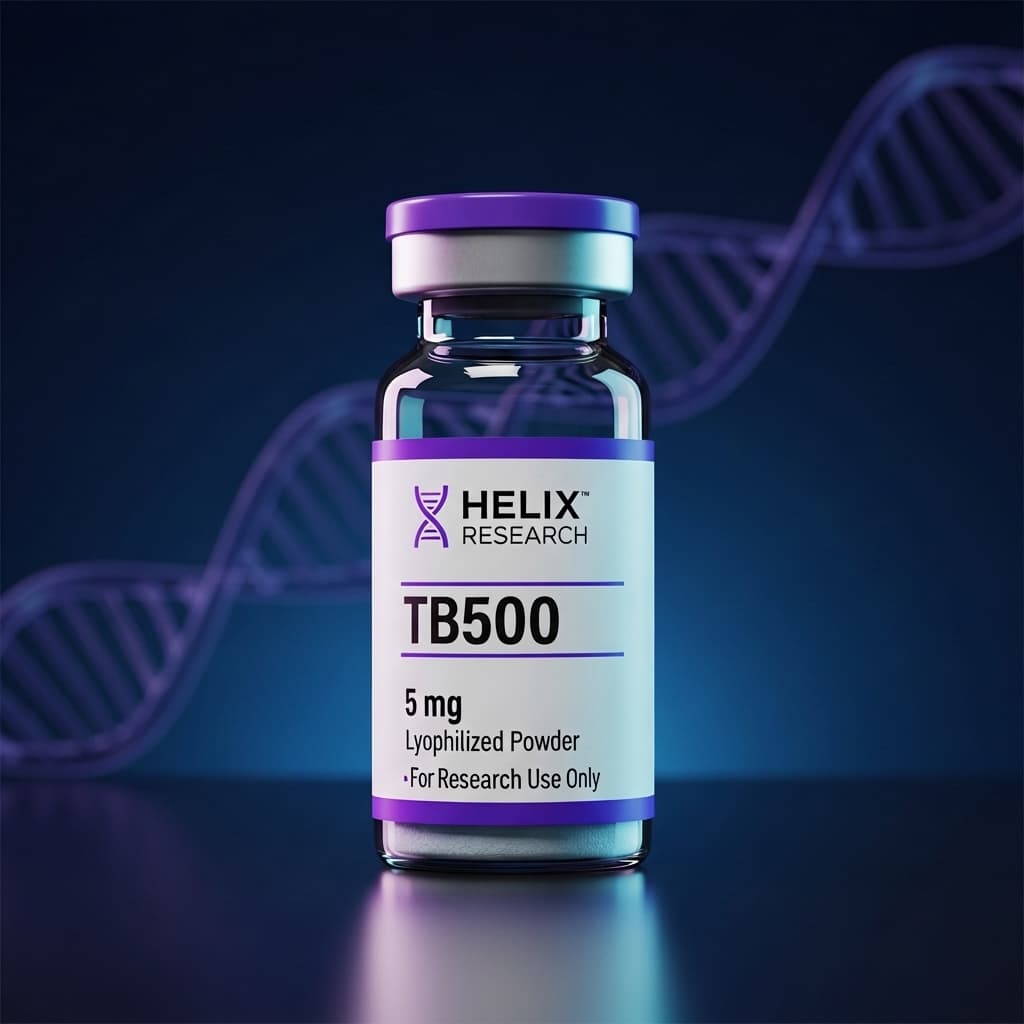
TB500
A synthetic fraction of the naturally occurring thymosin beta-4 protein. Extensively researched for wound healing, tissue repair, and anti-inflammatory properties.

BPC 5mg + TB 5mg
A combination blend of BPC 157 and TB500 in a single vial. Researched for potential synergistic effects in tissue repair and recovery protocols.

BPC 10mg + TB 10mg
A higher-dose combination blend of BPC 157 and TB500. Designed for research requiring larger quantities of both peptides in a convenient single-vial format.

GLOW (BPC 157 10mg + GHK-Cu 50mg + TB500 10mg)
A triple-peptide blend combining BPC 157, GHK-Cu, and TB500. Formulated for research into comprehensive tissue repair, collagen synthesis, and regenerative pathways.