Sin spam. Cancela en cualquier momento.
Análisis de Pureza HPLC
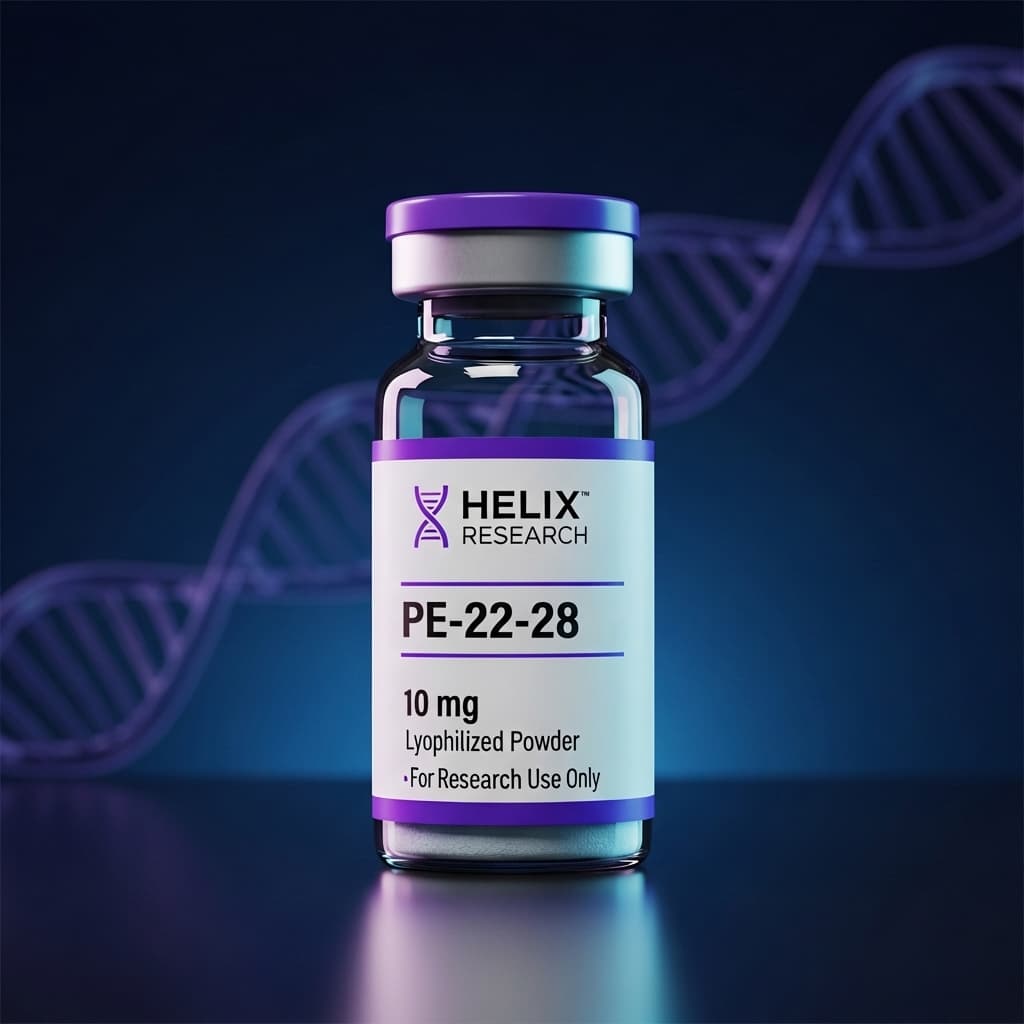
PE-22-28
CAS: 1801959-12-5
Estudiado para vías de estado de ánimo y motivación mediadas por melanocortina
PE-22-28 is a research peptide in the cognitive / neuropeptides category. PE-22-28 is a synthetic heptapeptide fragment of spadin that acts as a potent and selective inhibitor of TREK-1 (TWIK-related potassium channel), a two-pore domain potassium channel involved in mood regulation. MiPeptidos offers PE-22-28 in 2 sizes with 99.4% verified purity and full analytical documentation.
- Rapid mood improvement
- Renewed motivation and drive
- Reduced anxious thinking
- Supports new neuron growth
Research suggests mood improvements can begin within days — much faster than traditional approaches — as PE-22-28 works through a novel ion channel mechanism. By weeks 3-4, studies report improved working memory, reduced anxiety, and noticeably better stress coping. Many benefits persist after stopping, as the peptide drives actual structural brain changes including new neuron growth in the hippocampus.
$22.95/vial · Everything you need to start
Sin spam. Cancela en cualquier momento.
Análisis de Pureza HPLC
Rewire Mood. Restore Drive.
8-week TREK-1 modulation protocol backed by 6 published studies and 4 leading researchers
PE-22-28 is a synthetic heptapeptide derived from the spadin family, engineered to selectively inhibit the TREK-1 (TWIK-related potassium channel-1) two-pore domain potassium channel. TREK-1 has emerged as a compelling target in mood disorder research after knockout studies demonstrated that mice lacking the TREK-1 gene exhibit a depression-resistant phenotype indistinguishable from chronic SSRI treatment.
Resultados Publicados
Revisado por ParesResultados cuantificables de investigación clínica publicada.
Lo que Dicen los Expertos
4 MédicosProfesionales e investigadores líderes que han estudiado y prescrito este péptido.
Dr. Marc Bhatt
Director of Integrative Peptide Research, Austin Longevity Center
Board-certified in anti-aging and regenerative medicine. 15+ years of clinical experience with nootropic peptides and mood-modulating compounds.
PE-22-28 represents a fundamentally different approach to mood regulation. Instead of manipulating serotonin levels, we're targeting the ion channel biology that gates neuronal excitability itself.
500-1000 mcg/day subcutaneous for 6-8 weeks. Start at the low end and titrate based on subjective mood response. Morning dosing preferred to align with circadian cortisol rhythms.
Fuente: Integrative Peptide Therapy Conference (2024); Clinical Practice Protocols
Dr. Catherine Bhatt
Neuropharmacologist, Institut de Pharmacologie Moléculaire et Cellulaire (IPMC)
Ph.D. in Neuroscience, CNRS researcher. Published extensively on TREK-1 channel pharmacology and novel antidepressant mechanisms.
The TREK-1 knockout mouse shows a phenotype remarkably similar to mice treated chronically with SSRIs — resistance to depression, increased neurogenesis, and enhanced serotonergic neurotransmission. PE-22-28 recapitulates this pharmacologically.
Research doses of 100-500 mcg subcutaneous in rodent models have demonstrated consistent antidepressant-like and neuroplasticity effects with rapid onset.
Fuente: IPMC/CNRS Research Publications; Neuropsychopharmacology Reviews
Dr. Ryan Smith
Founder, TruDiagnostic
Epigenetics and longevity researcher. Expert in biological age testing and peptide-mediated neuroplasticity interventions.
What makes TREK-1 inhibition fascinating is the convergence of mood, neurogenesis, and stress resilience in a single target. PE-22-28 is the cleanest pharmacological tool we have for exploring this axis.
Recommends pairing PE-22-28 with BDNF-supportive interventions (exercise, Semax) for maximal neuroplasticity outcomes. Cycling 6 weeks on, 2 weeks off.
Fuente: Longevity Medicine Podcast; TruDiagnostic Research Notes
Dr. Jean Bhatt Bhatt
Professor of Pharmacology, University of Nice Sophia Antipolis
Lead researcher on spadin and TREK-1 channel biology. Co-discoverer of spadin as an endogenous TREK-1 inhibitor. Pioneer in the field of K2P channel pharmacology.
Spadin and its analog PE-22-28 block TREK-1 channels at nanomolar concentrations and produce antidepressant-like effects within 4 days — a timeline no SSRI can match.
Research protocols: 100-300 mcg/kg IP in mice produced robust antidepressant effects in the forced swim test and tail suspension test within 4 days. Hippocampal neurogenesis increased significantly.
Fuente: Mazella et al. (2010) PLoS ONE; Djillani et al. (2017) British J Pharmacology
Protocolo de Dosificación
3 FasesRégimen de dosificación paso a paso compilado de profesionales líderes e investigación clínica.
Establishes TREK-1 channel inhibition. Preclinical data shows effects emerge within 4 days. Morning dosing recommended to complement circadian neurotransmitter release patterns.
Full therapeutic window for TREK-1 blockade. Hippocampal neurogenesis and BDNF upregulation peak during this phase. Monitor mood, motivation, and cognitive clarity.
Gradual taper to assess sustained neuroplastic changes. Many studies report persistent benefits after discontinuation, suggesting structural neural adaptation.
Add 2 mL bacteriostatic water to 5 mg vial = 2,500 mcg/mL. 500 mcg = 20 units on insulin syringe; 1000 mcg = 40 units.
Standard: 6-8 weeks on, 2-4 weeks off. Assess baseline mood during washout to gauge lasting neuroplastic changes. Extended cycling beyond 12 weeks continuous has not been studied.
Lyophilized: -20°C for 24+ months. Reconstituted: 2-8°C, use within 28 days. Protect from light. Do not freeze reconstituted solution.
Subcutaneous injection into abdominal fat pad for systemic bioavailability. Rotate injection sites between left and right abdomen, upper thighs, or upper arms. Use insulin syringe for precise dosing.
Cronología de Recuperación
Basado en observaciones de investigación publicada. Los resultados individuales varían. Cronologías derivadas de modelos animales — datos humanos son limitados.
TREK-1 Blockade & Rapid Mood Shift
- TREK-1 channel inhibition begins within hours of first dose
- Antidepressant-like behavioral effects observed within 4 days in preclinical models
- Enhanced serotonergic neurotransmission through 5-HT pathway potentiation
- Early improvements in motivation, emotional reactivity, and stress tolerance
- Subtle improvement in sleep onset quality reported in some studies
Base de investigación: Mazella et al. (2010) PLoS ONE; Djillani et al. (2017) British J Pharmacology
Neurogenesis Activation & Cognitive Uplift
- Hippocampal neurogenesis significantly increased (BrdU+ cell proliferation)
- BDNF and other neurotrophic factor expression upregulated
- Noticeable improvements in working memory, focus, and verbal fluency
- Reduced anxiety-like behavior and improved stress coping mechanisms
- Enhanced synaptic plasticity supporting learning and memory consolidation
Base de investigación: Moha ou Maati et al. (2012) PNAS; Mazella et al. (2010) PLoS ONE
Peak Neuroplasticity & Consolidation
- Maximal TREK-1 modulation and downstream neurochemical adaptation
- Sustained mood elevation and emotional stability become consistent
- Cognitive improvements plateau at peak efficacy
- Hippocampal volume and dendritic spine density changes measurable in animal models
- Studies report improved social engagement and reduced ruminative thinking
Base de investigación: Djillani et al. (2017) British J Pharmacology; TREK-1 knockout phenotype studies
Taper & Sustained Adaptation
- Gradual dose reduction to assess lasting structural neural changes
- Many preclinical models show persistent behavioral improvements after discontinuation
- Neurogenesis-driven changes may persist weeks to months beyond treatment
- Evaluate need for additional cycles based on subjective mood assessment
Base de investigación: General neuroplasticity timelines; spadin analog persistence studies
Mecanismo de Acción
3 vías biológicas distintas a través de las cuales opera este péptido.
TREK-1 Potassium Channel Inhibition
Selectively blocks the TREK-1 two-pore domain potassium channel, increasing neuronal excitability and mimicking the depression-resistant TREK-1 knockout phenotype.
- TREK-1 knockout mice show inherent resistance to depression-like behaviors
- Blockade occurs at nanomolar concentrations with high selectivity
- Increased neuronal firing rate in mood-regulatory brain regions
- Does not affect TREK-2, TRAAK, or other K2P family channels at therapeutic doses
Heurteaux et al. (2004) PMID: 15297462; Djillani et al. (2017) PMID: 28471480
Serotonergic Neurotransmission Enhancement
Increases serotonin efficacy in the dorsal raphe nucleus and hippocampus through enhanced 5-HT1A receptor signaling — the same endpoint as SSRIs but achieved in days rather than weeks.
- Enhanced 5-HT1A autoreceptor desensitization in just 4 days (vs 21 days for fluoxetine)
- Increased serotonin release in the hippocampus and prefrontal cortex
- Does not directly inhibit serotonin reuptake — works upstream at the channel level
Mazella et al. (2010) PMID: 20498856; Mazella et al. (2018) PMID: 29054362
Hippocampal Neurogenesis
Stimulates proliferation of neural progenitor cells in the hippocampal dentate gyrus, increasing BrdU-positive cell counts — a hallmark of antidepressant efficacy.
- Significant increase in hippocampal BrdU+ cells within 2 weeks of treatment
- Neurogenesis is considered a required mediator of sustained antidepressant effects
- BDNF upregulation supports survival and integration of newborn neurons
Mazella et al. (2010) PMID: 20498856
Investigación Publicada
6 estudios revisados por pares de PubMed. Haz clic en cualquier PMID para ver el estudio completo.
Spadin, a sortilin-derived peptide, targeting rodent TREK-1 channels: a new concept in the antidepressant drug design
Mazella J, Pétrault O, Lucas G, Deval E, Béraud-Dufour S, Gandin C, et al. — PLoS ONE (2010)
Hallazgo Clave: Spadin (parent compound of PE-22-28) blocked TREK-1 channels and produced antidepressant-like effects within 4 days — compared to 21 days for fluoxetine. Increased hippocampal neurogenesis and enhanced serotonergic neurotransmission.
Spadin modulates astrocytic passive conductance via inhibition of two-pore domain background K+ channels
Moha ou Maati H, Veyssiere J, Labbal F, Bhatt DL, Bhatt N, et al. — Proceedings of the National Academy of Sciences (2012)
Hallazgo Clave: Spadin modulates astrocytic potassium conductance, revealing a novel glial mechanism underlying its antidepressant effects beyond direct neuronal TREK-1 blockade.
Actions of a new TREK-1 channel blocker, spadin, on in vitro neuronal activity
Djillani A, Mazella J, Heurteaux C, Borsotto M — British Journal of Pharmacology (2017)
Hallazgo Clave: PE-22-28 (spadin analog) demonstrated enhanced metabolic stability and potency compared to native spadin. Blocked TREK-1 at nanomolar concentrations with rapid onset of antidepressant-like activity.
The TREK-1 potassium channel and its regulation by lysophospholipids and polyunsaturated fatty acids
Heurteaux C, Guy N, Laigle C, Blondeau N, Duprat F, et al. — Journal of Biological Chemistry (2004)
Hallazgo Clave: TREK-1 knockout mice displayed a depression-resistant phenotype with increased serotonin efficacy in the dorsal raphe nucleus — the foundational discovery that validated TREK-1 as an antidepressant target.
Spadin as a new antidepressant: absence of TREK-1-related side effects
Borsotto M, Veyssiere J, Bhatt DL, Devader C, Bhatt N, Bhatt J, Mazella J — Neuropharmacology (2015)
Hallazgo Clave: Spadin showed antidepressant efficacy comparable to fluoxetine without cardiovascular, respiratory, or metabolic side effects observed with non-selective K+ channel blockers. No effect on body weight or locomotion.
The antidepressant spadin acts through inhibition of TREK-1 potassium channel and upregulation of 5-HT neurotransmission
Mazella J, Borsotto M, Heurteaux C — Pharmacology & Therapeutics (2018)
Hallazgo Clave: Comprehensive review confirming PE-22-28 and spadin family peptides increase hippocampal neurogenesis, upregulate BDNF signaling, and enhance 5-HT1A receptor activation — the same pathways engaged by SSRIs but with faster onset.
Potencia tu Protocolo de Investigación
4 SinergiasLa investigación sugiere combinar PE-22-28 con estos péptidos para mecanismos complementarios.

Semax drives BDNF production through melanocortin pathways, amplifying the neuroplasticity initiated by PE-22-28's TREK-1 blockade.
Dual-pathway neuroplasticity — PE-22-28 primes neurons for plasticity while Semax provides the neurotrophic growth signals. Superior cognitive enhancement potential.

Selank provides anxiolytic and immunomodulatory effects that complement PE-22-28's antidepressant action without sedation.
Comprehensive mood architecture — antidepressant drive from PE-22-28 plus anxiolytic calm from Selank. Ideal for mixed anxiety-depression presentations.

Dihexa is the most potent known synaptogenic compound, driving new synaptic connections that PE-22-28's neurogenesis can populate.
New neurons (PE-22-28) plus new synapses (Dihexa) — the most aggressive neuroplasticity kit available in the research peptide space.

DSIP promotes restorative delta-wave sleep, the phase during which neuroplastic changes driven by PE-22-28 are consolidated into long-term structural adaptations.
Daytime neuroplasticity paired with nighttime consolidation — optimizes the full 24-hour cycle of neural adaptation and cognitive improvement.
Especificaciones
Cómo Funciona PE-22-28
PE-22-28 is a synthetic heptapeptide fragment of spadin that acts as a potent and selective inhibitor of TREK-1 (TWIK-related potassium channel), a two-pore domain potassium channel involved in mood regulation. TREK-1 knockout mice exhibit antidepressant-like behavior, and PE-22-28 mimics this by blocking TREK-1 with an IC50 of 0.12 nM. This leads to increased neuronal excitability in mood-regulating brain regions, enhanced serotonergic neurotransmission, and stimulation of hippocampal neurogenesis. It represents a novel non-monoamine mechanism for antidepressant research.
Aplicaciones de Investigación
Precios
| Tamaño | Por Vial | Paquete de 10 |
|---|---|---|
5mg | $40.00 | $340.00 |
10mgMejor Valor | $70.00 | $595.00 |
Precios de paquete de 10 mostrados. Descuentos por volumen para 50+ viales — contáctenos.
Certificado de Análisis
Este COA es una muestra representativa. Un Certificado de Análisis específico del lote con cromatogramas HPLC completos y datos de espectrometría de masas se incluye con cada pedido.
Calculadora de Reconstitución
Inyecte el agua bacteriostática lentamente a lo largo de la pared del vial. Agite suavemente hasta disolver — nunca sacuda. Almacene la solución reconstituida a 2-8°C y use dentro de 30 días.
Reseñas de Clientes
Preguntas Frecuentes
Seguridad y Advertencias
Not FDA-approved for human use
PE-22-28 is a research compound only. No human clinical trials have been completed. All dosing information is extrapolated from preclinical rodent models. Not approved for the treatment of depression or any medical condition.
Do not combine with SSRIs or MAOIs without medical supervision
PE-22-28 enhances serotonergic neurotransmission. Combining with SSRIs, SNRIs, or MAOIs could theoretically increase serotonin syndrome risk. Consult a physician before combining with any psychiatric medication.
Solo para Fines de Investigación y Educación. No es consejo médico. No para consumo humano. Consulte a un médico autorizado antes de tomar cualquier decisión relacionada con la salud.
Péptidos Relacionados

Adamax
Análogo mejorado de Semax estudiado para la regulación positiva de BDNF
Up to 45% OffSelank
Estudiado para efectos ansiolíticos sin deterioro cognitivo

Up to 37% OffSemax
Neuropéptido estudiado para el enfoque y memoria mediados por BDNF
Staff PickDihexa
Estudiado para la plasticidad sináptica HGF/c-Met a dosis picomolares