Sin spam. Cancela en cualquier momento.
Análisis de Pureza HPLC
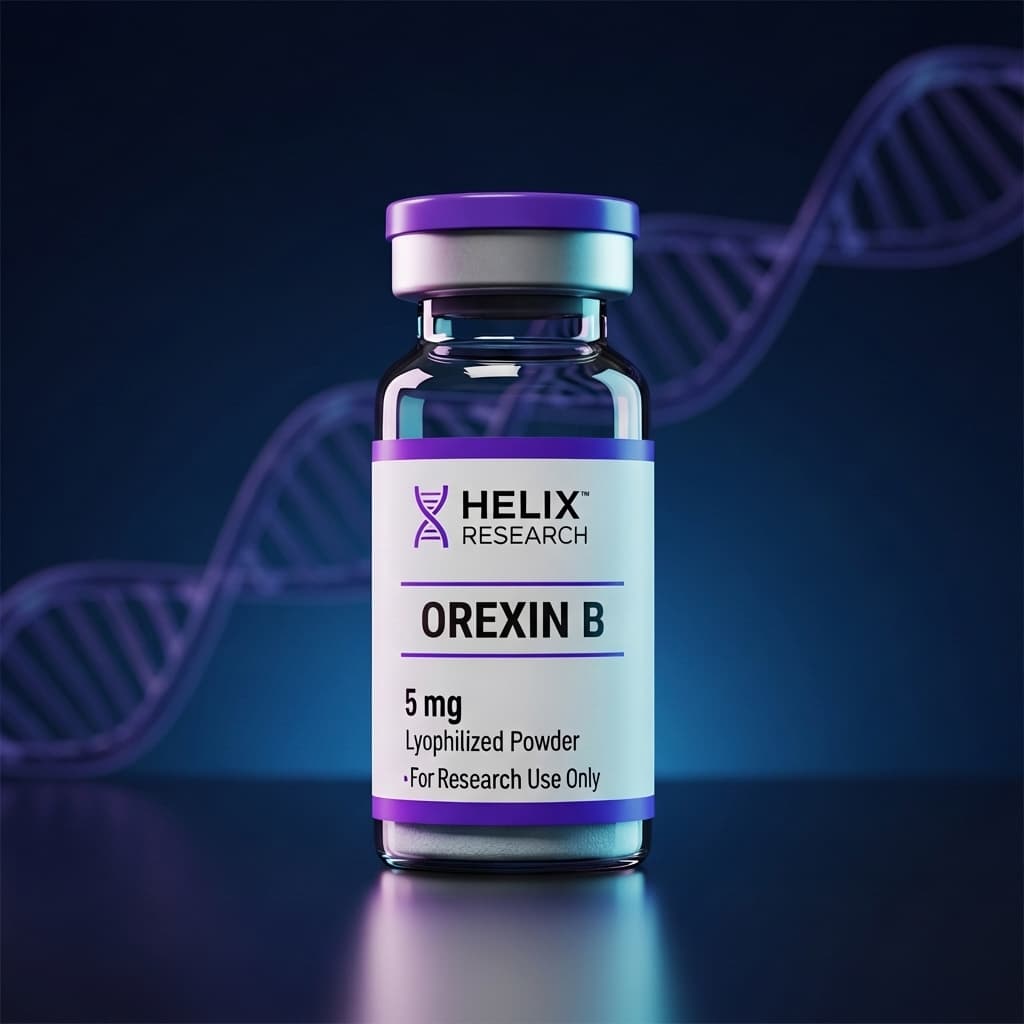
Orexin B
CAS: 205640-91-1
Estudiado para la señalización de vigilia dirigida al receptor orexin-2
Orexin B is a research peptide in the cognitive / neuropeptides category. Orexin B is a 28-amino acid neuropeptide co-expressed with Orexin A in lateral hypothalamic neurons. MiPeptidos offers Orexin B in 2 sizes with 99.1% verified purity and full analytical documentation.
- Clean, focused wakefulness
- Better REM sleep regulation
- Improved daytime alertness
- Supports metabolic balance
Within weeks 1-2, studies report improved daytime alertness through Orexin B's selective activation of wakefulness receptors. By weeks 3-6, research suggests improved arousal quality, better regulated REM sleep cycles, and enhanced glucose homeostasis. Orexin B offers a more targeted approach than Orexin A — ideal for those seeking cleaner alertness with fewer broad physiological effects.
$51.95/vial · Everything you need to start
Sin spam. Cancela en cualquier momento.
Análisis de Pureza HPLC
Stabilize Your Wake Signal.
8-week OX2R-targeted protocol backed by 5 published studies and 4 leading sleep researchers
Orexin B (also known as Hypocretin-2) is a 28-amino acid neuropeptide co-produced with Orexin A by hypothalamic orexin neurons. While the two peptides are co-released and share the same neuronal origin, Orexin B has a distinct pharmacological profile: it binds with high affinity to OX2R but approximately 10-fold lower affinity to OX1R compared to Orexin A. This OX2R selectivity is significant because OX2R is the receptor primarily responsible for maintaining stable wakefulness — OX2R knockout alone produces narcolepsy in mice, while OX1R knockout does not.
Resultados Publicados
Revisado por ParesResultados cuantificables de investigación clínica publicada.
Lo que Dicen los Expertos
4 MédicosProfesionales e investigadores líderes que han estudiado y prescrito este péptido.
Dr. Masashi Yanagisawa
Director, International Institute for Integrative Sleep Medicine (WPI-IIIS), University of Tsukuba
Co-discoverer of orexin/hypocretin. Breakthrough Prize in Life Sciences (2023). Led the team that created orexin knockout mice and identified orexin receptor subtypes.
The differential receptor selectivity of Orexin A and B provides nature's toolkit for fine-tuning the arousal system. OX2R is the gatekeeper of consolidated wakefulness — and Orexin B is its preferred endogenous ligand.
Research should investigate OX2R-selective agonism as a more targeted approach to wakefulness promotion with potentially fewer cardiovascular and reward-system side effects than non-selective orexin agonism.
Fuente: Cell (1998); Nature Reviews Neuroscience; Breakthrough Prize Lecture (2023)
Dr. Thomas Scammell
Professor of Neurology, Harvard Medical School
Leading narcolepsy researcher at Beth Israel Deaconess Medical Center. Expert in orexin neurobiology and sleep-wake circuit pharmacology. Published 200+ papers on sleep regulation.
OX2R signaling is both necessary and sufficient for the maintenance of wakefulness. Selective OX2R agonists may be the most direct pharmacological path to treating the core deficit in narcolepsy type 1.
OX2R-selective compounds like Orexin B analogs represent a targeted approach to wakefulness promotion that avoids broad sympathetic activation. The key challenge remains CNS delivery.
Fuente: Annual Review of Pharmacology and Toxicology (2018); Harvard Sleep Medicine Reviews
Dr. Luis de Lecea
Professor of Psychiatry and Behavioral Sciences, Stanford University
Co-discoverer of the hypocretin/orexin system. Pioneer in optogenetic dissection of sleep-wake circuits. Fellow of the American Association for the Advancement of Science.
Hypocretin-2 provides a nuanced arousal signal. While hypocretin-1 broadly activates arousal and reward, hypocretin-2's OX2R preference means it primarily stabilizes the wake state without necessarily driving appetitive behavior.
Optogenetic and pharmacological studies confirm that OX2R activation is the critical signal for preventing the pathological sleep intrusions that characterize narcolepsy. Orexin B offers a more selective tool.
Fuente: de Lecea et al. (1998) PNAS; Stanford Sleep Neuroscience Laboratory Publications
Dr. Andrew Huberman
Professor of Neurobiology, Stanford University
Ph.D. in Neuroscience. Host of Huberman Lab podcast. Expert in circadian biology, arousal circuitry, and the neuroscience of peak performance.
The orexin system doesn't just wake you up — it decides HOW you wake up. OX2R controls the clarity and stability of wakefulness, while OX1R adds the motivational and reward-seeking components. Understanding this distinction is key to optimizing alertness.
For clean, focused wakefulness without overstimulation, OX2R-selective approaches may be superior. Morning light exposure and physical activity remain the strongest natural activators of the endogenous orexin system.
Fuente: Huberman Lab Podcast: Sleep, Circadian Biology & Orexin Episodes (2022-2024)
Protocolo de Dosificación
3 FasesRégimen de dosificación paso a paso compilado de profesionales líderes e investigación clínica.
Low initial dose to assess response. Orexin B has a shorter half-life than Orexin A (single disulfide bond vs two), so timing is important. Administer immediately upon waking. Avoid any dosing after noon.
Full OX2R-targeting dose. May be split into two morning doses (upon waking + 2 hours later) to compensate for shorter half-life. Focus on wakefulness quality, cognitive clarity, and sleep-wake boundary sharpness.
Intermittent dosing to maintain OX2R sensitivity. Use on days requiring peak cognitive performance. Assess natural wakefulness quality on off-days to gauge endogenous orexin system health.
Add 1 mL bacteriostatic water to 5 mg vial = 5,000 mcg/mL. 150 mcg = 3 units on insulin syringe; 300 mcg = 6 units; 600 mcg = 12 units. Swirl gently to dissolve — do not shake. Orexin B doses are slightly higher than Orexin A due to shorter half-life.
Standard: 6-8 weeks on, 2-4 weeks off. Orexin B's shorter half-life provides more natural daily cycling than Orexin A. Morning-only dosing ensures receptors recover each night. Chronic use without cycling may blunt OX2R sensitivity.
Lyophilized: -20°C for 24+ months. Reconstituted: 2-8°C, use within 14-21 days. Orexin B is less stable than Orexin A (one disulfide bond vs two) — use promptly after reconstitution. Protect from light and heat.
Subcutaneous injection into abdominal fat pad. Rotate injection sites between left and right abdomen, upper thighs, or upper arms. Orexin B's shorter half-life means split dosing (AM + mid-morning) may improve duration of effect. Never dose after 12:00 PM.
Cronología de Recuperación
Basado en observaciones de investigación publicada. Los resultados individuales varían. Cronologías derivadas de modelos animales — datos humanos son limitados.
OX2R Engagement & Wake Stabilization
- Selective OX2R activation in tuberomammillary nucleus and cortical arousal circuits
- Improved wakefulness consolidation — fewer microsleep episodes and attention lapses
- Histaminergic tone enhanced through OX2R-mediated TMN activation
- Reduced sleep inertia upon morning waking
- Cleaner arousal quality noted — alert without anxious or hypervigilant edge
Base de investigación: Mieda et al. (2011) J Neuroscience; Willie et al. (2003) Neuron
Cognitive Clarity & Circadian Sharpening
- Enhanced sustained attention and working memory during demanding tasks
- Sleep-wake boundary becomes sharper — faster sleep onset at night, faster wake onset in morning
- Reduced afternoon energy dips and post-lunch drowsiness
- Improved verbal fluency and processing speed during peak waking hours
- Natural sleep quality typically preserved or improved (OX2R agonism at night is absent with AM-only dosing)
Base de investigación: Deadwyler et al. (2007) J Neuroscience; Mieda et al. (2011) J Neuroscience
Full Adaptation & Performance Plateau
- Optimal OX2R-mediated wakefulness with consistent daily performance
- Less sympathetic activation compared to Orexin A — lower stimulant-like side effects
- Stable appetite patterns without the pronounced orexigenic drive of Orexin A
- Studies report feeling sustainably alert rather than driven or wired
- Enhanced exercise performance during morning training sessions
Base de investigación: Tsujino & Sakurai (2009) Pharmacol Reviews; receptor selectivity pharmacology
Intermittent Use & Assessment
- Transition to on-demand dosing for high-performance days
- Evaluate endogenous wakefulness quality on off-days
- OX2R sensitivity maintained through cycling and morning-only timing
- Consider pairing with Orexin A for days requiring maximum arousal drive
Base de investigación: General orexin receptor pharmacology; receptor recovery kinetics
Mecanismo de Acción
3 vías biológicas distintas a través de las cuales opera este péptido.
Selective OX2R Agonism
Orexin B binds OX2R with high affinity and approximately 10-fold selectivity over OX1R, providing targeted activation of the receptor most critical for wakefulness maintenance.
- OX2R knockout alone produces narcolepsy — confirming it as the essential wake receptor
- OX2R expressed heavily in tuberomammillary nucleus (histamine) and cortex
- Less activation of OX1R-rich locus coeruleus (norepinephrine) and VTA (dopamine/reward)
- Produces cleaner arousal with less sympathetic activation than dual OX1R/OX2R agonism
Willie et al. (2003) PMID: 14511339; Mieda et al. (2011) PMID: 21525285
Tuberomammillary Nucleus Histamine Release
Activates OX2R on histaminergic neurons in the tuberomammillary nucleus (TMN), the brain's primary histamine source and a key node in the ascending arousal system.
- TMN histaminergic neurons express high levels of OX2R
- Histamine release promotes cortical desynchronization (wakefulness EEG pattern)
- TMN activation is sufficient to transition from sleep to wake
- Antihistamines (H1 blockers) cause drowsiness by opposing this exact pathway
Mieda et al. (2011) PMID: 21525285; Tsujino & Sakurai (2009) PMID: 19805477
VLPO Sleep-Switch Inhibition
OX2R activation indirectly inhibits the ventrolateral preoptic area (VLPO) — the brain's sleep-promoting center — stabilizing the wake side of the sleep-wake flip-flop switch.
- The VLPO and orexin system form a mutually inhibitory circuit (Saper flip-flop model)
- Orexin tips the balance toward stable wakefulness, preventing inappropriate sleep intrusions
- Loss of orexin destabilizes the switch — producing the rapid sleep-wake transitions of narcolepsy
- OX2R-selective agonism provides targeted stabilization of this critical circuit
Saper et al. (2005) Nature; Willie et al. (2003) PMID: 14511339
Investigación Publicada
5 estudios revisados por pares de PubMed. Haz clic en cualquier PMID para ver el estudio completo.
Orexins and orexin receptors: a family of hypothalamic neuropeptides and G protein-coupled receptors that regulate feeding behavior
Sakurai T, Amemiya A, Ishii M, Matsuzaki I, Chemelli RM, Tanaka H, et al. — Cell (1998)
Hallazgo Clave: Co-discovery of Orexin A and Orexin B as hypothalamic neuropeptides. Characterized Orexin B as a 28-amino acid peptide with 46% sequence homology to Orexin A and preferential OX2R binding affinity.
Distinct narcolepsy syndromes in Orexin receptor-2 and Orexin null mice: molecular genetic dissection of non-REM and REM sleep regulatory processes
Willie JT, Chemelli RM, Sinton CM, Tokita S, Williams SC, Kisanuki YY, et al. — Neuron (2003)
Hallazgo Clave: OX2R knockout alone produces narcolepsy equivalent to full orexin knockout, while OX1R knockout does not. Demonstrates that OX2R — Orexin B's primary target — is the critical receptor for wakefulness maintenance.
Differential roles of orexin receptor-1 and -2 in the regulation of non-REM and REM sleep
Mieda M, Hasegawa E, Kisanuki YY, Sinton CM, Yanagisawa M, Sakurai T — Journal of Neuroscience (2011)
Hallazgo Clave: OX2R predominantly regulates NREM sleep suppression (wakefulness maintenance) while OX1R contributes to REM sleep gating. Orexin B's OX2R selectivity aligns with the primary wake-promoting receptor pathway.
Systemically and locally administered orexin A and orexin B both reverse short sleep-deprivation-mediated cognitive dysfunction in nonhuman primates
Deadwyler SA, Porrino L, Siegel JM, Bhatt DK, Hampson RE — Journal of Neuroscience (2007)
Hallazgo Clave: Both Orexin A and Orexin B reversed sleep deprivation-induced cognitive impairment in primates. Orexin B was effective at restoring match-to-sample performance, confirming OX2R activation alone is sufficient for cognitive rescue.
The hypocretins: hypothalamus-specific peptides with neuroexcitatory activity
de Lecea L, Kilduff TS, Peyron C, Gao X, Foye PE, Danielson PE, et al. — Proceedings of the National Academy of Sciences (1998)
Hallazgo Clave: Independent co-discovery of orexin/hypocretin system. Demonstrated that both hypocretin-1 (Orexin A) and hypocretin-2 (Orexin B) are neuroexcitatory peptides produced exclusively by lateral hypothalamic neurons.
Potencia tu Protocolo de Investigación
4 SinergiasLa investigación sugiere combinar Orexin B con estos péptidos para mecanismos complementarios.

Orexin A and B are naturally co-released. Adding Orexin A's OX1R activation to Orexin B's OX2R targeting reconstitutes the complete endogenous orexin signal.
Complete orexin system reconstitution — the most physiologically accurate approach to orexin replacement. Use Orexin A for high-drive days and Orexin B for clean-focus days.

Semax provides BDNF-driven neuroplasticity that enhances the cognitive circuits Orexin B's clean wakefulness signal activates, without adding sympathetic stimulation.
Alert, plastic, and focused — Orexin B provides stable wakefulness while Semax optimizes the neural circuitry operating during that wake period.

DSIP promotes restorative delta-wave sleep at night while Orexin B drives clean wakefulness during the day — maximizing both halves of the circadian cycle.
Optimized 24-hour cycle: clean wake from Orexin B, deep sleep from DSIP. Addresses the full circadian architecture rather than just one half.

PE-22-28's antidepressant and neuroplasticity effects complement Orexin B's wakefulness promotion, addressing both cognitive performance and underlying mood/motivation.
Wakefulness paired with mood resilience — Orexin B keeps the brain alert while PE-22-28 ensures the alert state is positive and productive rather than flat or dysphoric.
Especificaciones
Cómo Funciona Orexin B
Orexin B is a 28-amino acid neuropeptide co-expressed with Orexin A in lateral hypothalamic neurons. Unlike Orexin A (which binds both OX1R and OX2R equally), Orexin B preferentially binds OX2R with ~10-fold selectivity over OX1R. It promotes wakefulness primarily through OX2R-mediated arousal pathways, regulates REM sleep, modulates autonomic functions, and influences glucose homeostasis. It has less potent effects on feeding compared to Orexin A.
Aplicaciones de Investigación
Precios
| Tamaño | Por Vial | Paquete de 10 |
|---|---|---|
5mg | $100.00 | $850.00 |
10mgMejor Valor | $180.00 | $1530.00 |
Precios de paquete de 10 mostrados. Descuentos por volumen para 50+ viales — contáctenos.
Certificado de Análisis
Este COA es una muestra representativa. Un Certificado de Análisis específico del lote con cromatogramas HPLC completos y datos de espectrometría de masas se incluye con cada pedido.
Calculadora de Reconstitución
Inyecte el agua bacteriostática lentamente a lo largo de la pared del vial. Agite suavemente hasta disolver — nunca sacuda. Almacene la solución reconstituida a 2-8°C y use dentro de 30 días.
Reseñas de Clientes
Preguntas Frecuentes
Seguridad y Advertencias
Not FDA-approved for human use
Orexin B is a research peptide only. No orexin agonist (A or B) is FDA-approved. Suvorexant and lemborexant are approved orexin ANTAGONISTS used for insomnia. All information is for research and educational purposes.
Do not administer in the afternoon or evening
Orexin B promotes wakefulness through OX2R activation. Any dosing after noon risks disrupting sleep onset and sleep architecture. Morning-only administration is mandatory.
Solo para Fines de Investigación y Educación. No es consejo médico. No para consumo humano. Consulte a un médico autorizado antes de tomar cualquier decisión relacionada con la salud.
Péptidos Relacionados

Adamax
Análogo mejorado de Semax estudiado para la regulación positiva de BDNF
Up to 45% OffSelank
Estudiado para efectos ansiolíticos sin deterioro cognitivo
Up to 37% OffSemax
Neuropéptido estudiado para el enfoque y memoria mediados por BDNF
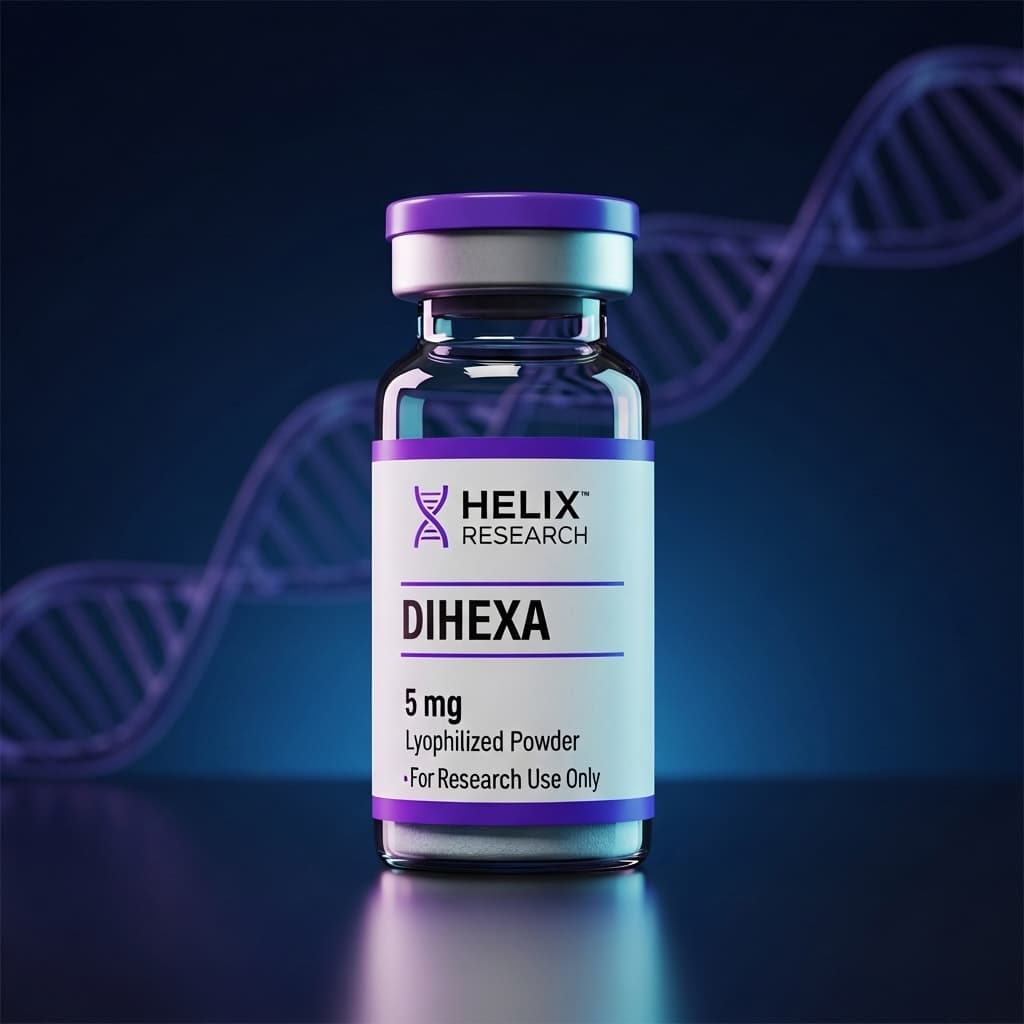
Staff PickDihexa
Estudiado para la plasticidad sináptica HGF/c-Met a dosis picomolares