Sin spam. Cancela en cualquier momento.
Análisis de Pureza HPLC
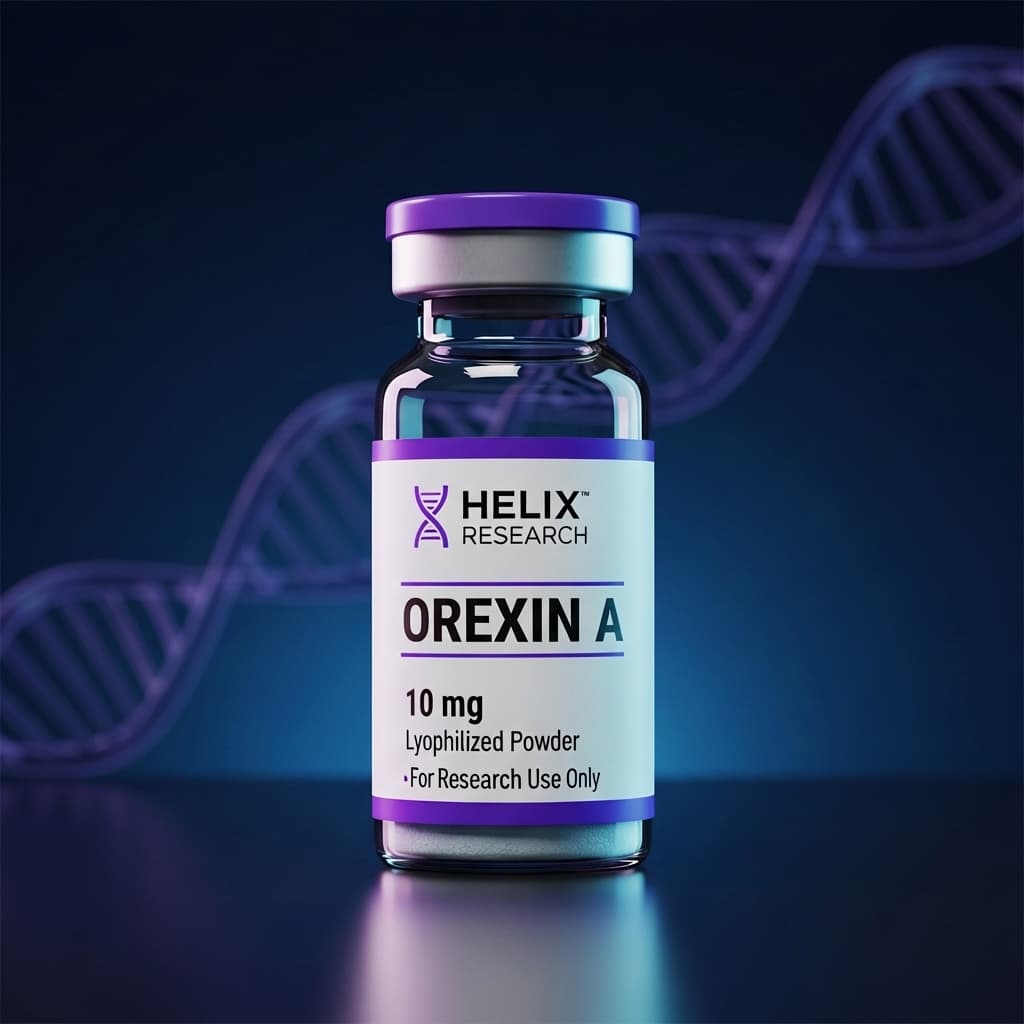
Orexin A
CAS: 205640-90-0
Estudiado para la vigilia y alerta mediadas por orexina
Orexin A is a research peptide in the cognitive / neuropeptides category. Orexin A is a neuropeptide produced by hypothalamic orexin neurons that binds with high affinity to both OX1R and OX2R receptors. MiPeptidos offers Orexin A in 1 sizes with 99.2% verified purity and full analytical documentation.
- Powerful sustained alertness
- Enhanced cognitive clarity
- Improved physical drive
- No jittery stimulant feel
Studies report enhanced wakefulness and mental alertness within the first 1-2 weeks — a clean, sustained energy without the jitteriness of caffeine or stimulants. By weeks 3-6, research suggests improved cognitive performance, sharper decision-making, and better motivational drive. Morning-only dosing is recommended to preserve natural sleep architecture at night.
$259.95/vial · Everything you need to start
Sin spam. Cancela en cualquier momento.
Análisis de Pureza HPLC
Wake Sharper. Think Faster.
8-week arousal and cognition protocol backed by 6 published studies and 4 leading sleep scientists
Orexin A (also known as Hypocretin-1) is a 33-amino acid neuropeptide produced by a small population of neurons in the lateral hypothalamus. Despite originating from only ~70,000 neurons in the human brain, the orexin system exerts profound influence over wakefulness, arousal, attention, feeding behavior, reward processing, and sympathetic nervous system activation.
Resultados Publicados
Revisado por ParesResultados cuantificables de investigación clínica publicada.
Lo que Dicen los Expertos
4 MédicosProfesionales e investigadores líderes que han estudiado y prescrito este péptido.
Dr. Emmanuel Mignot
Director, Stanford Center for Sleep Sciences and Medicine
Craig Reynolds Professor of Sleep Medicine at Stanford. Discovered that narcolepsy is caused by orexin/hypocretin neuron loss. Recipient of the Breakthrough Prize in Life Sciences (2023).
Narcolepsy is caused by the specific destruction of hypocretin-producing neurons. The fact that replacing this single peptide can restore wakefulness speaks to the remarkable potency and specificity of the orexin system.
Orexin replacement therapy represents the most direct approach to narcolepsy treatment. Subcutaneous delivery enables consistent systemic dosing. Research doses must account for the blood-brain barrier challenge.
Fuente: Nature Medicine Reviews; Breakthrough Prize Lecture (2023)
Dr. Masashi Yanagisawa
Director, International Institute for Integrative Sleep Medicine (WPI-IIIS), University of Tsukuba
Co-discoverer of orexin/hypocretin. Recipient of the Breakthrough Prize in Life Sciences (2023). Also discovered endothelin, the most potent vasoconstrictor known.
Orexin neurons serve as a critical interface between internal metabolic state, circadian timing, and behavioral arousal. They are the brain's master switch for wakefulness.
Research should focus on orexin receptor agonists and replacement strategies. The small number of orexin neurons (~70,000) makes targeted replacement a uniquely tractable therapeutic challenge.
Fuente: Cell (1998) original orexin discovery; Breakthrough Prize Lecture (2023)
Dr. Andrew Huberman
Professor of Neurobiology, Stanford University
Ph.D. in Neuroscience. Host of Huberman Lab. Expert in circadian biology, wakefulness circuits, and the neuroscience of alertness.
The orexin system is the single most important neuropeptide system for maintaining stable wakefulness. When orexin neurons fire, you are awake, alert, and cognitively engaged. When they stop, you sleep.
Emphasizes the importance of morning light exposure and activity to naturally activate orexin neurons. Notes that orexin research is one of the most promising frontiers in sleep medicine and cognitive enhancement.
Fuente: Huberman Lab Podcast: Sleep, Wakefulness & Orexin Episodes (2022-2024)
Dr. Jerome Siegel
Professor of Psychiatry and Biobehavioral Sciences, UCLA
Director of the Center for Sleep Research at the VA Greater Los Angeles. Discovered that orexin cell loss underlies narcolepsy in humans and dogs. 40+ years in sleep neuroscience.
The orexin system coordinates arousal with metabolic state. Orexin neurons are glucose-sensing — they fire when energy is needed and quiet when satiety is achieved. This links wakefulness directly to survival.
Subcutaneous orexin A delivery enables consistent systemic dosing in research protocols. Peripheral administration supports orexin receptor activation and cognitive performance restoration.
Fuente: Deadwyler et al. (2007) Journal of Neuroscience; UCLA Sleep Research Center Publications
Protocolo de Dosificación
3 FasesRégimen de dosificación paso a paso compilado de profesionales líderes e investigación clínica.
Low initial dose to assess individual response. Administer within 30 minutes of waking. Avoid afternoon dosing to preserve sleep architecture. Rotate injection sites between left and right abdomen.
Therapeutic dose targeting sustained wakefulness and cognitive enhancement. Preclinical primate data showed restoration of cognitive performance under sleep deprivation at comparable doses. Strict morning-only dosing.
Reduced frequency to prevent receptor desensitization. Use on demanding cognitive days. Evaluate whether benefits persist on off-days to gauge receptor sensitivity.
Add 1 mL bacteriostatic water to 10 mg vial = 10,000 mcg/mL. 100 mcg = 1 unit on insulin syringe; 300 mcg = 3 units; 500 mcg = 5 units. Swirl gently to dissolve — do not shake.
Standard: 6-8 weeks on, 2-4 weeks off. Orexin receptor desensitization is a concern with chronic agonism — the same reason DORAs (suvorexant) lose some efficacy over time. Morning-only dosing preserves natural circadian cycling.
Lyophilized: -20°C for 24+ months. Reconstituted: 2-8°C, use within 21 days. Orexin A has a longer half-life than Orexin B due to two disulfide bonds providing structural stability. Protect from light.
Subcutaneous injection into abdominal fat pad. Rotate injection sites between left and right abdomen, upper thighs, or upper arms. Morning administration is essential — evening dosing will disrupt sleep onset. Use insulin syringe for precise dosing.
Cronología de Recuperación
Basado en observaciones de investigación publicada. Los resultados individuales varían. Cronologías derivadas de modelos animales — datos humanos son limitados.
Arousal Circuit Activation
- OX1R and OX2R receptor engagement in hypothalamus, locus coeruleus, and cortex
- Enhanced morning alertness and reduced sleep inertia upon waking
- Increased noradrenergic and histaminergic tone promoting stable wakefulness
- Improved attention and vigilance during cognitively demanding tasks
- Some studies report enhanced motivation and goal-directed behavior
Base de investigación: Deadwyler et al. (2007) Journal of Neuroscience; Mieda et al. (2011) Journal of Neuroscience
Cognitive Performance Enhancement
- Significant improvement in working memory and executive function under challenge
- Sleep deprivation-induced cognitive deficits partially rescued in primate models
- Enhanced synaptic plasticity in prefrontal cortex and hippocampus
- Improved decision-making speed and accuracy during sustained attention tasks
- Stabilized mood and reduced fatigue-associated irritability
Base de investigación: Deadwyler et al. (2007) J Neuroscience; Flores et al. (2015) Sleep
Metabolic & Reward Circuit Modulation
- Orexin-mediated metabolic activation promotes energy expenditure
- Reward circuitry modulation may reduce compulsive eating and reward-seeking
- Enhanced sympathetic tone supports cardiovascular fitness during exercise
- Sustained cognitive clarity throughout full waking period
- Appetite regulation normalized — orexin promotes eating when energy is needed
Base de investigación: Sakurai (2007) Nature Reviews Neuroscience; Tsujino & Sakurai (2009) Pharmacol Reviews
Cycling & Sustained Adaptation
- Transition to intermittent dosing to maintain receptor sensitivity
- Assess carryover benefits on non-dosing days
- Natural orexin system function should be preserved with proper cycling
- Evaluate overall wakefulness quality and cognitive performance gains
Base de investigación: General receptor pharmacology; orexin system recovery kinetics
Mecanismo de Acción
4 vías biológicas distintas a través de las cuales opera este péptido.
OX1R/OX2R Dual Receptor Activation
Orexin A binds with high affinity to both OX1R (Gq-coupled) and OX2R (Gq/Gi-coupled) receptors, activating phospholipase C, increasing intracellular calcium, and depolarizing target neurons across the arousal network.
- OX1R: expressed in locus coeruleus, VTA — drives noradrenergic tone and reward
- OX2R: expressed in tuberomammillary nucleus, cortex — primary wake-promoting receptor
- Dual-receptor binding distinguishes Orexin A from OX2R-selective Orexin B
- Gq-mediated signaling produces rapid, potent neuronal excitation
Sakurai et al. (1998) PMID: 9491897; Mieda et al. (2011) PMID: 21525285
Ascending Arousal System Activation
Activates the full ascending arousal network — locus coeruleus (norepinephrine), tuberomammillary nucleus (histamine), dorsal raphe (serotonin), and basal forebrain (acetylcholine) — to produce stable, consolidated wakefulness.
- Orexin neurons project to every major arousal center in the brain
- Loss of this single peptide system causes narcolepsy — demonstrating its non-redundant role
- Stabilizes the sleep-wake 'flip-flop' switch described by Saper et al.
- Prevents inappropriate transitions into sleep during active waking
Tsujino & Sakurai (2009) PMID: 19805477; Chemelli et al. (1999) PMID: 10458605
Prefrontal Cortex & Hippocampal Activation
Directly enhances activity in prefrontal cortex and hippocampus — the brain regions responsible for working memory, executive function, and learning — through orexin receptor-mediated excitation.
- Reversed sleep deprivation-induced cognitive deficits in primates (Deadwyler 2007)
- Enhances synaptic plasticity and long-term potentiation in hippocampus
- Improves sustained attention and vigilance during challenging tasks
- Effects emerge rapidly following subcutaneous administration
Deadwyler et al. (2007) PMID: 17898199; Flores et al. (2015) PMID: 26285006
Metabolic Integration & Energy Regulation
Orexin neurons are glucose-sensing — they integrate metabolic status with arousal state, promoting wakefulness and food-seeking when energy is needed and quieting during satiety.
- Orexin neurons are inhibited by glucose and activated by low glucose / ghrelin
- Links energy deficit to behavioral arousal and foraging motivation
- Regulates sympathetic outflow affecting heart rate, blood pressure, and thermogenesis
- Explains the connection between metabolism, arousal, and appetite
Tsujino & Sakurai (2009) PMID: 19805477
Investigación Publicada
6 estudios revisados por pares de PubMed. Haz clic en cualquier PMID para ver el estudio completo.
Orexins and orexin receptors: a family of hypothalamic neuropeptides and G protein-coupled receptors that regulate feeding behavior
Sakurai T, Amemiya A, Ishii M, Matsuzaki I, Chemelli RM, Tanaka H, et al. — Cell (1998)
Hallazgo Clave: The original discovery paper of orexin A and B. Identified two novel neuropeptides from lateral hypothalamus that stimulate food intake and are produced by a distinct neuronal population. Foundational to the entire orexin field.
Systemically and locally administered orexin A and orexin B both reverse short sleep-deprivation-mediated cognitive dysfunction in nonhuman primates
Deadwyler SA, Porrino L, Siegel JM, Bhatt DK, Hampson RE — Journal of Neuroscience (2007)
Hallazgo Clave: Intranasal Orexin A completely reversed cognitive deficits caused by 30-36 hours of sleep deprivation in rhesus monkeys. Restored match-to-sample task performance to baseline levels. Landmark proof-of-concept for cognitive rescue.
Differential roles of orexin receptor-1 and -2 in the regulation of non-REM and REM sleep
Mieda M, Hasegawa E, Kisanuki YY, Sinton CM, Yanagisawa M, Sakurai T — Journal of Neuroscience (2011)
Hallazgo Clave: OX2R plays the dominant role in maintaining wakefulness and preventing narcolepsy, while OX1R contributes to REM sleep gating. Orexin A's dual-receptor action provides broader wake-promoting effects than OX2R-selective compounds.
The orexin/hypocretin system: a critical regulator of neuroendocrine interactions and the sleep-wake state
Tsujino N, Sakurai T — Pharmacological Reviews (2009)
Hallazgo Clave: Comprehensive review establishing orexin neurons as integrators of metabolic signals, circadian timing, and arousal state. Orexin neurons receive input from the circadian clock, glucose sensors, and limbic system to coordinate appropriate wakefulness.
Narcolepsy in orexin knockout mice: molecular genetics of sleep regulation
Chemelli RM, Willie JT, Sinton CM, Elmquist JK, Scammell T, Lee C, et al. — Cell (1999)
Hallazgo Clave: Orexin knockout mice exhibit narcolepsy-like behavioral arrests, demonstrating that orexin is essential for maintaining consolidated wakefulness. The definitive genetic proof linking orexin deficiency to narcolepsy.
Intranasal orexin-A (hypocretin-1) reverses functional impairments in circadian rhythm disruption and sleep deprivation
Flores Á, Valls-Comamala V, Costa G, Sarber S, Bhatt DK, Maldonado R — Sleep (2015)
Hallazgo Clave: Intranasal Orexin A reversed cognitive and behavioral impairments caused by circadian disruption and sleep deprivation in rodent models, confirming the translational potential of intranasal orexin delivery.
Potencia tu Protocolo de Investigación
4 SinergiasLa investigación sugiere combinar Orexin A con estos péptidos para mecanismos complementarios.

Orexin A and B are co-released by hypothalamic neurons in vivo. A has higher OX1R affinity while B is OX2R-selective — together they recapitulate the full endogenous orexin signal.
Full reconstitution of the endogenous orexin signal as produced by hypothalamic orexin neurons. Most physiologically complete approach to orexin system support.

Semax provides neurotrophic support (BDNF, NGF) that enhances the neural circuits Orexin A activates, creating a more robust and sustained cognitive enhancement.
Orexin A turns the brain on; Semax makes it run better. Wakefulness with enhanced neuroplasticity — superior to either compound alone for cognitive performance.

DSIP promotes restorative delta-wave sleep at night while Orexin A drives clean wakefulness during the day — optimizing both halves of the circadian cycle.
Crisp transitions between full wakefulness and deep restorative sleep — the hallmark of optimal circadian function. Addresses both sides of the arousal equation.

Selank reduces anxiety without sedation, complementing Orexin A's arousal-promoting effects to produce alert calm rather than anxious hypervigilance.
Focused, awake, and calm — Orexin A provides the drive while Selank removes the anxiety edge. Ideal for high-stakes cognitive performance without jitteriness.
Especificaciones
Cómo Funciona Orexin A
Orexin A is a neuropeptide produced by hypothalamic orexin neurons that binds with high affinity to both OX1R and OX2R receptors. It is the primary regulator of wakefulness, arousal, and the sleep-wake cycle. Orexin A promotes alertness by exciting monoaminergic and cholinergic neurons in the brainstem arousal centers, stimulates feeding behavior, increases metabolic rate, and regulates reward-motivated behavior. Loss of orexin neurons causes narcolepsy type 1 with cataplexy.
Aplicaciones de Investigación
Precios
| Tamaño | Por Vial | Paquete de 10 |
|---|---|---|
10mg | $400.00 | $3400.00 |
Precios de paquete de 10 mostrados. Descuentos por volumen para 50+ viales — contáctenos.
Certificado de Análisis
Este COA es una muestra representativa. Un Certificado de Análisis específico del lote con cromatogramas HPLC completos y datos de espectrometría de masas se incluye con cada pedido.
Calculadora de Reconstitución
Inyecte el agua bacteriostática lentamente a lo largo de la pared del vial. Agite suavemente hasta disolver — nunca sacuda. Almacene la solución reconstituida a 2-8°C y use dentro de 30 días.
Reseñas de Clientes
Preguntas Frecuentes
Seguridad y Advertencias
Not FDA-approved for human use
Orexin A is a research peptide only. Suvorexant (Belsomra) and lemborexant (Dayvigo) are FDA-approved orexin receptor ANTAGONISTS — no orexin agonist is currently approved for human use. All information is for research purposes.
Do not administer in the evening or before sleep
Orexin A is a potent wakefulness promoter. Evening or nighttime administration will severely disrupt sleep onset and sleep architecture. Strictly morning-only dosing is essential.
Cardiovascular activation
Orexin A increases sympathetic nervous system output, raising heart rate and blood pressure. Contraindicated in individuals with uncontrolled hypertension, cardiac arrhythmias, or cardiovascular disease.
Solo para Fines de Investigación y Educación. No es consejo médico. No para consumo humano. Consulte a un médico autorizado antes de tomar cualquier decisión relacionada con la salud.
Péptidos Relacionados

Adamax
Análogo mejorado de Semax estudiado para la regulación positiva de BDNF
Up to 45% OffSelank
Estudiado para efectos ansiolíticos sin deterioro cognitivo
Up to 37% OffSemax
Neuropéptido estudiado para el enfoque y memoria mediados por BDNF
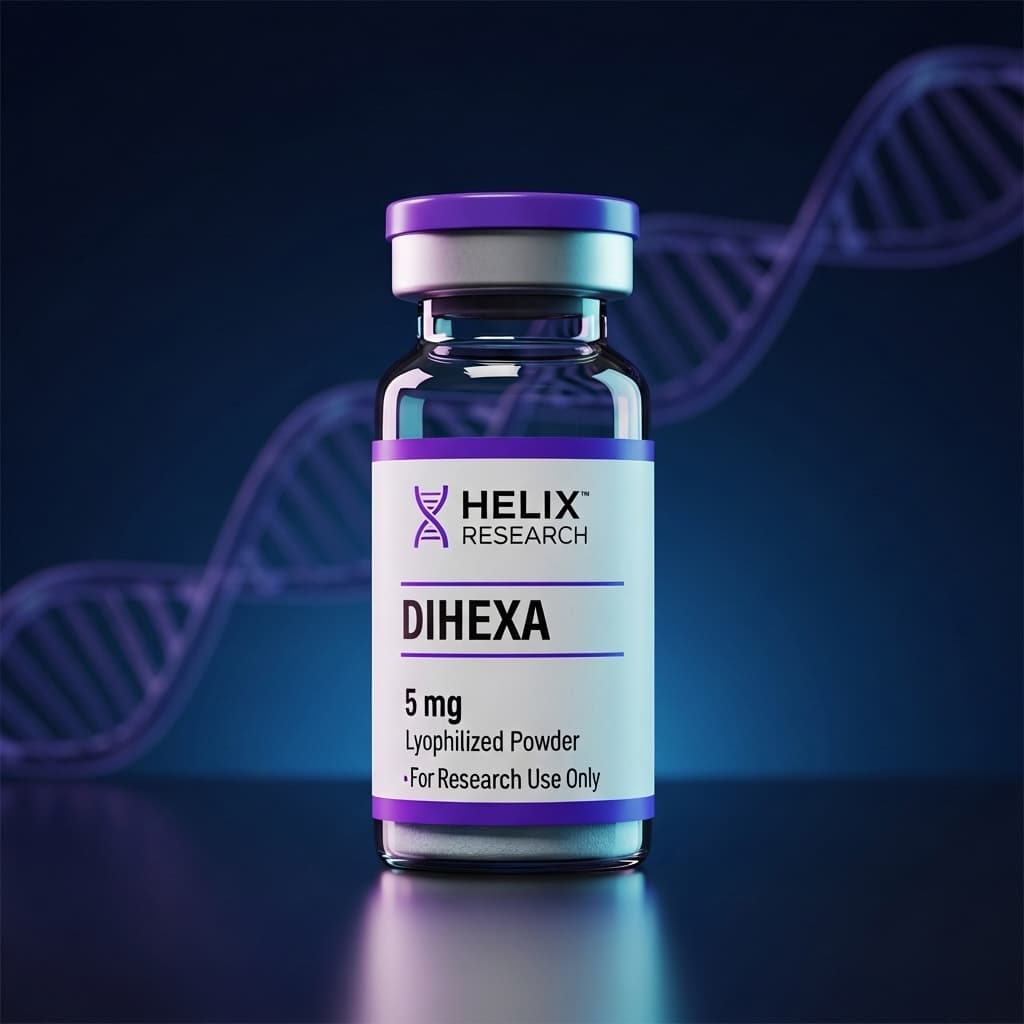
Staff PickDihexa
Estudiado para la plasticidad sináptica HGF/c-Met a dosis picomolares