Sin spam. Cancela en cualquier momento.
Análisis de Pureza HPLC
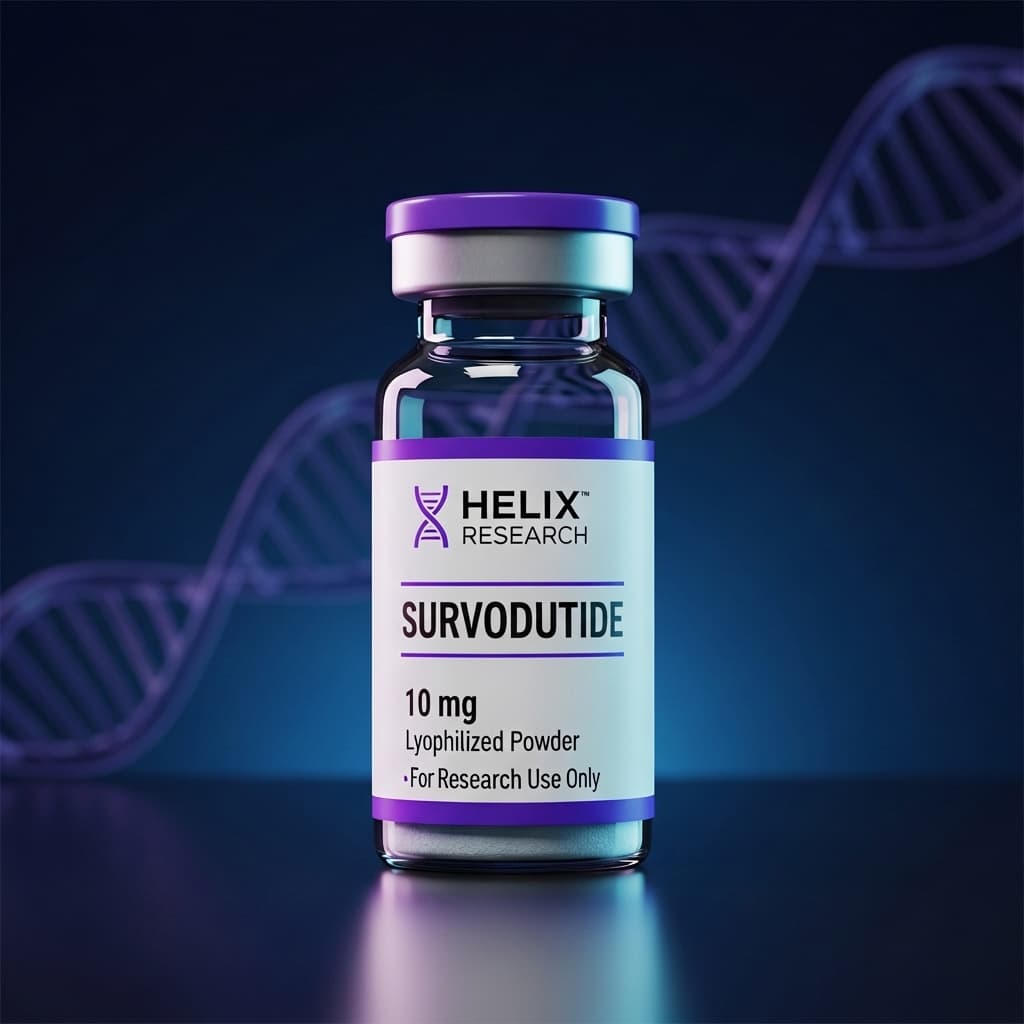
Survodutide
CAS: 2805997-46-8
Estudiado para la reducción de grasa hepática y control de peso
Survodutide is a research peptide in the glp-1 / weight management category. Survodutide is a dual glucagon/GLP-1 receptor agonist that combines GLP-1-mediated appetite suppression and insulin secretion with glucagon receptor-mediated increases in energy expenditure and hepatic fat oxidation. MiPeptidos offers Survodutide in 1 sizes with 99.1% verified purity and full analytical documentation.
- Targets liver fat directly
- Boosts calorie burning
- Reduces appetite
- Supports liver health
Research suggests appetite reduction begins within the first 1-2 weeks as the GLP-1 component takes effect. What makes survodutide unique is its glucagon component, which studies report as a subtle increase in warmth and energy expenditure by weeks 3-4. Phase 2 trials showed 18.7% weight loss at 46 weeks, with especially impressive liver fat reductions. Users with fatty liver concerns may notice improvements in energy levels and metabolic markers by weeks 8-12 as hepatic fat is actively cleared.
$75.89/vial · Everything you need to start
Sin spam. Cancela en cualquier momento.
Análisis de Pureza HPLC
Burn More. Store Less.
20-week GLP-1/glucagon dual-agonist protocol targeting both appetite AND energy expenditure
Survodutide (BI 456906) is a dual GLP-1/glucagon receptor agonist developed by Boehringer Ingelheim and Zealand Pharma. Unlike tirzepatide which pairs GIP with GLP-1, survodutide pairs glucagon with GLP-1 — directly increasing energy expenditure alongside appetite suppression. In Phase 2, survodutide 4.8mg produced 18.7% weight loss at 46 weeks.
Resultados Publicados
Revisado por ParesResultados cuantificables de investigación clínica publicada.
Lo que Dicen los Expertos
4 MédicosProfesionales e investigadores líderes que han estudiado y prescrito este péptido.
Dr. Philip Newsome
Professor of Hepatology, University of Birmingham; Director, Centre for Liver & Gastrointestinal Research
Leading MASH/NASH researcher. Principal investigator of survodutide liver studies and the semaglutide NASH trial. Past Secretary General of EASL.
Survodutide's glucagon component directly addresses hepatic fat accumulation. The Phase 2 MASH data showing fibrosis improvement is something we've rarely seen with other agents.
Monitor liver enzymes closely. The glucagon-driven hepatic fat clearance creates a transient metabolic stress that is ultimately beneficial but requires monitoring in patients with advanced liver disease.
Fuente: Survodutide MASH Phase 2 (Lancet, 2024); EASL presentations
Dr. Ania Jastreboff
Director, Yale Obesity Research Center
Lead investigator in multiple incretin and poly-agonist obesity trials. MD, PhD. Expert in comparing different agonist mechanisms.
Survodutide hits the two pathways I find most interesting: GLP-1 for appetite and glucagon for energy expenditure. It's a different bet than tirzepatide — glucagon instead of GIP.
The 4.8mg dose produces ~19% weight loss. Dose escalation should follow the 4-week intervals used in Phase 2. GI effects are the dose-limiting factor.
Fuente: Yale Obesity Research Center commentary; Phase 2 obesity data analysis
Dr. Arun Sanyal
Professor of Medicine, Virginia Commonwealth University; Director, Stravitz-Sanyal Institute for Liver Disease and Metabolic Health
World's most-cited MASH/NASH researcher. Architect of the MASH clinical trial framework. Principal investigator of survodutide Phase 2 MASH trial.
The fibrosis improvement we saw with survodutide in MASH is clinically significant. Glucagon receptor agonism appears to provide hepatic benefits beyond what GLP-1 alone achieves.
For MASH-focused protocols, hepatic endpoints (MRI-PDFF, FibroScan, liver enzymes) should be monitored every 12 weeks. The liver fat reduction is rapid and substantial.
Fuente: Survodutide MASH Phase 2; VCU liver research; Hepatology publications
Dr. Matthias Tschöp
CEO, Helmholtz Munich; Professor of Metabolic Diseases, Technical University of Munich
Pioneer of poly-agonist metabolic pharmacology. Conceptualized GLP-1/glucagon co-agonism as an obesity treatment strategy.
Survodutide vindicates the glucagon co-agonism hypothesis. For decades, glucagon was seen as the enemy of diabetes treatment. Now we understand that balanced glucagon activation drives fat burning.
The GLP-1/glucagon ratio is crucial — enough glucagon for thermogenesis and liver fat clearance without excess hepatic glucose output. Survodutide's ratio appears well-calibrated.
Fuente: Nature Reviews Drug Discovery poly-agonist reviews; Helmholtz Munich research
Protocolo de Dosificación
3 FasesRégimen de dosificación paso a paso compilado de profesionales líderes e investigación clínica.
Low starting dose for dual-receptor adaptation. Glucagon component may cause transient hepatic effects. GI tolerability typically manageable at this dose.
Escalate by approximately one dose level every 4 weeks as tolerated. The 2.4mg to 3.6mg transition is where most GI events occur. Hold at current dose for an additional 4 weeks if GI symptoms are significant.
Maximum Phase 2 dose. 18.7% weight loss at 46 weeks. For MASH-focused protocols, even lower doses (2.4mg) showed significant liver fat reduction. Continue with metabolic monitoring.
Research-grade lyophilized survodutide: reconstitute 10mg vial with 1mL bacteriostatic water = 10mg/mL. For 0.3mg = 0.03mL (3 units). For 4.8mg = 0.48mL (48 units). Use insulin syringes for precise measurement.
Survodutide is designed for continuous long-term use. No cycling data exists. Weight regain and liver fat reaccumulation expected upon discontinuation. Phase 3 trials will provide long-term data.
Lyophilized: store at -20°C. Reconstituted: refrigerate at 2-8°C, use within 30 days. Protect from light and temperature extremes. Peptide stability in solution is time-limited.
Subcutaneous injection once weekly on the same day. Rotate injection sites. In Phase 2, timing of injection relative to meals did not affect efficacy or tolerability.
Cronología de Recuperación
Basado en observaciones de investigación publicada. Los resultados individuales varían. Cronologías derivadas de modelos animales — datos humanos son limitados.
Dual-Receptor Activation & Baseline Adaptation
- GLP-1 and glucagon receptor pathways begin activating
- Early appetite suppression from GLP-1R engagement
- Glucagon-mediated hepatic lipid oxidation begins — early liver fat changes
- GI adaptation period — nausea in ~20% at starting doses
- Typical weight loss: 1-3% of body weight
Base de investigación: Survodutide Phase 2 obesity trial (Lancet, 2024); Phase 1 PK/PD data
Dose Escalation & Growing Dual-Pathway Effects
- Progressive escalation to 2.4mg enhances both appetite suppression and thermogenesis
- Glucagon-driven increase in resting energy expenditure becoming measurable
- Liver fat content reducing significantly — MRI-PDFF changes visible by week 12
- GI tolerance developing — side effects stabilizing at current doses
- Typical weight loss: 8-12% of body weight
Base de investigación: Survodutide Phase 2 dose-escalation data; MASH substudy imaging
Peak Dose & Accelerating Metabolic Improvement
- Reaching 3.6-4.8mg target dose — full dual-agonist effects
- MASH studies: 83% of patients at 4.8mg lost ≥5% liver fat
- Weight loss trajectory continues — no plateau at 24 weeks in Phase 2
- Cardiovascular risk markers (lipids, blood pressure, CRP) improving significantly
- Typical weight loss: 14-18% of body weight
Base de investigación: Survodutide Phase 2 obesity (46-week data); MASH Phase 2 results
Sustained Loss & Long-Term Hepatic Benefits
- 18.7% mean weight loss at 46 weeks with 4.8mg in Phase 2
- MASH: fibrosis improvement in up to 36% of patients — a key clinical milestone
- MASH: MASH resolution without fibrosis worsening in up to 83%
- Phase 3 SYNCHRONIZE and ACHIEVE trials will provide 52-72 week data
- Ongoing therapy recommended — Phase 3 data will guide long-term protocols
Base de investigación: Survodutide Phase 2 obesity and MASH trials (Lancet, 2024)
Mecanismo de Acción
3 vías biológicas distintas a través de las cuales opera este péptido.
GLP-1/Glucagon Dual Receptor Agonism
Simultaneously activates GLP-1 receptors for appetite suppression and glucagon receptors for energy expenditure — attacking obesity from both the intake and expenditure sides.
- GLP-1R activation provides central appetite suppression through hypothalamic pathways
- Glucagon-R activation increases hepatic lipid oxidation and systemic thermogenesis
- The ratio of GLP-1:glucagon activity is calibrated to maintain glycemic control
- Different from tirzepatide (GIP/GLP-1) — survodutide uniquely increases energy expenditure
Nahra et al. (2022) Nature Medicine (PMID: 36216947)
Glucagon-Driven Hepatic Fat Clearance
Glucagon receptor activation directly drives hepatic fatty acid oxidation, making survodutide exceptionally effective at reducing liver fat — critical for MASH/NASH treatment.
- Glucagon activates CPT1a for mitochondrial fatty acid oxidation in hepatocytes
- 83% of patients achieved MASH resolution at highest dose in Phase 2
- Fibrosis improvement in 36% — a milestone rarely achieved by pharmacological agents
- Liver fat reduction occurs rapidly and precedes full body weight loss
Sanyal et al. (2024) Lancet MASH Phase 2 (PMID: 38492567)
Thermogenic Energy Expenditure
Glucagon receptor activation increases resting metabolic rate through thermogenesis — survodutide makes the body burn more calories independent of exercise or diet changes.
- GLP-1/glucagon co-agonism increases energy expenditure by 12-20%
- Glucagon promotes FGF21 release for white adipose tissue browning
- Non-shivering thermogenesis increases basal metabolic rate
- This pathway differentiates survodutide from pure GLP-1 agonists
Ambery et al. (2018) Diabetes Obes Metab (PMID: 29345071)
Investigación Publicada
4 estudios revisados por pares de PubMed. Haz clic en cualquier PMID para ver el estudio completo.
Survodutide for the treatment of obesity: a phase 2 dose-finding trial
Bossart M, Wagner M, Elvert R, et al. — The Lancet (2024)
Hallazgo Clave: Survodutide 4.8mg achieved 18.7% weight loss at 46 weeks. Dose-response confirmed across 0.6mg-4.8mg range. GI events manageable with dose escalation.
Survodutide for the treatment of MASH: a phase 2 randomised, double-blind, placebo-controlled trial
Sanyal AJ, Newsome PN, Kliers I, et al. — The Lancet (2024)
Hallazgo Clave: MASH Phase 2: survodutide 4.8mg achieved MASH resolution in up to 83% and fibrosis improvement in up to 36% of patients at 48 weeks. Dramatic liver fat reduction by MRI-PDFF.
Glucagon and GLP-1 receptor dual agonist survodutide for weight management: a phase 1 trial
Nahra R, Wang T, Gadde KM, et al. — Nature Medicine (2022)
Hallazgo Clave: Phase 1: Survodutide demonstrated dose-proportional pharmacokinetics supporting weekly dosing. Body weight reductions up to 8% at 16 weeks confirmed the dual-agonist mechanism.
GLP-1/glucagon receptor co-agonism for treatment of obesity
Ambery P, Parker VE, Sheridan B, et al. — Diabetes, Obesity and Metabolism (2018)
Hallazgo Clave: Foundational proof-of-concept for GLP-1/glucagon dual agonism: increased energy expenditure by 12-20%, reduced appetite, and maintained glycemic control despite glucagon activation.
Potencia tu Protocolo de Investigación
4 SinergiasLa investigación sugiere combinar Survodutide con estos péptidos para mecanismos complementarios.

BPC-157 protects GI mucosa during survodutide's dose escalation when dual-pathway GI effects are strongest.
May enable smoother dose escalation with fewer GI-related dose delays, reaching therapeutic doses faster.

With ~19% weight loss, lean mass preservation through GH secretagogue support is essential alongside resistance training.
Preserves metabolically active lean tissue during aggressive weight reduction. Critical for maintaining resting metabolic rate.

MOTS-c enhances mitochondrial function, complementing survodutide's glucagon-driven hepatic and systemic energy expenditure increases.
Dual approach to energy metabolism: glucagon-driven hepatic oxidation + AMPK-driven skeletal muscle efficiency. Supports exercise tolerance during weight loss.
Especificaciones
Cómo Funciona Survodutide
Survodutide is a dual glucagon/GLP-1 receptor agonist that combines GLP-1-mediated appetite suppression and insulin secretion with glucagon receptor-mediated increases in energy expenditure and hepatic fat oxidation. The glucagon component drives thermogenesis and lipolysis while the GLP-1 activity counterbalances any hyperglycemic effects of glucagon activation. This dual mechanism provides both weight loss and liver fat reduction.
Aplicaciones de Investigación
Precios
| Tamaño | Por Vial | Paquete de 10 |
|---|---|---|
10mg | $180.00 | $1530.00 |
Precios de paquete de 10 mostrados. Descuentos por volumen para 50+ viales — contáctenos.
Certificado de Análisis
Este COA es una muestra representativa. Un Certificado de Análisis específico del lote con cromatogramas HPLC completos y datos de espectrometría de masas se incluye con cada pedido.
Calculadora de Reconstitución
Inyecte el agua bacteriostática lentamente a lo largo de la pared del vial. Agite suavemente hasta disolver — nunca sacuda. Almacene la solución reconstituida a 2-8°C y use dentro de 30 días.
Reseñas de Clientes
Preguntas Frecuentes
Seguridad y Advertencias
Investigational compound — not approved for any use
Survodutide is in Phase 3 trials (SYNCHRONIZE for obesity, ACHIEVE for MASH). No regulatory approval anywhere. All use is investigational.
Thyroid C-cell tumors and pancreatitis (GLP-1 class warnings)
GLP-1 component carries class warnings including thyroid C-cell tumors in rodents and pancreatitis risk. CONTRAINDICATED with MTC or MEN 2 family history.
Solo para Fines de Investigación y Educación. No es consejo médico. No para consumo humano. Consulte a un médico autorizado antes de tomar cualquier decisión relacionada con la salud.
Péptidos Relacionados
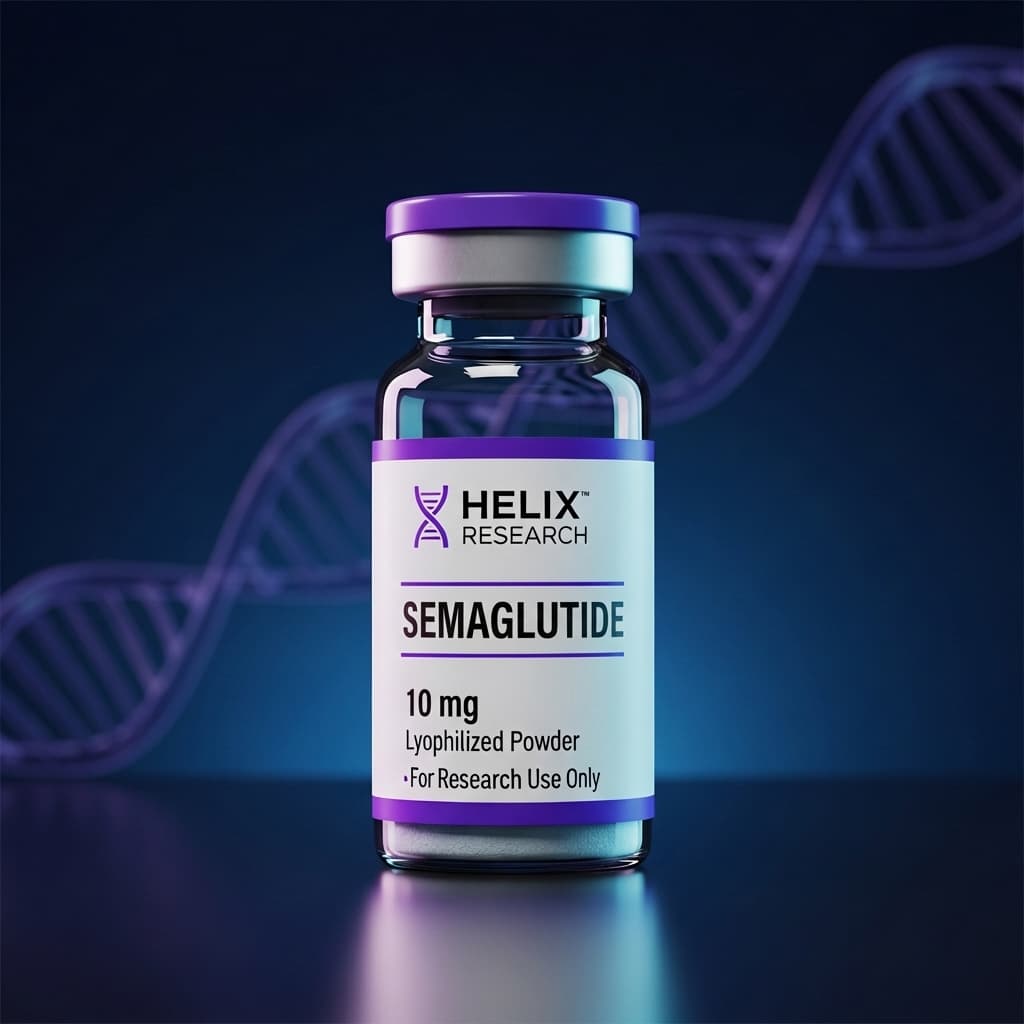
Up to 50% OffSemaglutide
Estudiado clínicamente para una reducción de peso constante — una vez por semana
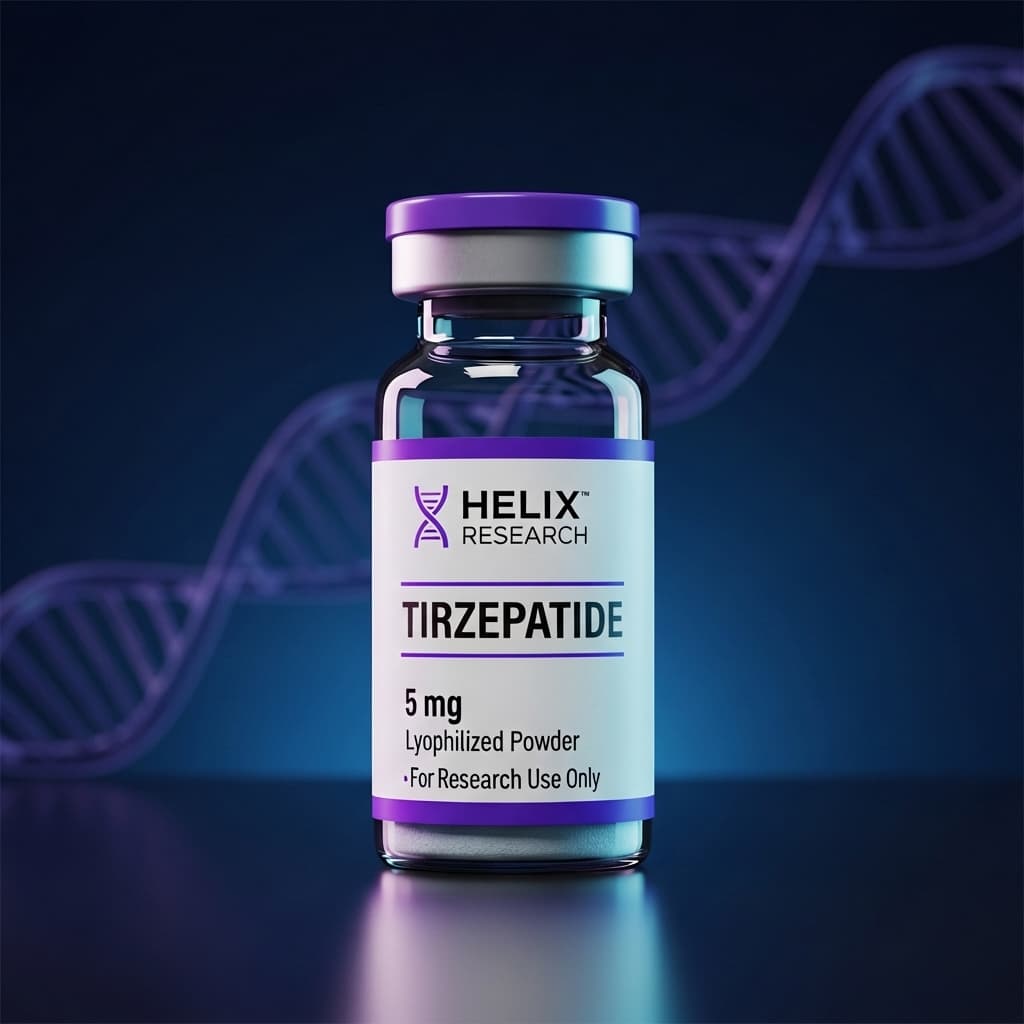
Up to 60% OffTirzepatide
El agonista dual más estudiado para la reducción de peso
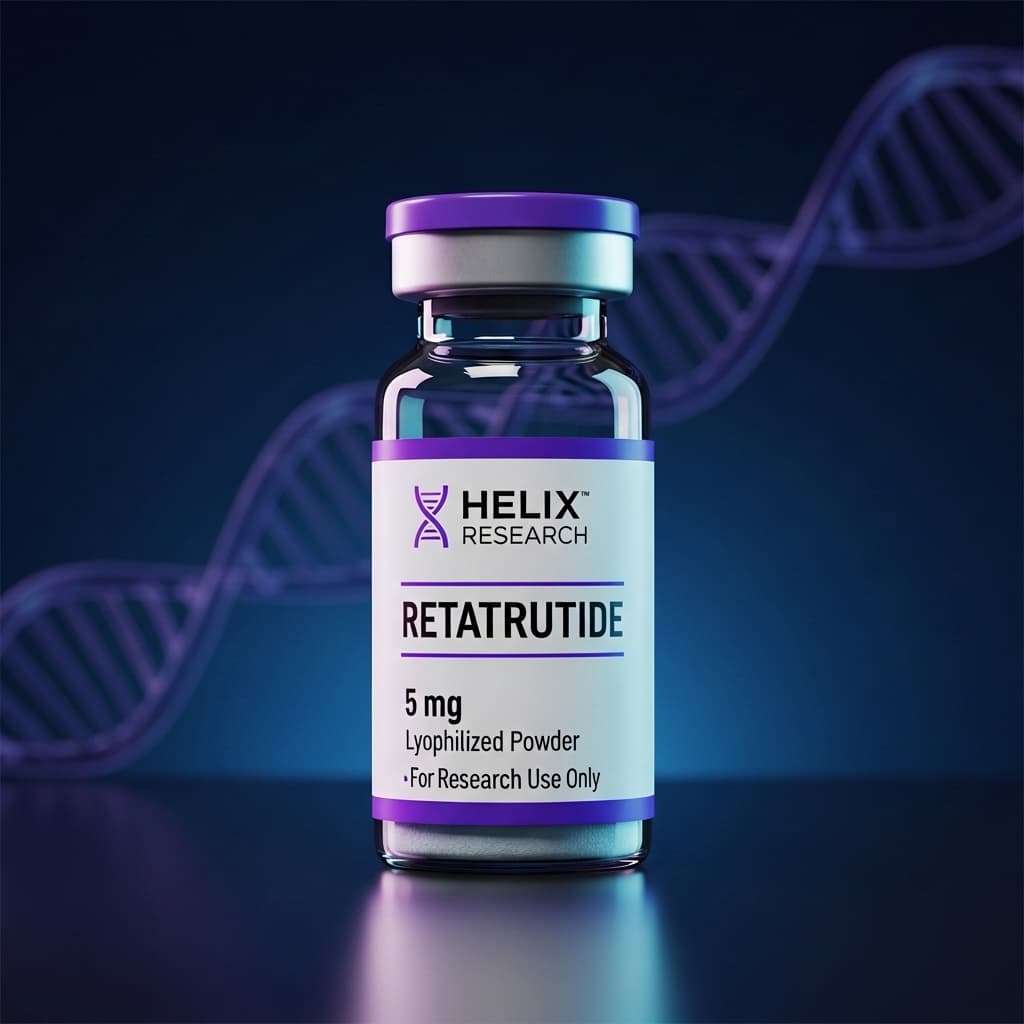
Up to 42% OffRetatrutide
Agonista de triple receptor estudiado para una actividad metabólica mejorada
Up to 38% OffLiraglutide
GLP-1 diario estudiado para la regulación constante del apetito