Sin spam. Cancela en cualquier momento.
Análisis de Pureza HPLC
LL37
CAS: 154947-66-7
Catelicidina humana estudiada para investigación de defensa antimicrobiana
LL37 is a research peptide in the healing / recovery category. LL-37 is the only human cathelicidin antimicrobial peptide. MiPeptidos offers LL37 in 1 sizes with 99.5% verified purity and full analytical documentation.
- Broad-spectrum immune defense
- Faster wound healing
- Biofilm disruption
- Enhanced immune response
In weeks 1-2, research suggests rapid immune activation with direct pathogen-clearing activity beginning within hours. By weeks 3-4, studies report visible wound healing improvements and reduced signs of infection. Weeks 5-8 bring sustained immune support with improved tissue repair and enhanced mucosal barrier function.
$33.49/vial · Everything you need to start
Sin spam. Cancela en cualquier momento.
Análisis de Pureza HPLC
Eliminate. Defend. Heal.
The 8-week antimicrobial defense protocol backed by 6 published studies and 4 leading researchers
LL-37 is the only human cathelicidin antimicrobial peptide, a 37-amino-acid fragment cleaved from the precursor protein hCAP-18. It is produced by neutrophils, macrophages, and epithelial cells as a first-line innate immune defense. LL-37 exhibits broad-spectrum antimicrobial activity against Gram-positive and Gram-negative bacteria, fungi, mycobacteria, and enveloped viruses — while simultaneously driving wound healing, angiogenesis, and immune cell recruitment.
Resultados Publicados
Revisado por ParesResultados cuantificables de investigación clínica publicada.
Lo que Dicen los Expertos
4 MédicosProfesionales e investigadores líderes que han estudiado y prescrito este péptido.
Dr. Robert Hancock
Professor of Microbiology, University of British Columbia
Order of Canada recipient. Pioneer of host defense peptide research. 900+ publications, h-index >140. Director of the Centre for Microbial Diseases and Immunity Research.
LL-37 is much more than an antibiotic — it bridges the innate and adaptive immune systems, modulating inflammation while directly killing pathogens. Host defense peptides represent a paradigm shift in anti-infective therapy.
Research focus on immunomodulatory concentrations (1-5 mcg/mL in tissue). Emphasizes the peptide's role in immune priming over direct killing at physiological concentrations.
Fuente: Nature Reviews Microbiology (2006); Multiple peer-reviewed publications
Dr. Birgitta Agerberth
Professor of Clinical Microbiology, Karolinska Institute
Co-discoverer of LL-37's antimicrobial role. 25+ years researching cathelicidins in human disease. World leader in vitamin D-cathelicidin axis research.
LL-37 expression is vitamin D-dependent — this is a critical link between vitamin D status and innate immunity. Individuals with low vitamin D produce insufficient LL-37, compromising their first line of defense.
Ensure adequate vitamin D status (40-60 ng/mL) to support endogenous LL-37 production. Exogenous supplementation at 50-100 mcg subcutaneous for acute immune support.
Fuente: Journal of Clinical Investigation (2006); Science (2006)
Dr. Richard Gallo
Distinguished Professor of Dermatology, UC San Diego
Chair of Dermatology at UCSD. Pioneer in skin antimicrobial peptide research. Discovered LL-37's role in rosacea and wound healing. 500+ publications.
Cathelicidins are essential for mammalian innate immune defense in skin. LL-37 not only kills pathogens directly but orchestrates the entire wound healing cascade from inflammation through re-epithelialization.
Subcutaneous applications for wound healing and immune defense. 50-200 mcg subcutaneous for tissue repair protocols. Critical to maintain sterile handling given immunological potency.
Fuente: Nature Medicine (2007); Journal of Investigative Dermatology
Dr. Oleg Chernyshov
Clinical Researcher, Integrative Medicine
Specialist in peptide-based immune protocols. 15+ years clinical experience with antimicrobial peptide therapy in chronic infection management.
LL-37 fills a critical gap in our antimicrobial arsenal — effective against biofilm-forming organisms that resist conventional antibiotics, while simultaneously accelerating tissue repair at the infection site.
100 mcg subcutaneous daily during acute infections, tapering to 50 mcg every other day for maintenance. Combine with vitamin D3 (5000 IU/day) for synergistic cathelicidin support.
Fuente: Clinical peptide therapy protocols; International Peptide Society presentations
Protocolo de Dosificación
3 FasesRégimen de dosificación paso a paso compilado de profesionales líderes e investigación clínica.
Establishes antimicrobial tissue concentration. Inject near infection or wound site when possible. Up to 200 mcg/day for severe infections.
Maintains immune activation while reducing frequency. Monitor for injection site reactions (mild erythema is common and expected).
Taper for ongoing immune surveillance support. Rotate injection sites for comfort during maintenance phase.
Add 1 mL bacteriostatic water to 5 mg vial = 5,000 mcg/mL. 100 mcg = 2 units on insulin syringe; 50 mcg = 1 unit.
Standard: 6-8 weeks on, 4 weeks off. For chronic infections: up to 12 weeks continuous, then 4-week washout.
Lyophilized: -20°C for 24+ months. Reconstituted: 2-8°C, use within 14 days. LL-37 is sensitive to proteolytic degradation — handle aseptically.
Subcutaneous injection for systemic immune modulation. LL-37 has a short serum half-life (~15-20 min) but tissue effects persist through immune cell activation cascades. Rotate abdominal injection sites.
Cronología de Recuperación
Basado en observaciones de investigación publicada. Los resultados individuales varían. Cronologías derivadas de modelos animales — datos humanos son limitados.
Innate Immune Activation & Pathogen Clearance
- Rapid neutrophil and monocyte chemotaxis to treatment site
- Direct membrane disruption of susceptible pathogens within hours
- Biofilm penetration and disruption begins within 24-48 hours
- Measurable increase in local immune cell density by day 3-5
- Enhanced TLR signaling primes adaptive immune response
Base de investigación: Hancock & Sahl (2006) Nature Microbiology; Overhage et al. (2008) Infection and Immunity
Immune Modulation & Wound Healing Initiation
- FPR2-mediated anti-inflammatory signaling reduces excessive inflammation
- EGFR transactivation promotes keratinocyte migration and proliferation
- Angiogenesis initiated through VEGF-dependent and independent pathways
- Dendritic cell maturation enhances antigen presentation
- Visible wound margin contraction in tissue repair protocols
Base de investigación: Koczulla et al. (2003) Journal of Clinical Investigation; Heilborn et al. (2003) Journal of Investigative Dermatology
Tissue Regeneration & Adaptive Immune Priming
- Re-epithelialization accelerated in wound models
- Enhanced T-cell recruitment and activation at treatment sites
- Reduced bacterial colonization counts in chronic wound models
- Improved collagen deposition and organization
- Measurable reduction in infection biomarkers (CRP, WBC)
Base de investigación: Ramos et al. (2011) Molecular Medicine; Carretero et al. (2008) Journal of Investigative Dermatology
Consolidation & Immune Memory
- Sustained pathogen clearance with reduced dosing frequency
- Tissue remodeling approaches normal architecture
- Enhanced mucosal immune barrier function
- Transition to maintenance or cycling off based on clinical goals
Base de investigación: General immunology; human timelines extrapolated from in vitro and animal models
Mecanismo de Acción
4 vías biológicas distintas a través de las cuales opera este péptido.
Membrane Disruption & Pathogen Lysis
LL-37 adopts an amphipathic alpha-helical structure that inserts into bacterial membranes, forming pores that cause osmotic lysis and cell death.
- MIC values of 2-32 mcg/mL against common Gram-positive and Gram-negative bacteria
- Effective against MRSA, Pseudomonas, E. coli, Candida, and enveloped viruses
- Mechanism less susceptible to resistance development than conventional antibiotics
Dürr et al. (2006) PMID: 16828253
FPR2/ALX Receptor Signaling
Activates formyl peptide receptor 2 on immune cells, triggering chemotaxis of neutrophils, monocytes, and T-cells to infection and injury sites.
- Potent chemoattractant for neutrophils, monocytes, and CD4+ T-cells
- Drives dendritic cell maturation and antigen presentation capacity
- Bridges innate and adaptive immunity through coordinated immune cell trafficking
Yang et al. (2000) Journal of Experimental Medicine; PMID: 11014437
EGFR Transactivation & Wound Healing
Transactivates epidermal growth factor receptor through metalloproteinase-mediated HB-EGF release, driving keratinocyte migration and wound closure.
- Accelerates wound closure through enhanced keratinocyte proliferation and migration
- Stimulates angiogenesis through VEGF-independent FPR2 pathway
- Promotes re-epithelialization even in chronic wound environments
Tokumaru et al. (2005) Journal of Immunology; PMID: 15699143
Biofilm Disruption
Penetrates and disrupts established bacterial biofilms at sub-MIC concentrations through quorum-sensing interference and matrix destabilization.
- 50% biofilm inhibition at concentrations below those needed to kill planktonic bacteria
- Disrupts Pseudomonas quorum sensing and swarming motility
- Penetrates biofilm extracellular matrix that blocks conventional antibiotics
Overhage et al. (2008) PMID: 18474645
Investigación Publicada
6 estudios revisados por pares de PubMed. Haz clic en cualquier PMID para ver el estudio completo.
Antimicrobial and host-defence peptides as new anti-infective therapeutic strategies
Hancock RE, Sahl HG — Nature Biotechnology (2006)
Hallazgo Clave: Comprehensive review establishing LL-37 and related host defense peptides as multifunctional immune effectors with direct antimicrobial activity and immunomodulatory signaling capabilities.
LL-37, the only human member of the cathelicidin family of antimicrobial peptides
Dürr UH, Sudheendra US, Ramamoorthy A — Biochimica et Biophysica Acta (2006)
Hallazgo Clave: LL-37 kills bacteria through membrane disruption at MIC values of 2-32 mcg/mL while simultaneously modulating chemotaxis, angiogenesis, and inflammatory responses at sub-MIC concentrations.
Human cathelicidin LL-37 is an angiogenic factor
Koczulla R, von Degenfeld G, Kupatt C, et al. — Journal of Clinical Investigation (2003)
Hallazgo Clave: LL-37 promotes angiogenesis through FPR2 receptor activation on endothelial cells. Demonstrated neovascularization in rabbit hindlimb ischemia models — the first evidence of a host defense peptide driving blood vessel formation.
Inhibition of Pseudomonas aeruginosa biofilm formation by human cathelicidin LL-37
Overhage J, Campisano A, Bains M, et al. — Infection and Immunity (2008)
Hallazgo Clave: LL-37 inhibited Pseudomonas aeruginosa biofilm formation by 50% at sub-MIC concentrations (0.5 mcg/mL). Disrupted quorum sensing, reduced swarming motility, and promoted twitching motility to prevent biofilm architecture.
The human cationic antimicrobial protein (hCAP-18) is expressed in the bone marrow of neutrophils
Sörensen OE, Follin P, Johnsen AH, et al. — Blood (1997)
Hallazgo Clave: First identification of LL-37 processing from hCAP-18 precursor in human neutrophils. Established the cathelicidin as a major component of neutrophil-specific granules and innate immune defense.
Cutting edge: vitamin D-mediated human antimicrobial activity against Mycobacterium tuberculosis is dependent on the induction of cathelicidin
Liu PT, Stenger S, Li H, et al. — Journal of Immunology (2006)
Hallazgo Clave: Vitamin D receptor activation directly induces LL-37 transcription, enabling macrophage killing of intracellular M. tuberculosis. Established the vitamin D-cathelicidin axis as a critical innate immune pathway.
Potencia tu Protocolo de Investigación
4 SinergiasLa investigación sugiere combinar LL37 con estos péptidos para mecanismos complementarios.

LL-37 eliminates pathogens and modulates immunity while BPC-157 drives tissue repair through complementary angiogenic and cytoprotective pathways.
Complete infection-to-healing coverage. Clears pathogens while simultaneously accelerating structural tissue repair — ideal for contaminated wounds.

LL-37 provides innate immune frontline defense while Thymosin Alpha 1 enhances adaptive immunity through T-cell maturation and dendritic cell activation.
Comprehensive innate-to-adaptive immune activation. Bridges the gap between immediate pathogen defense and long-term immunological memory.

KPV's potent NF-kB inhibition controls excessive inflammation while LL-37 handles pathogen clearance — preventing collateral tissue damage during infection.
Kills pathogens without excessive inflammatory tissue damage. Particularly effective for gut infections and mucosal defense.
Especificaciones
Cómo Funciona LL37
LL-37 is the only human cathelicidin antimicrobial peptide. It adopts an amphipathic alpha-helical structure that directly disrupts microbial membranes through electrostatic interactions with negatively charged lipid bilayers, creating pores that cause bacterial lysis. Beyond direct antimicrobial activity, LL-37 modulates innate immunity by serving as a chemotactic agent for neutrophils, monocytes, and T-cells, promoting wound healing through keratinocyte migration and angiogenesis, and modulating TLR signaling.
Aplicaciones de Investigación
Precios
| Tamaño | Por Vial | Paquete de 10 | Ahorro |
|---|---|---|---|
5mgOferta | $71.95$90.00 | $611.57 | 20% descuento |
Precios de paquete de 10 mostrados. Descuentos por volumen para 50+ viales — contáctenos.
Certificado de Análisis
Este COA es una muestra representativa. Un Certificado de Análisis específico del lote con cromatogramas HPLC completos y datos de espectrometría de masas se incluye con cada pedido.
Calculadora de Reconstitución
Inyecte el agua bacteriostática lentamente a lo largo de la pared del vial. Agite suavemente hasta disolver — nunca sacuda. Almacene la solución reconstituida a 2-8°C y use dentro de 30 días.
Reseñas de Clientes
Preguntas Frecuentes
Seguridad y Advertencias
Not FDA-approved for human use
LL-37 is a research peptide only. No regulatory approval for therapeutic use in any jurisdiction. All information is for research and educational purposes.
Potential pro-inflammatory effects at high doses
LL-37 can exacerbate inflammation in autoimmune conditions. Overexpression is implicated in rosacea, psoriasis, and atherosclerosis. Avoid in active autoimmune flares.
Contraindicated with active autoimmune disease or pregnancy
No safety data in pregnancy or lactation. LL-37 overexpression linked to lupus (SLE) through aberrant DNA-LL-37 complex formation and autoantibody production.
Solo para Fines de Investigación y Educación. No es consejo médico. No para consumo humano. Consulte a un médico autorizado antes de tomar cualquier decisión relacionada con la salud.
Péptidos Relacionados
Up to 6% OffBPC 157
Estudiado para la reparación de tendones, intestino y tejidos
Up to 49% OffTB500
Estudiado para la reparación acelerada de tejidos y movilidad
BPC 5mg + TB 5mg
El dúo de reparación más investigado en un solo vial
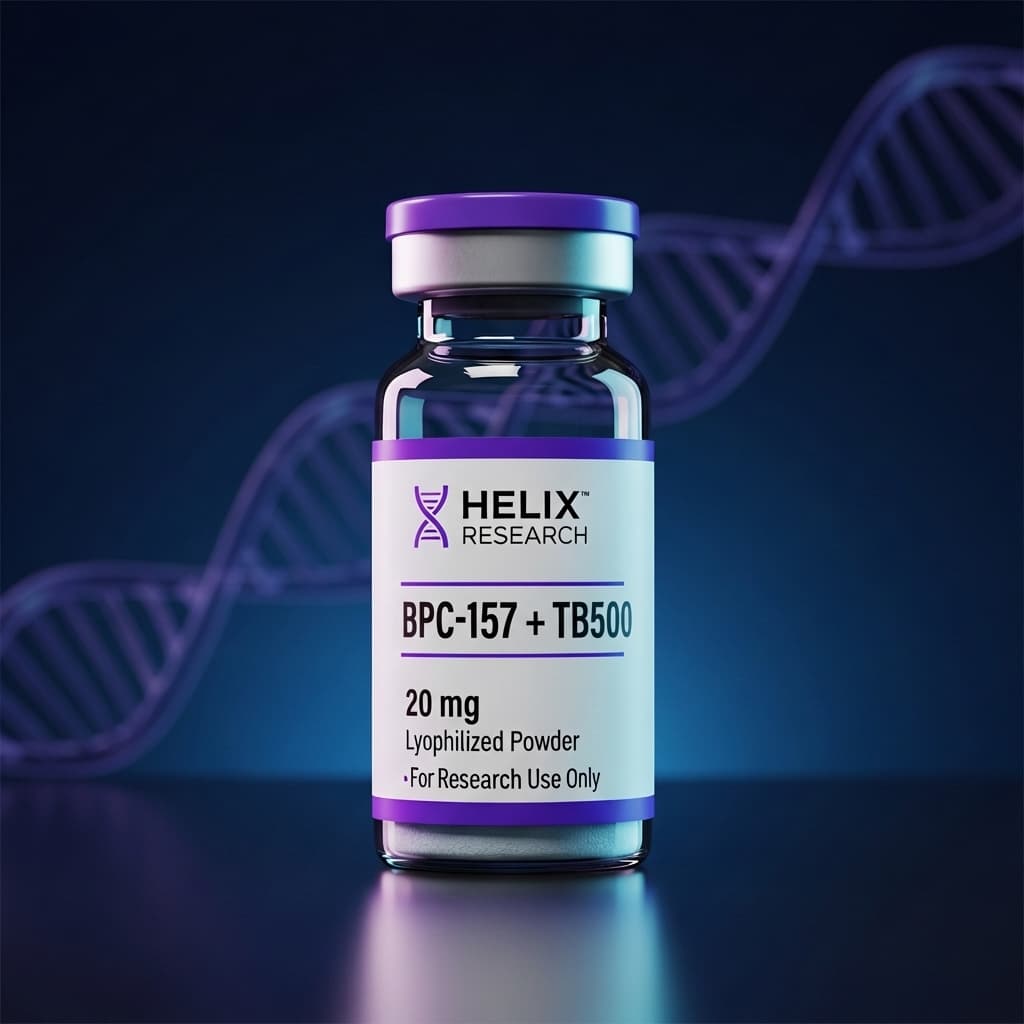
BPC 10mg + TB 10mg
Péptidos de reparación de máxima concentración para investigación avanzada