Sin spam. Cancela en cualquier momento.
Análisis de Pureza HPLC
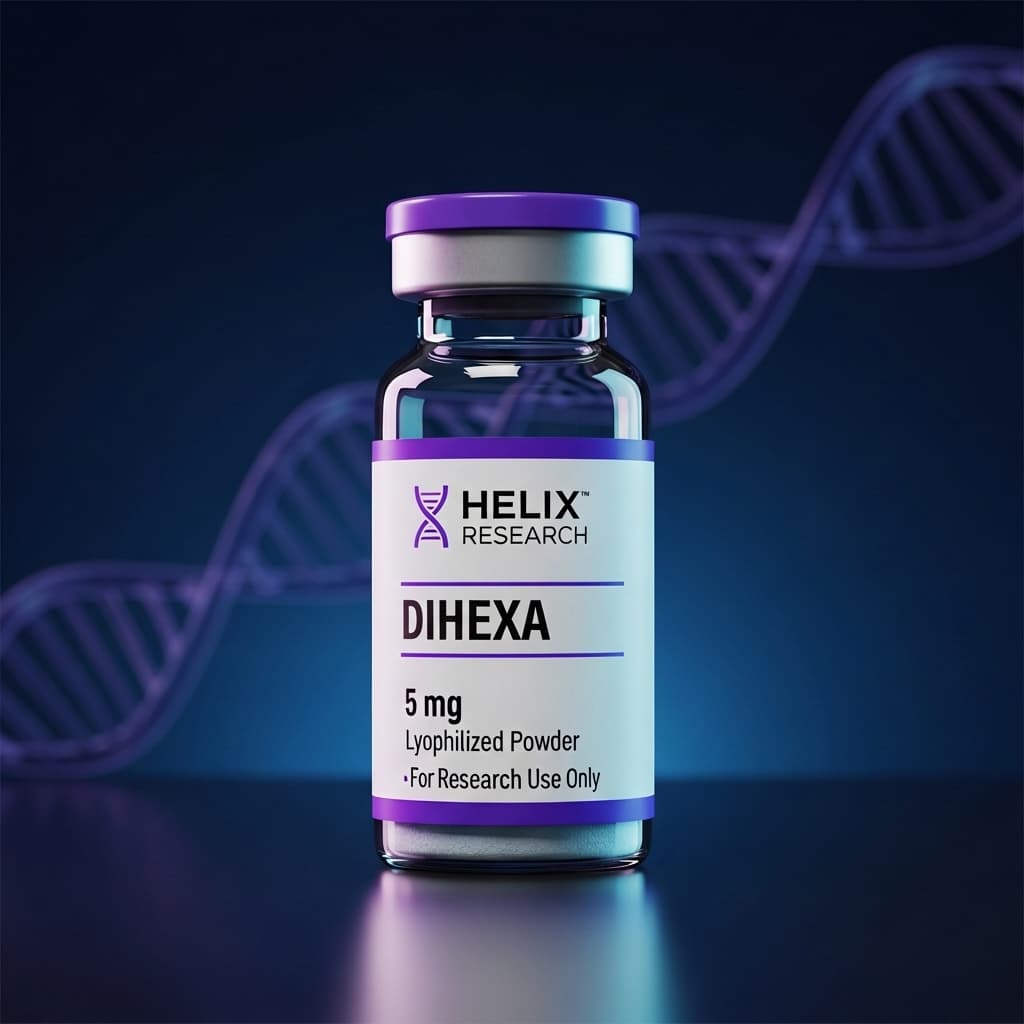
Dihexa
CAS: 1401708-83-5
Estudiado para la plasticidad sináptica HGF/c-Met a dosis picomolares
Dihexa es un péptido de investigación en la categoría de cognitivo / neuropéptidos. Dihexa es un oligopéptido pequeño, activo por vía oral, que atraviesa la barrera hematoencefálica, derivado de la angiotensina IV. MiPeptidos ofrece Dihexa en 2 tamaños con 99.6% de pureza verificada y documentación analítica completa.
- Potente mejora de la memoria
- Formación de nuevas sinapsis
- Mayor velocidad de aprendizaje
- Atraviesa la barrera hematoencefálica
Los estudios reportan mayor claridad mental y sueños vívidos dentro de las primeras 1-2 semanas a medida que comienzan a formarse nuevas conexiones sinápticas. Entre las semanas 3-4, la investigación sugiere mejoras notables tanto en la memoria a corto como a largo plazo, junto con un aprendizaje más rápido. Las semanas 5-6 traen la actividad sinaptogénica máxima — muchas de estas ganancias cognitivas persisten incluso después de suspender, ya que las nuevas conexiones sinápticas son estructurales.
$28.95/vial · Everything you need to start
Sin spam. Cancela en cualquier momento.
Análisis de Pureza HPLC
Build New Synapses.
6-week synaptogenesis protocol based on Harding et al. research — 10 million times more potent than BDNF
Dihexa (N-hexanoic-Tyr-Ile-(6)-aminohexanoic amide) is a small, blood-brain barrier-permeable peptidomimetic derived from angiotensin IV. Developed by Dr. Joseph Harding and colleagues at Washington State University, Dihexa has been described as potentially the most potent procognitive compound ever characterized — approximately 10 million times more potent than BDNF at forming new synaptic connections in hippocampal neurons.
Resultados Publicados
Revisado por ParesResultados cuantificables de investigación clínica publicada.
Lo que Dicen los Expertos
4 MédicosProfesionales e investigadores líderes que han estudiado y prescrito este péptido.
Dr. Joseph Harding
Professor Emeritus of Integrative Physiology & Neuroscience, Washington State University
Lead researcher who developed Dihexa. Co-inventor on US Patent 9,243,031 for 'Procognitive Agents.' Decades of research on the angiotensin IV/AT4 receptor system and HGF/c-Met signaling in cognition.
Dihexa was the most potent compound we tested. It was able to rescue cognitive deficits at picomolar concentrations — a million-fold more potent than brain-derived neurotrophic factor in promoting new synapse formation.
Research doses in animal models: 0.1-2 mg/kg. The compound is BBB-permeable. Effective at picomolar concentrations in vitro. No human dosing established.
Fuente: US Patent 9,243,031; Benoist et al. (2014) J Pharmacology & Experimental Therapeutics
Dr. John Wright
Professor of Psychology, Washington State University
Co-researcher with Harding on angiotensin IV-derived cognitive enhancers. Published extensively on HGF/c-Met pathway involvement in memory and learning.
The HGF/c-Met system represents a previously unrecognized pathway for cognitive enhancement. Dihexa's ability to augment this signaling system opens entirely new therapeutic possibilities for dementia and age-related cognitive decline.
Emphasizes the research potential for Alzheimer's disease and age-related cognitive decline. Notes the compound's BBB permeability and potency at picomolar concentrations.
Fuente: Wright & Harding (2011) Progress in Neurobiology; WSU research publications
Dr. Neil Paulvin
Functional & Regenerative Medicine Physician, Manhattan
Known as 'Dr. Peptide.' Specializes in cognitive optimization for high-performance individuals. One of few Western practitioners with clinical familiarity with Dihexa.
Dihexa is the most potent nootropic compound available. I use it very sparingly and at extremely low doses. This is not a daily nootropic — it's a tool for specific cognitive demands that warrants enormous respect.
Extremely conservative human dosing: 250-750 mcg subcutaneously. Do NOT use daily — pulse dosing 2-3 times per week maximum. Cycle strictly: 4-6 weeks on, 4-8 weeks off. Not for beginners.
Fuente: Clinical practice; cognitive optimization protocols
Dr. William Seeds
Founder, SSRP Institute
40+ years in cellular and molecular medicine. Author of 'Peptide Protocols: Volume 1'. Expert in clinical peptide therapy and risk assessment.
When we're talking about compounds at this level of potency, the margin between therapeutic and excessive is extremely narrow. Dihexa demands the most conservative approach of any peptide in the nootropic arsenal.
Use only under medical supervision. Start at absolute minimum doses. Document cognitive response carefully. Do not combine with other potent neuroactive peptides without professional guidance.
Fuente: Peptide Protocols: Volume 1 (ISBN: 978-0578624358)
Protocolo de Dosificación
2 FasesRégimen de dosificación paso a paso compilado de profesionales líderes e investigación clínica.
Start at the absolute minimum. Dihexa is active at picomolar concentrations. This is NOT a peptide to dose aggressively. Allow 48+ hours between doses to assess response. Rotate injection sites. Document cognitive effects carefully.
Increase only if well-tolerated and cognitive response is suboptimal. Most studies report effects within 20-40 minutes of subcutaneous dosing. Never dose daily. Allow full off-days between doses for receptor recovery. Rotate injection sites.
Add 1 mL bacteriostatic water to 5 mg vial = 5,000 mcg/mL. Use an insulin syringe for precise subcutaneous dosing. 250 mcg = 5 units (0.05 mL); 500 mcg = 10 units (0.10 mL); 750 mcg = 15 units (0.15 mL).
STRICT cycling required: 4-6 weeks on (2-3 doses per week), 4-8 weeks off. The extraordinary potency of HGF/c-Met augmentation makes cycling non-negotiable. Do not extend cycles beyond 6 weeks without compelling reason.
Lyophilized: -20°C for 24+ months. Once in solution: -20°C for prepared stock, 2-8°C for working dilutions (use within 14 days). Protect from light, heat, and moisture.
Subcutaneous injection into the abdominal fat pad is the recommended route. Use a 29-31 gauge insulin syringe. Pinch a fold of skin, insert at a 45-degree angle, and inject slowly. Rotate injection sites between abdominal quadrants. Administer on an empty stomach for optimal absorption.
Cronología de Recuperación
Basado en observaciones de investigación publicada. Los resultados individuales varían. Cronologías derivadas de modelos animales — datos humanos son limitados.
HGF/c-Met Activation & Initial Cognitive Response
- HGF/c-Met receptor signaling augmentation begins within hours of first dose
- Subtle improvements in mental clarity and information processing speed within days
- Enhanced associative thinking and connection-making reported in studies
- New dendritic spine formation initiating in hippocampal neurons
- Studies often report vivid dreams and enhanced memory during sleep
Base de investigación: Benoist et al. (2014) J Pharmacology & Experimental Therapeutics; McCoy et al. (2013) J Pharmacol Exp Ther
Synaptogenesis & Memory Enhancement
- Active synapse formation and strengthening of hippocampal connectivity
- Noticeable improvements in both short-term and long-term memory
- Enhanced spatial memory and navigation ability
- Improved ability to learn and integrate complex new information
- Cognitive processing speed measurably improved in demanding tasks
Base de investigación: McCoy et al. (2013); Wright & Harding (2011) Progress in Neurobiology
Peak Synaptogenic Activity & Consolidation
- Maximum synaptogenic effect from cumulative HGF/c-Met augmentation
- New synaptic connections maturing and stabilizing
- Peak cognitive enhancement — studies report highest subjective cognitive performance
- Begin planning washout period to allow receptor normalization
- Document cognitive baseline for comparison during off-cycle
Base de investigación: Harding et al. patent data; preclinical dose-response literature
Washout & Synaptic Maturation
- Newly formed synapses continue maturing during washout period
- Many cognitive benefits persist after discontinuation due to structural synaptic changes
- HGF/c-Met receptor sensitivity normalizes over 4-8 weeks
- Assess sustained cognitive improvements vs pre-protocol baseline
Base de investigación: General synaptic maturation biology; Harding laboratory observations
Mecanismo de Acción
3 vías biológicas distintas a través de las cuales opera este péptido.
HGF/c-Met Receptor Augmentation
Augments hepatocyte growth factor (HGF) signaling at the c-Met tyrosine kinase receptor, one of the most powerful pro-synaptogenic pathways in the brain.
- Does not directly activate c-Met — augments the response to endogenous HGF ligand
- Effective at picomolar (10⁻¹² M) concentrations — 10 million times more potent than BDNF
- Drives new dendritic spine formation — the physical substrate of new synaptic connections
- Stabilizes the HGF/c-Met complex for prolonged receptor activation
Benoist et al. (2014) PMID: 24352186
Dendritic Spine Formation (Spinogenesis)
Promotes de novo formation of dendritic spines on hippocampal and cortical neurons — the structural basis for new memory and learning capacity.
- New spines form within hours to days of c-Met activation
- Spines mature into functional excitatory synapses with continued signaling
- Effect is selective for hippocampal neurons — the memory-critical brain region
- Structural changes persist beyond drug exposure — semi-permanent cognitive enhancement
Benoist et al. (2014) PMID: 24352186; Wright et al. (2015) PMID: 25444850
Angiotensin IV (AT4R/IRAP) System
Dihexa was designed as an analog of angiotensin IV, which activates the AT4 receptor (identified as IRAP — insulin-regulated aminopeptidase), a key component of the brain's memory system.
- AT4R/IRAP is concentrated in hippocampus, cortex, and other memory-critical structures
- Angiotensin IV system is distinct from the angiotensin I/II blood pressure system
- IRAP inhibition increases neuropeptide availability at synaptic clefts
- Dihexa transcends AT4R — its primary mechanism is now understood as direct HGF/c-Met augmentation
Wright & Harding (2011) PMID: 21530608
Investigación Publicada
6 estudios revisados por pares de PubMed. Haz clic en cualquier PMID para ver el estudio completo.
Facilitation of HGF-induced spinogenesis and a procognitive effect by a peptidomimetic ligand of AT4R
Benoist CC, Kawas LH, Zhu M, Bhatt C, Bhatt S, Bhatt D, Harding JW — Journal of Pharmacology and Experimental Therapeutics (2014)
Hallazgo Clave: Dihexa augmented HGF-induced new dendritic spine formation in hippocampal neurons at picomolar concentrations — approximately 10 million times more potent than BDNF. Restored cognitive function in scopolamine-impaired rats.
N-hexanoic-Tyr-Ile-(6) aminohexanoic amide (Dihexa) as a procognitive agent for Alzheimer's disease
McCoy AT, Benoist CC, Wright JW, Kawas LH, Bule-Ghogare JM, Zhu M, et al. — Journal of Pharmacology and Experimental Therapeutics (2013)
Hallazgo Clave: Dihexa reversed cognitive deficits in aged rats to the level of young controls. BBB penetration confirmed. c-Met receptor activation confirmed as the primary mechanism.
The brain angiotensin system and Alzheimer's disease: an evolving story
Wright JW, Harding JW — Progress in Neurobiology (2011)
Hallazgo Clave: Comprehensive review establishing the angiotensin IV/AT4R/HGF/c-Met pathway as a major cognitive enhancement system. AT4R was identified as insulin-regulated aminopeptidase (IRAP), with HGF/c-Met as the downstream effector.
Procognitive agents: compositions and methods of use thereof
Harding JW, Wright JW, Benoist CC, Kawas LH — US Patent 9,243,031 (2016)
Hallazgo Clave: Patent covering Dihexa and analogs as procognitive agents. Details synthesis, BBB penetration, and dose-response relationships. Describes restoration of cognitive function in dementia models.
Hepatocyte growth factor/scatter factor is a key molecule for enhancing cognitive function
Wright JW, Kawas LH, Harding JW — Neurobiology of Learning and Memory (2015)
Hallazgo Clave: Established HGF/c-Met as a critical pathway for synaptogenesis and cognitive function. HGF facilitates dendritic spine formation, enhances LTP, and improves performance across multiple memory tasks.
The brain hepatocyte growth factor/c-Met receptor system: a new target for the treatment of Alzheimer's disease
Kawas LH, McCoy AT, Yamamoto BJ, Wright JW, Harding JW — Journal of Alzheimer's Disease (2012)
Hallazgo Clave: c-Met receptor activation by HGF-derived compounds promotes synaptic plasticity and memory. Dihexa-class compounds represent a novel therapeutic strategy fundamentally different from cholinesterase inhibitors or amyloid-targeting approaches.
Potencia tu Protocolo de Investigación
4 SinergiasLa investigación sugiere combinar Dihexa con estos péptidos para mecanismos complementarios.

Semax provides the BDNF neurotrophic environment that supports and sustains the new synapses Dihexa creates through HGF/c-Met activation.
Theoretical maximum cognitive enhancement: Dihexa builds new neural hardware while Semax provides the neurotrophic software to maintain it. Use on alternating schedules for safety.

Adamax provides sustained BDNF elevation that nourishes the new synaptic connections driven by Dihexa's HGF/c-Met mechanism.
Long-lasting neurotrophic support (Adamax) for newly formed synapses (Dihexa). Adamax's extended half-life provides continuous neurotrophin coverage between Dihexa's pulse doses.

Selank provides anxiolytic cover during Dihexa-driven neural remodeling, preventing anxiety from interfering with the synaptogenic process.
Dihexa's raw cognitive power is tempered by Selank's calming influence — enabling focused, anxiety-free neural enhancement. Selank's immune benefits also support neuroinflammatory balance.

P21 promotes neurogenesis (new neuron formation) while Dihexa promotes synaptogenesis (new connections between neurons) — complementary structural enhancement.
Complete neural construction: new neurons (P21) plus new synaptic connections between them (Dihexa). The most aggressive cognitive enhancement combination available.
Especificaciones
Cómo Funciona Dihexa
Dihexa is a small, orally active, blood-brain barrier-permeable oligopeptide derivative of angiotensin IV. It acts as an allosteric agonist of the hepatocyte growth factor (HGF)/c-Met receptor system, potentiating HGF signaling at picomolar concentrations. This drives neurogenesis, synaptogenesis, and spinogenesis in the hippocampus. Dihexa is reportedly 10 million times more potent than BDNF in promoting neurite outgrowth. It also enhances synaptic plasticity and long-term potentiation, the cellular basis of learning and memory.
Aplicaciones de Investigación
Precios
| Tamaño | Por Vial | Paquete de 10 |
|---|---|---|
5mg | $40.00 | $340.00 |
10mgMejor Valor | $60.00 | $510.00 |
Precios de paquete de 10 mostrados. Descuentos por volumen para 50+ viales — contáctenos.
Certificado de Análisis
Este COA es una muestra representativa. Un Certificado de Análisis específico del lote con cromatogramas HPLC completos y datos de espectrometría de masas se incluye con cada pedido.
Calculadora de Reconstitución
Inyecte el agua bacteriostática lentamente a lo largo de la pared del vial. Agite suavemente hasta disolver — nunca sacuda. Almacene la solución reconstituida a 2-8°C y use dentro de 30 días.
Reseñas de Clientes
Preguntas Frecuentes
Seguridad y Advertencias
Not FDA-approved for human use — zero human clinical trials
Dihexa has never been tested in human clinical trials. All data comes from rodent studies and in vitro experiments. Human dosing, safety, and pharmacokinetics are entirely uncharacterized.
Potential oncogenic risk from HGF/c-Met activation
HGF/c-Met signaling is a well-established oncogenic pathway. c-Met is frequently overexpressed in cancers (liver, lung, stomach, breast, brain). Augmenting this pathway may theoretically promote tumor growth or metastasis. ABSOLUTELY contraindicated in anyone with active cancer or cancer history.
Extreme potency demands extreme caution
Active at picomolar concentrations — 10 million times more potent than BDNF. The margin between effective and excessive doses is unknown. Overdosing risk is significant. Never exceed conservative dosing guidelines.
Solo para Fines de Investigación y Educación. No es consejo médico. No para consumo humano. Consulte a un médico autorizado antes de tomar cualquier decisión relacionada con la salud.
Péptidos Relacionados

Adamax
Análogo mejorado de Semax estudiado para la regulación positiva de BDNF
Up to 45% OffSelank
Estudiado para efectos ansiolíticos sin deterioro cognitivo
Up to 37% OffSemax
Neuropéptido estudiado para el enfoque y memoria mediados por BDNF
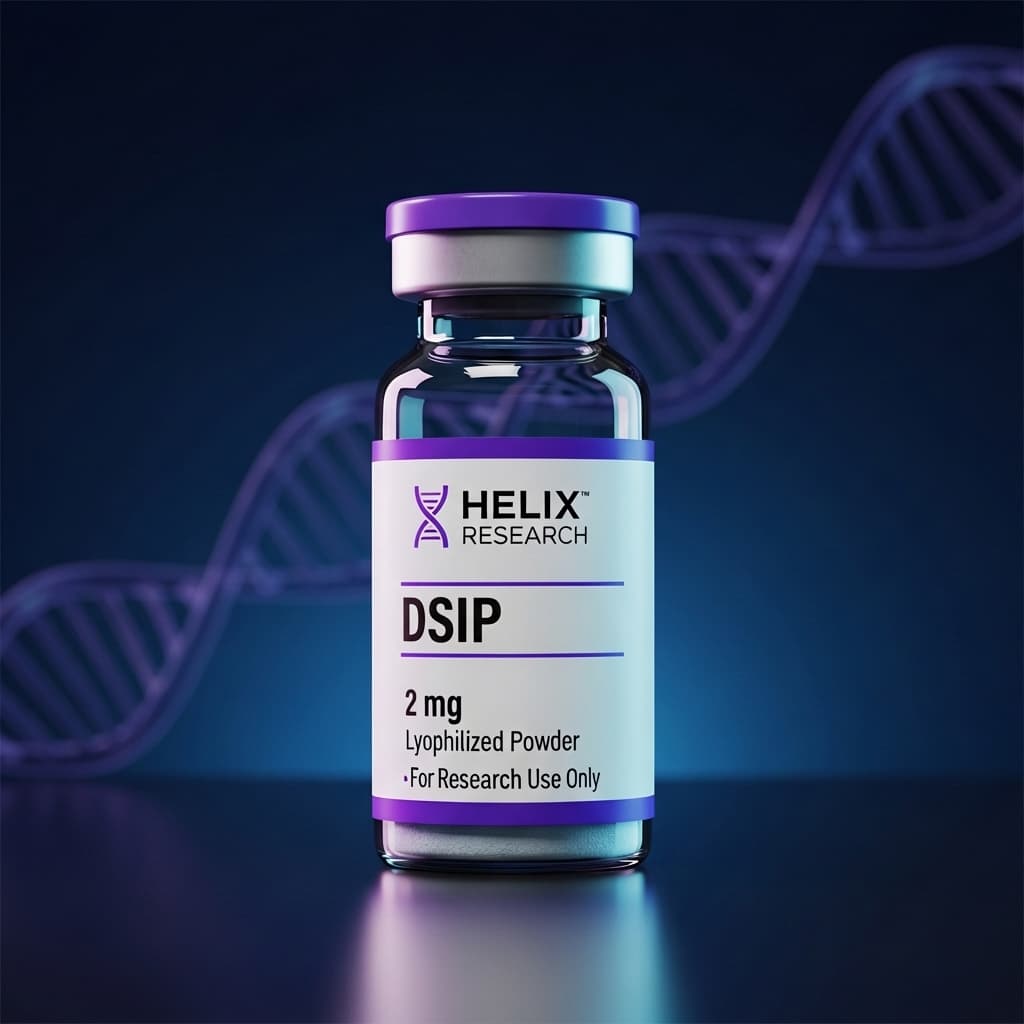
Up to 20% OffDSIP
Estudiado para la mejora de la arquitectura del sueño de ondas delta