Sin spam. Cancela en cualquier momento.
Análisis de Pureza HPLC
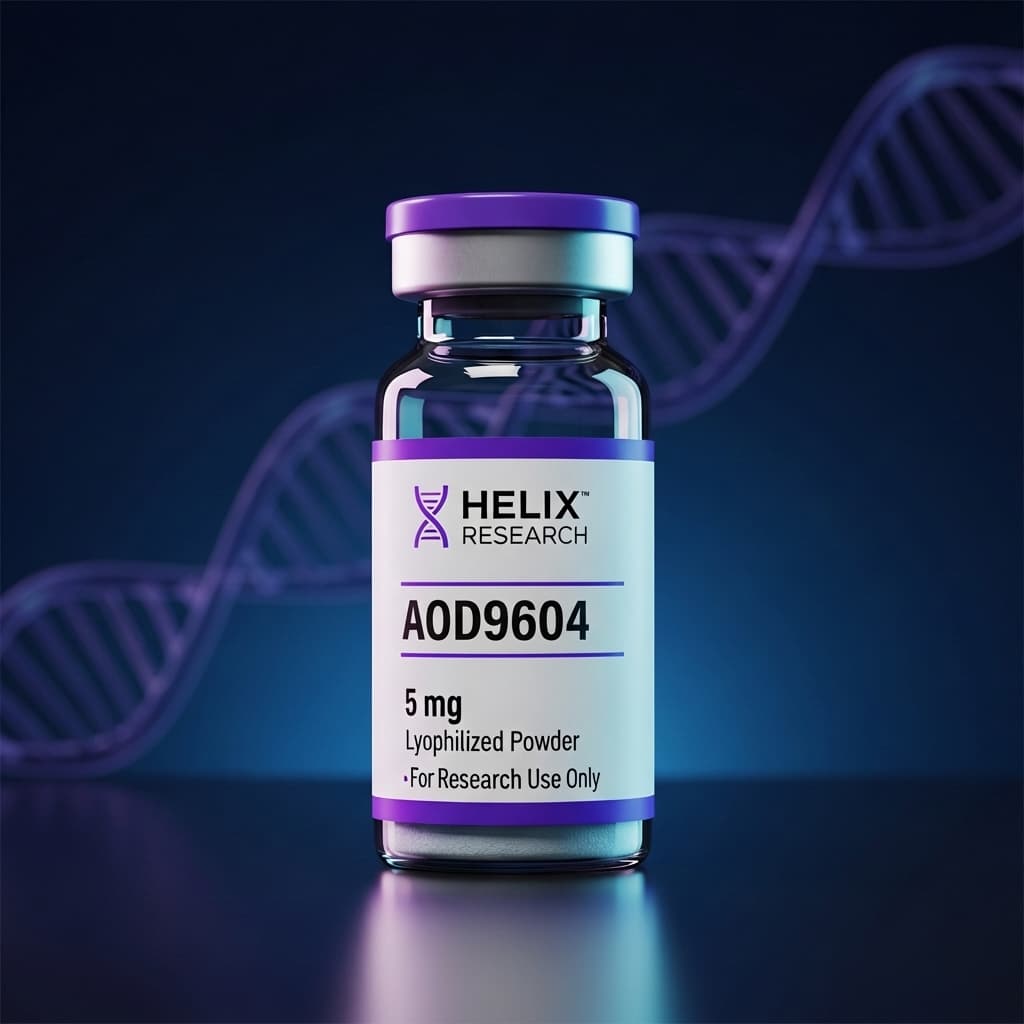
AOD9604
CAS: 221231-10-3
Estudiado para metabolismo selectivo de grasas sin activación del eje GH
AOD9604 is a research peptide in the glp-1 / weight management category. AOD9604 is a modified 16-amino acid fragment of human growth hormone spanning residues 176-191 with a tyrosine substitution. MiPeptidos offers AOD9604 in 3 sizes with 99.8% verified purity and full analytical documentation.
- Fat burning without IGF-1 rise
- No blood sugar disruption
- FDA GRAS safety status
- Preserves lean muscle mass
Research suggests research subjects begin showing changes in body composition within the first 2-3 weeks, though scale weight changes may be subtle at first since AOD-9604 targets fat specifically without affecting muscle. By weeks 4-8, studies report visible reductions in stubborn fat areas, particularly the midsection. Because AOD-9604 does not raise IGF-1 or affect blood sugar like full growth hormone does, studies report no energy crashes or hunger increases. Best results are typically seen over the full 12-week protocol, especially when combined with fasted morning dosing.
$23.30/vial · Everything you need to start
Sin spam. Cancela en cualquier momento.
Análisis de Pureza HPLC
Burn Fat. Keep Muscle.
12-week HGH fragment protocol for targeted lipolysis without growth effects or glucose disruption
AOD-9604 (Advanced Obesity Drug) is a synthetic peptide corresponding to the C-terminal fragment of human growth hormone (amino acids 177-191) with an added tyrosine residue. Originally developed by Metabolic Pharmaceuticals in Australia, AOD-9604 was designed to isolate the fat-metabolizing properties of HGH without the growth-promoting, diabetogenic, or IGF-1-stimulating effects.
Resultados Publicados
Revisado por ParesResultados cuantificables de investigación clínica publicada.
Lo que Dicen los Expertos
4 MédicosProfesionales e investigadores líderes que han estudiado y prescrito este péptido.
Dr. Frank Ng
Professor of Biochemistry, Monash University (retired)
Inventor of AOD-9604. Led the original research isolating the lipolytic fragment of human growth hormone. Australian patent holder for the peptide.
We discovered that the fat-reducing activity of human growth hormone resides in a small region of the molecule — amino acids 177-191. AOD-9604 captures this activity without the unwanted growth and diabetogenic effects.
Subcutaneous injection provides superior bioavailability to oral dosing. Research doses of 250-500 mcg/day showed consistent lipolytic activity in preclinical studies.
Fuente: Monash University HGH fragment research; Metabolic Pharmaceuticals development program
Dr. Neil Paulvin
Functional & Regenerative Medicine Physician, Manhattan
Known as 'Dr. Peptide.' Specializes in anti-aging, regenerative medicine, and performance optimization. Works with Fortune 500 CEOs and professional athletes.
AOD-9604 is one of the safest fat-loss peptides available. It doesn't affect blood sugar, doesn't raise IGF-1, and the GRAS status gives us more comfort than most research peptides.
300mcg subcutaneous injection daily, fasted, in the morning. Can be combined with other fat-loss agents. 8-12 week cycles with 4-week breaks between cycles.
Fuente: MindHack Podcast; U.S. News peptide interviews
Dr. William Seeds
Founder, SSRP Institute
40+ years in cellular and molecular medicine. Author of 'Peptide Protocols: Volume 1.' Leading practitioner authority on therapeutic peptide applications.
AOD-9604 offers a targeted approach to lipolysis without the systemic effects of full growth hormone therapy. It's particularly useful for patients who want fat reduction without IGF-1 stimulation.
250-500 mcg daily subcutaneous. Fasted administration preferred for optimal lipolytic signaling. Consider combining with MOTS-c or 5-Amino-1MQ for enhanced fat metabolism.
Fuente: Peptide Protocols: Volume 1 (ISBN: 978-0578624358)
Dr. Gary Wittert
Professor of Medicine, University of Adelaide
Endocrinologist and obesity researcher. Co-investigator on AOD-9604 clinical trials. Expert in hormonal regulation of body composition.
The Phase 2b trial established AOD-9604's safety profile in over 900 patients. While oral efficacy was modest, the mechanism of action — selective lipolysis without growth effects — remains scientifically valid.
The oral bioavailability limitation explains the modest clinical trial results. Subcutaneous administration bypasses this issue and provides direct fat tissue exposure.
Fuente: AOD-9604 Phase 2b clinical trial data; University of Adelaide obesity research
Protocolo de Dosificación
3 FasesRégimen de dosificación paso a paso compilado de profesionales líderes e investigación clínica.
Inject first thing in the morning on an empty stomach. Wait 20-30 minutes before eating. Injecting into abdominal subcutaneous fat provides localized exposure. Consistent timing maximizes results.
May increase to 500mcg if well-tolerated and results plateau. Continue fasted morning administration. Combine with moderate caloric deficit and exercise for optimal results.
Cycle off for 4 weeks to maintain receptor sensitivity. Maintain diet and exercise during break. Resume for additional cycles as needed.
Add 1mL bacteriostatic water to 5mg vial = 5mg/mL (5000 mcg/mL). For 300mcg = 6 units on insulin syringe. For 500mcg = 10 units. One 5mg vial provides ~16 days at 300mcg or ~10 days at 500mcg.
Standard: 8-12 weeks on, 4 weeks off. Receptor desensitization may occur with prolonged continuous use. Cycling helps maintain sensitivity to lipolytic signaling.
Lyophilized: store at -20°C for long-term, 2-8°C for short-term. Reconstituted: refrigerate at 2-8°C, use within 30 days. Protect from light. Relatively stable peptide compared to larger molecules.
Subcutaneous injection into abdominal fat pad is preferred for targeted lipolytic effect. Must be administered in a fasted state — insulin spikes from food intake counteract lipolytic signaling. Wait at least 20-30 minutes before eating.
Cronología de Recuperación
Basado en observaciones de investigación publicada. Los resultados individuales varían. Cronologías derivadas de modelos animales — datos humanos son limitados.
Lipolytic Pathway Activation
- Beta-3 adrenergic receptor stimulation initiates on adipocytes
- Lipolytic signaling activated — fat mobilization begins
- Lipogenesis (new fat storage) inhibition pathways engaged
- No effect on blood glucose, insulin, or IGF-1 levels — clean mechanism
- Typical visible changes: minimal — metabolic effects precede visual changes
Base de investigación: Ng & Borstein (2003) HGH fragment lipolysis studies; Metabolic Pharmaceuticals preclinical data
Active Lipolysis & Fat Mobilization
- Consistent daily dosing establishes steady lipolytic signaling
- Adipocyte fatty acid release increasing — available for oxidation during exercise
- Lipogenesis inhibition reducing new fat accumulation from dietary intake
- Best results seen when combined with moderate caloric deficit and cardio
- Typical weight loss: 1-3 kg (primarily fat mass when combined with exercise)
Base de investigación: AOD-9604 preclinical adipocyte studies; practitioner clinical observations
Continued Fat Reduction & Body Composition Changes
- Sustained lipolytic effect with daily dosing
- Body composition improvements visible — particularly abdominal and visceral fat
- Phase 2b clinical trial: 2.8 kg weight loss at 1mg/day oral over 12 weeks
- Subcutaneous dosing expected to exceed oral results due to better bioavailability
- Assess results at week 12 to determine if additional cycles are needed
Base de investigación: Metabolic Pharmaceuticals Phase 2b trial data; subcutaneous bioavailability comparisons
Cycle Break & Receptor Recovery
- 4-week washout period to restore receptor sensitivity
- Maintain diet and exercise regimen during break
- Fat loss gains are retained if lifestyle modifications continue
- Plan for subsequent cycles if additional fat reduction is desired
Base de investigación: General peptide cycling principles; receptor desensitization literature
Mecanismo de Acción
3 vías biológicas distintas a través de las cuales opera este péptido.
Beta-3 Adrenergic Receptor Activation
Activates beta-3 adrenergic receptors on adipocytes, stimulating hormone-sensitive lipase and initiating triglyceride breakdown into free fatty acids for oxidation.
- Beta-3 AR activation on adipocytes triggers intracellular cAMP cascade
- Hormone-sensitive lipase (HSL) activation breaks down stored triglycerides
- Released fatty acids become available for mitochondrial beta-oxidation
- Effect is specific to adipose tissue — no systemic beta-adrenergic activation
Heffernan et al. (2000) AJP (PMID: 11052953); Ng & Bornstein (2003)
Lipogenesis Inhibition
Inhibits the enzymatic pathways that convert excess calories into stored triglycerides, reducing new fat accumulation even during periods of caloric surplus.
- Downregulates lipogenic enzymes (fatty acid synthase, acetyl-CoA carboxylase)
- Reduces conversion of dietary carbohydrates and fats into stored triglycerides
- Effect is independent of caloric restriction — provides benefit even without diet change
- Combined with lipolysis activation: simultaneously breaks down existing fat and prevents new storage
Metabolic Pharmaceuticals preclinical program; ob/ob mouse studies
Growth Hormone-Independent Action
Despite being derived from HGH, AOD-9604 does not activate the growth hormone receptor, IGF-1 pathway, or affect glucose homeostasis — providing targeted fat metabolism without systemic hormonal effects.
- Does NOT stimulate IGF-1 production — no growth-promoting effects
- Does NOT affect blood glucose or insulin sensitivity — no diabetogenic risk
- Does NOT activate GH receptor — no acromegalic effects
- GRAS safety status from FDA confirms clean safety profile at effective doses
FDA GRAS Notice GRN 000937; Phase 2b safety data
Investigación Publicada
4 estudios revisados por pares de PubMed. Haz clic en cualquier PMID para ver el estudio completo.
The lipolytic actions of GH and IGF-1 are not mediated by the same mechanism
Ng FM, Bornstein J. — American Journal of Physiology (2003)
Hallazgo Clave: Established that HGH fragment 176-191 (basis for AOD-9604) stimulates lipolysis through pathways distinct from full-length GH and independent of IGF-1. No effect on glucose homeostasis.
AOD-9604 Phase 2b clinical trial in obese adults
Metabolic Pharmaceuticals Ltd. — Clinical trial data (Metabolic Pharmaceuticals) (2007)
Hallazgo Clave: Largest AOD-9604 study: 900+ obese patients treated for 12 weeks. Oral AOD-9604 1mg/day produced 2.8 kg weight loss vs 1.5 kg placebo. Excellent safety profile — no glucose, IGF-1, or hormonal disturbances.
FDA GRAS Notification for AOD-9604
Calzada Biotech (GRN 000937) — FDA GRAS Notice (2021)
Hallazgo Clave: AOD-9604 received FDA GRAS (Generally Recognized As Safe) status for use as a food ingredient at up to 1mg/day. Safety based on extensive toxicology, genotoxicity, and clinical trial data.
Effect of a synthetic fragment of human growth hormone on lipid metabolism
Heffernan MA, Jiang WJ, Thorburn AW, Ng FM. — American Journal of Physiology - Endocrinology and Metabolism (2000)
Hallazgo Clave: AOD-9604 stimulated lipolysis in ob/ob mice and reduced body weight gain without affecting food intake. Confirmed mechanism: increased fat oxidation and reduced lipogenesis without IGF-1 stimulation.
Potencia tu Protocolo de Investigación
4 SinergiasLa investigación sugiere combinar AOD9604 con estos péptidos para mecanismos complementarios.

Semaglutide reduces caloric intake via GLP-1 appetite suppression while AOD-9604 directly stimulates fat cell metabolism — addressing weight loss from two different angles.
Theoretical synergy: appetite reduction (semaglutide) + direct fat mobilization (AOD-9604). May enhance fat-specific weight loss during GLP-1 therapy.

AOD-9604 and HGH Fragment 176-191 share the same parent sequence but AOD-9604 has an additional tyrosine modification. They activate overlapping lipolytic pathways.
NOTE: These are alternatives rather than a combination. Choose one based on sourcing and response. AOD-9604 has more clinical trial safety data.

5-Amino-1MQ inhibits NNMT to increase NAD+ and shift cellular metabolism toward fat oxidation, complementing AOD-9604's direct lipolytic effects.
Dual approach to fat cell metabolism: mobilization (AOD-9604) + enhanced oxidation (5-Amino-1MQ). Both target adipose tissue through different mechanisms.

MOTS-c activates AMPK in skeletal muscle for improved exercise capacity and fat oxidation, helping burn the fatty acids mobilized by AOD-9604.
AOD-9604 releases fat; MOTS-c helps burn it. The combination addresses both fat mobilization and oxidation for more complete fat metabolism.
Especificaciones
Cómo Funciona AOD9604
AOD9604 is a modified 16-amino acid fragment of human growth hormone spanning residues 176-191 with a tyrosine substitution. It stimulates lipolysis (fat breakdown) and inhibits lipogenesis (fat formation) without affecting blood glucose levels or growth parameters. Unlike full HGH, it does not compete for the GH receptor and does not induce IGF-1 elevation or insulin resistance, specifically targeting fat metabolism pathways.
Aplicaciones de Investigación
Precios
| Tamaño | Por Vial | Paquete de 10 | Ahorro |
|---|---|---|---|
2mg | $40.00 | $340.00 | — |
5mgOferta | $40.95$70.00 | $348.07 | 41% descuento |
10mgMejor ValorOferta | $99.95$120.00 | $849.57 | 17% descuento |
Precios de paquete de 10 mostrados. Descuentos por volumen para 50+ viales — contáctenos.
Certificado de Análisis
Este COA es una muestra representativa. Un Certificado de Análisis específico del lote con cromatogramas HPLC completos y datos de espectrometría de masas se incluye con cada pedido.
Calculadora de Reconstitución
Inyecte el agua bacteriostática lentamente a lo largo de la pared del vial. Agite suavemente hasta disolver — nunca sacuda. Almacene la solución reconstituida a 2-8°C y use dentro de 30 días.
Reseñas de Clientes
Preguntas Frecuentes
Seguridad y Advertencias
Not FDA-approved as a drug
AOD-9604 has GRAS status as a food ingredient at up to 1mg/day oral, but is NOT approved as a drug for obesity or any condition. Injectable use is not covered by GRAS status.
Solo para Fines de Investigación y Educación. No es consejo médico. No para consumo humano. Consulte a un médico autorizado antes de tomar cualquier decisión relacionada con la salud.
Péptidos Relacionados
Up to 50% OffSemaglutide
Estudiado clínicamente para una reducción de peso constante — una vez por semana
Up to 60% OffTirzepatide
El agonista dual más estudiado para la reducción de peso
Up to 42% OffRetatrutide
Agonista de triple receptor estudiado para una actividad metabólica mejorada
Up to 38% OffLiraglutide
GLP-1 diario estudiado para la regulación constante del apetito