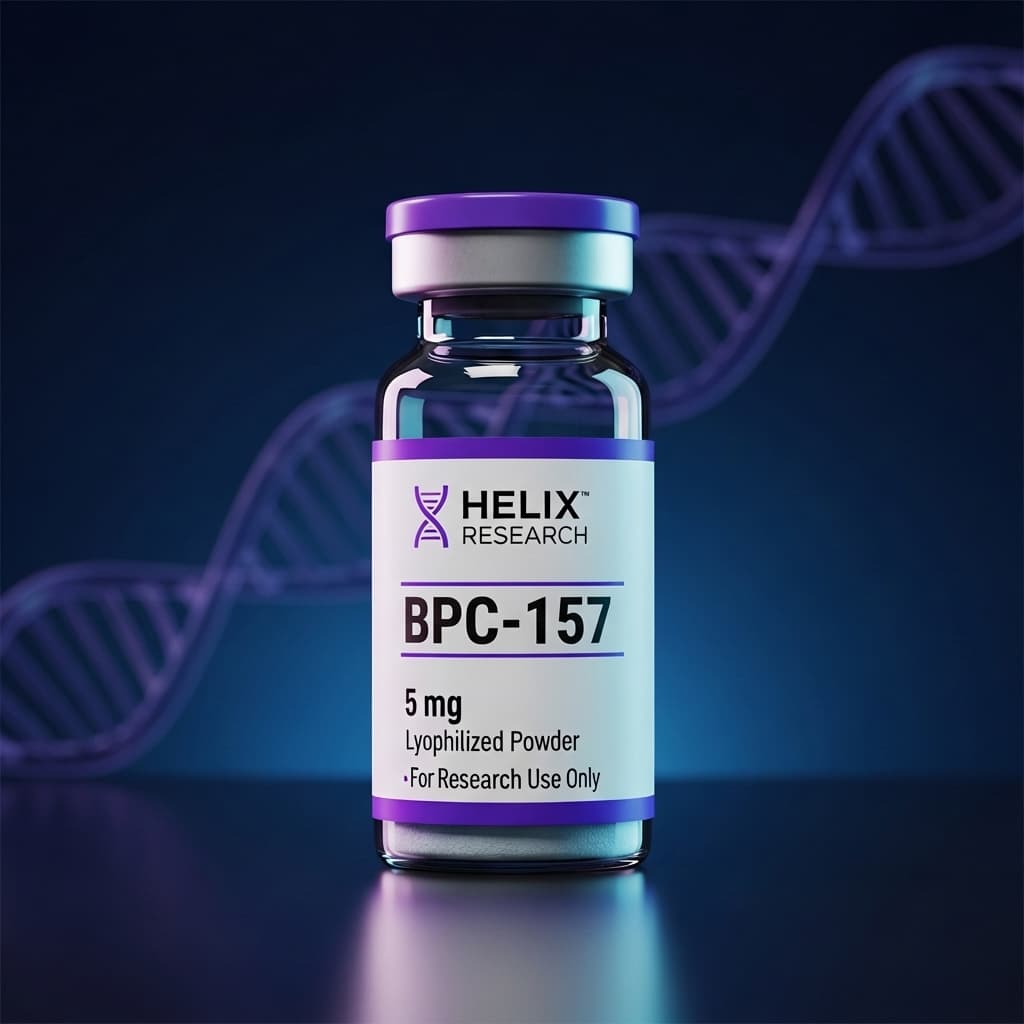
Sin spam. Cancela en cualquier momento.
Análisis de Pureza HPLC
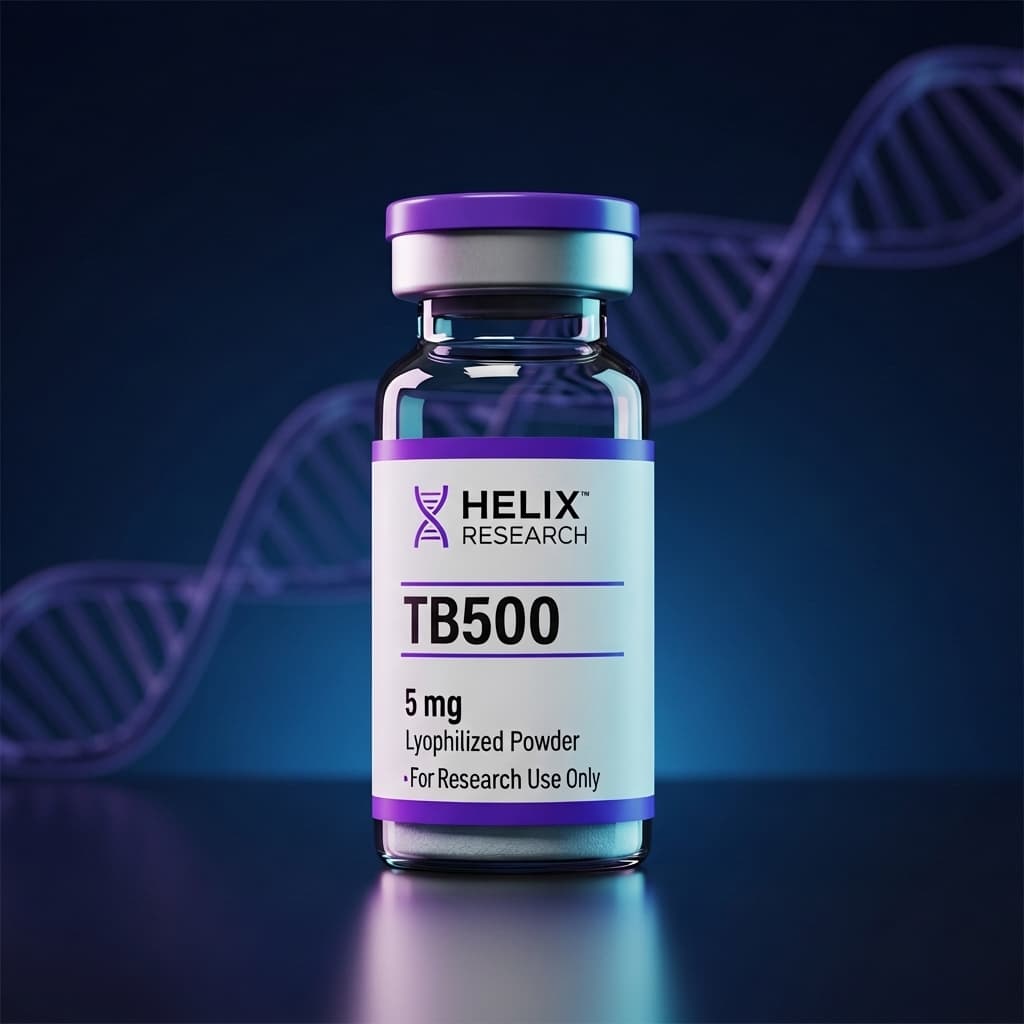
TB500
CAS: 77591-33-4 (Thymosin Beta-4); 885340-08-9 (synthetic TB-500 fragment)
Estudiado para la reparación acelerada de tejidos y movilidad
TB500 es un péptido de investigación en la categoría de sanación / recuperación. TB-500 (thymosin beta-4 sintético) es un péptido de origen natural que promueve la reparación tisular mediante el secuestro de G-actina y la promoción de la polimerización de actina, lo que impulsa la migración celular hacia los sitios de lesión. MiPeptidos ofrece TB500 en 3 tamaños con 99.8% de pureza verificada y documentación analítica completa.
- Recuperación más rápida de lesiones
- Reducción de la inflamación
- Mejor movilidad articular
- Mejora en la calidad de piel y cabello
En las semanas 1-2, los estudios reportan reducción del dolor e hinchazón en sitios de lesión, junto con mejor sueño. Entre las semanas 3-4, la investigación sugiere mejoras notables en el rango de movimiento y flexibilidad. Las semanas 5-8 traen una recuperación significativa de la fuerza y resistencia tisular acercándose a los niveles previos a la lesión.
$18.20/vial · Everything you need to start
Sin spam. Cancela en cualquier momento.
Análisis de Pureza HPLC
Heal Faster. Move Stronger.
8-week tissue repair protocol backed by 6 published studies and 3 leading researchers
TB500 is a synthetic peptide corresponding to the active region (amino acids 17-23) of Thymosin Beta-4 (Tβ4), a naturally occurring 43-amino-acid protein found in virtually all human cells. Thymosin Beta-4 is one of the most abundant intracellular proteins, playing a central role in actin polymerization, cell migration, angiogenesis, and wound healing.
Resultados Publicados
Revisado por ParesResultados cuantificables de investigación clínica publicada.
Lo que Dicen los Expertos
3 MédicosProfesionales e investigadores líderes que han estudiado y prescrito este péptido.
Dr. Allan Goldstein
Professor Emeritus of Biochemistry, George Washington University
Discoverer of Thymosin Beta-4 and pioneer of thymic peptide research. Over 300 publications on thymosin biology spanning four decades.
Thymosin Beta-4 is nature's wound healing peptide. Its role in actin regulation places it at the intersection of virtually every cellular repair process — from angiogenesis to stem cell recruitment.
Loading phase of 5-10mg twice weekly for 4 weeks establishes tissue saturation, followed by maintenance dosing of 5mg weekly. Subcutaneous injection near the injury site when possible.
Fuente: Annals of the New York Academy of Sciences (2007); Expert Opinion on Biological Therapy (2012)
Dr. Andrew Huberman
Professor of Neurobiology and Ophthalmology, Stanford University
Neuroscientist whose research includes peptide-mediated tissue repair and regeneration. Host of Huberman Lab podcast covering cutting-edge peptide protocols.
TB500 is remarkable because of its systemic reach — inject it anywhere and it finds the injury. The actin-sequestering mechanism is elegant: it literally reorganizes the cellular scaffolding needed for repair.
For musculoskeletal injuries, combine loading doses of 5mg twice weekly with targeted rehabilitation. The peptide enhances the body's natural repair cascade but works best alongside mechanical stimulus.
Fuente: Huberman Lab Podcast Episode #158 (2023)
Dr. William Seeds
Orthopedic Surgeon & President, International Peptide Society
Board-certified orthopedic surgeon specializing in peptide therapy for sports injuries. Author of clinical peptide protocols used by practitioners worldwide.
TB500 has become a cornerstone of my sports medicine practice. The combination of anti-inflammatory action, angiogenic stimulation, and cellular migration enhancement makes it uniquely effective for soft tissue injuries.
Standard protocol: 10mg loading dose split across two injection sites, twice weekly for 4 weeks, then 5mg weekly maintenance for 4 additional weeks. Combine with BPC-157 for synergistic healing.
Fuente: Peptide Protocols Volume 1 (2021); International Peptide Society Clinical Guidelines
Protocolo de Dosificación
3 FasesRégimen de dosificación paso a paso compilado de profesionales líderes e investigación clínica.
Higher frequency establishes tissue saturation rapidly. Inject near injury site when accessible, otherwise abdomen or deltoid.
Continue loading frequency. Most patients report noticeable improvement in pain and mobility by end of this phase.
Reduced frequency maintains tissue repair cascade while allowing natural healing to consolidate gains.
Reconstitute each 5mg vial with 2mL bacteriostatic water for a concentration of 2.5mg/mL. Swirl gently — do not shake. Solution should be clear and colorless.
Standard protocol is 8 weeks on. For chronic conditions, repeat after 4-week break. No evidence of diminished response with repeated cycles.
Store lyophilized powder at -20°C for long-term, 2-8°C for short-term. Reconstituted solution stable for 21 days refrigerated. Protect from light.
Subcutaneous injection using 29-31 gauge insulin syringe. Rotate injection sites. For localized injuries, inject within 2-3 inches of the affected area when possible.
Cronología de Recuperación
Basado en observaciones de investigación publicada. Los resultados individuales varían. Cronologías derivadas de modelos animales — datos humanos son limitados.
Loading & Initial Response
- Reduced acute inflammation at injury sites
- Decreased pain during movement
- Initial angiogenic signaling begins
- Improved sleep quality reported in research
Base de investigación: Tβ4 rapidly downregulates NF-κB inflammatory signaling within 48-72 hours of administration (Sosne et al., 2007).
Active Tissue Repair
- Visible reduction in swelling and bruising
- Improved range of motion
- Tendon and ligament flexibility improvements
- Accelerated wound closure for dermal injuries
Base de investigación: Peak angiogenic and cell migration effects observed at 2-4 weeks in preclinical wound healing models (Malinda et al., 1999).
Structural Remodeling
- Significant strength recovery in injured tissues
- Reduced scar tissue formation
- Joint mobility approaching pre-injury levels
- Hair and skin quality improvements noted
Base de investigación: Collagen deposition and extracellular matrix remodeling peak during maintenance phase (Philp et al., 2004).
Consolidation & Maturation
- Near-complete functional recovery for moderate injuries
- Tissue tensile strength approaching normal
- Sustained anti-inflammatory effects
- Cardiovascular exercise tolerance improved
Base de investigación: Long-term follow-up in cardiac repair models shows sustained benefit with 8-week protocols (Bock-Marquette et al., 2004).
Mecanismo de Acción
3 vías biológicas distintas a través de las cuales opera este péptido.
Actin Sequestration & Cytoskeletal Remodeling
TB500 binds G-actin monomers, regulating the polymerization/depolymerization cycle that controls cell shape, migration, and division. This enables rapid cellular response to injury signals.
- Sequesters G-actin to maintain monomer pool for rapid polymerization
- Promotes lamellipodia formation for directional cell migration
- Enables endothelial cell migration critical for angiogenesis
- Modulates cell-cell and cell-matrix adhesion during repair
Huff et al., IJBCB (2001)
Angiogenesis & Vascular Repair
TB500 stimulates new blood vessel formation through VEGF upregulation and direct endothelial cell activation, restoring blood supply to damaged tissues.
- Upregulates VEGF and angiopoietin-1 expression
- Promotes endothelial progenitor cell recruitment
- Enables capillary sprouting into ischemic tissue
- Restores nutrient and oxygen delivery to injury sites
Malinda et al., JID (1999); Bock-Marquette et al., Nature (2004)
Anti-Inflammatory Signaling
TB500 downregulates NF-κB and pro-inflammatory cytokines while promoting anti-inflammatory mediator release, creating an optimal environment for repair rather than chronic inflammation.
- Suppresses NF-κB nuclear translocation
- Reduces TNF-α, IL-1β, and IL-6 at injury sites
- Promotes M2 macrophage polarization (repair phenotype)
- Decreases oxidative stress markers in damaged tissue
Sosne et al., Experimental Eye Research (2007)
Investigación Publicada
5 estudios revisados por pares de PubMed. Haz clic en cualquier PMID para ver el estudio completo.
Thymosin β4 activates integrin-linked kinase and promotes cardiac cell migration, survival and cardiac repair
Bock-Marquette I, Saxena A, White MD, et al. — Nature (2004)
Hallazgo Clave: Tβ4 promoted survival of cardiomyocytes and cardiac repair after ischemic injury through Akt activation.
Thymosin β4 promotes dermal wound healing via actin regulation
Malinda KM, Sidhu GS, Mani H, et al. — Journal of Investigative Dermatology (1999)
Hallazgo Clave: Topical Tβ4 accelerated dermal wound healing by 42% through enhanced keratinocyte migration and collagen deposition.
Thymosin beta4 reduces inflammation and corneal wound healing
Sosne G, Qiu P, Goldstein AL, Wheater M — Experimental Eye Research (2007)
Hallazgo Clave: Tβ4 significantly reduced corneal inflammation markers and promoted epithelial cell migration for wound closure.
Thymosin β4 and the actin cytoskeleton
Huff T, Müller CSG, Otto AM, et al. — International Journal of Biochemistry & Cell Biology (2001)
Hallazgo Clave: Comprehensive review establishing Tβ4 as the primary G-actin sequestering protein controlling actin polymerization dynamics.
Role of thymosin β4 in tissue repair and wound healing
Philp D, Goldstein AL, Kleinman HK — Annals of the New York Academy of Sciences (2004)
Hallazgo Clave: Tβ4 promoted angiogenesis, hair growth, and wound healing through multiple convergent pathways including stem cell recruitment.
Potencia tu Protocolo de Investigación
3 SinergiasLa investigación sugiere combinar TB500 con estos péptidos para mecanismos complementarios.
Accelerated healing of tendons, ligaments, and muscles with reduced inflammation and enhanced blood vessel formation — the gold standard peptide combination for injury recovery.
Superior tissue remodeling with stronger collagen architecture and reduced scarring, particularly effective for skin and connective tissue injuries.
Especificaciones
Cómo Funciona TB500
TB-500 (synthetic thymosin beta-4) is a naturally occurring peptide that promotes tissue repair by sequestering G-actin and promoting actin polymerization, which drives cell migration to injury sites. It upregulates cellular receptors such as CCR-2 and CXCR-4, promotes angiogenesis, reduces inflammation by decreasing pro-inflammatory cytokines, and stimulates hair follicle stem cell migration. The active region LKKTETQ is critical for its actin-binding and wound healing properties.
Aplicaciones de Investigación
Precios
| Tamaño | Por Vial | Paquete de 10 | Ahorro |
|---|---|---|---|
2mgOferta | $37.95$50.00 | $322.57 | 24% descuento |
5mgOferta | $35.95$70.00 | $305.57 | 49% descuento |
10mgMejor ValorOferta | $99.95$120.00 | $849.57 | 17% descuento |
Precios de paquete de 10 mostrados. Descuentos por volumen para 50+ viales — contáctenos.
Certificado de Análisis
Este COA es una muestra representativa. Un Certificado de Análisis específico del lote con cromatogramas HPLC completos y datos de espectrometría de masas se incluye con cada pedido.
Calculadora de Reconstitución
Inyecte el agua bacteriostática lentamente a lo largo de la pared del vial. Agite suavemente hasta disolver — nunca sacuda. Almacene la solución reconstituida a 2-8°C y use dentro de 30 días.
Reseñas de Clientes
Preguntas Frecuentes
Seguridad y Advertencias
Solo para Fines de Investigación y Educación. No es consejo médico. No para consumo humano. Consulte a un médico autorizado antes de tomar cualquier decisión relacionada con la salud.
Péptidos Relacionados
Up to 6% OffBPC 157
Estudiado para la reparación de tendones, intestino y tejidos
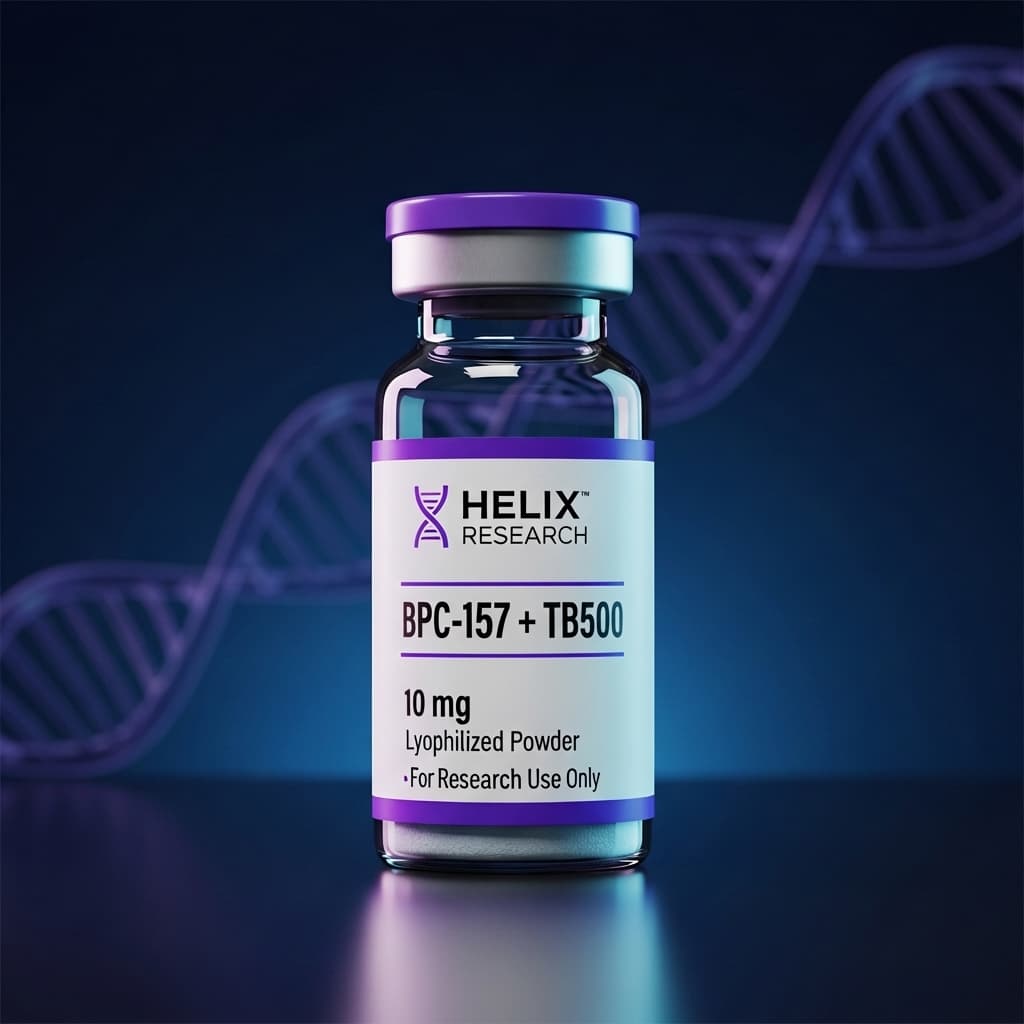
BPC 5mg + TB 5mg
El dúo de reparación más investigado en un solo vial
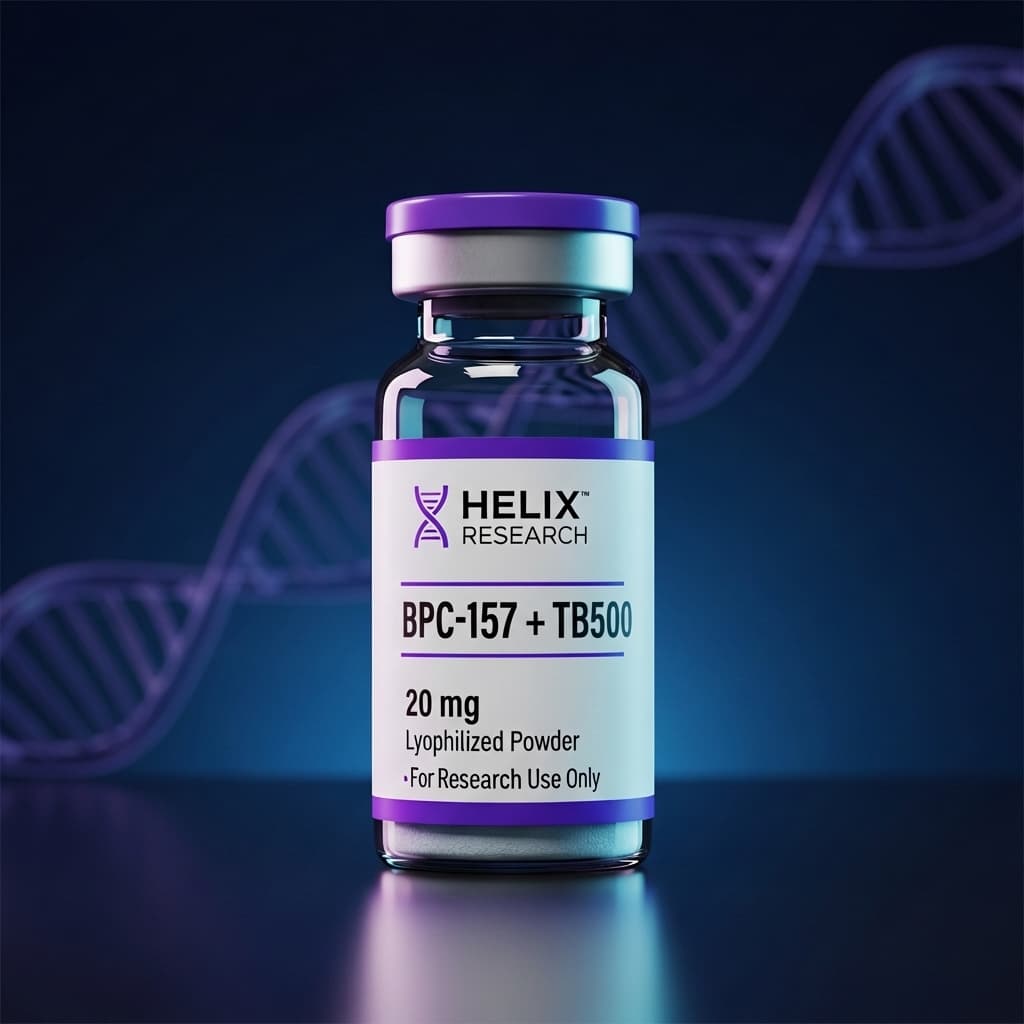
BPC 10mg + TB 10mg
Péptidos de reparación de máxima concentración para investigación avanzada
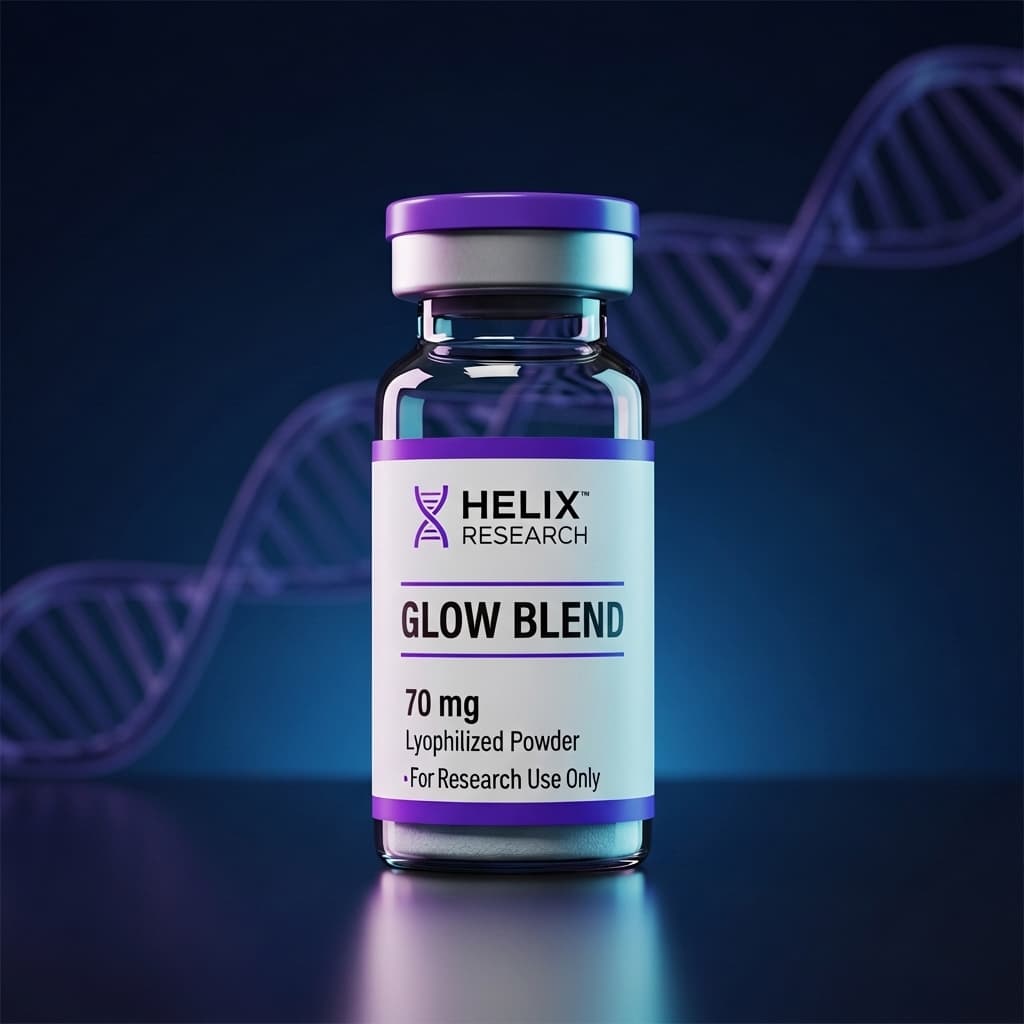
GLOW (BPC 157 10mg + GHK-Cu 50mg + TB500 10mg)
Fórmula de triple péptido estudiada para el rejuvenecimiento de la piel