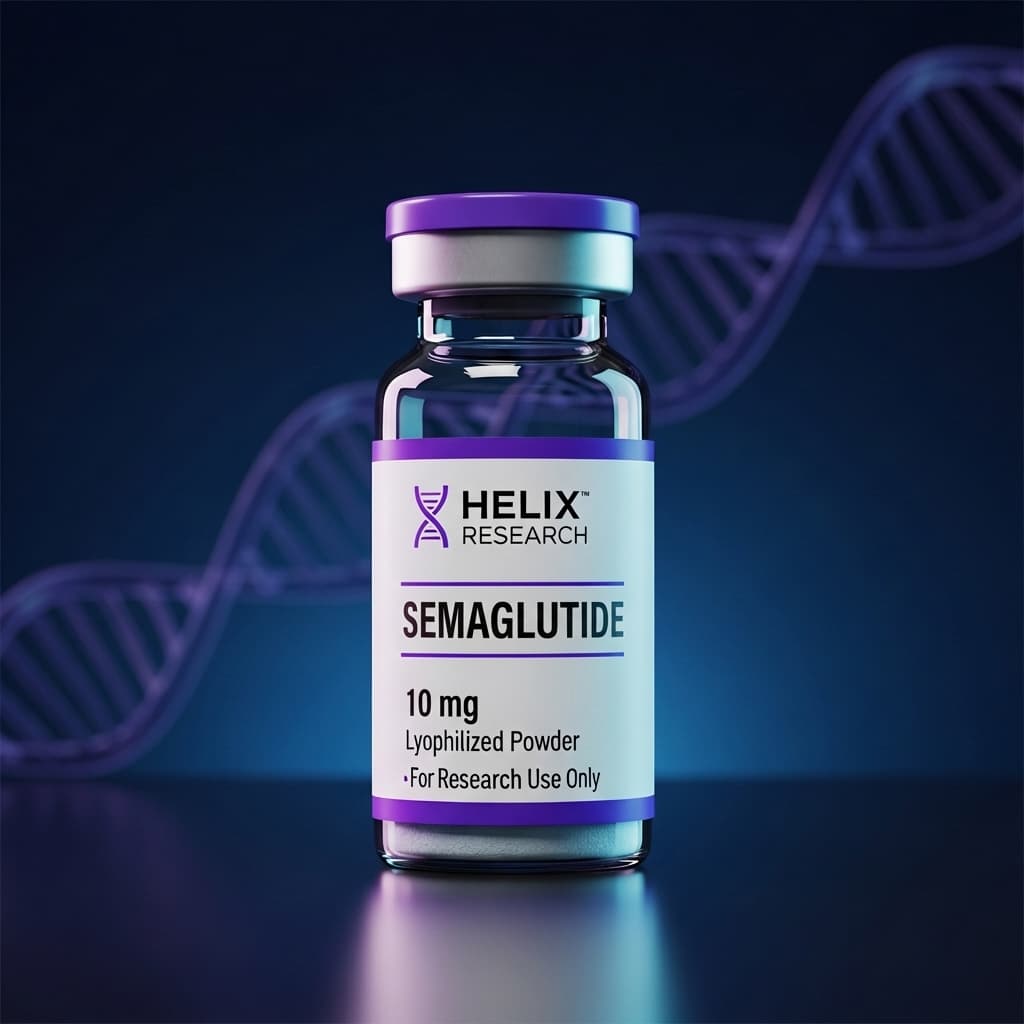
Sin spam. Cancela en cualquier momento.
Análisis de Pureza HPLC
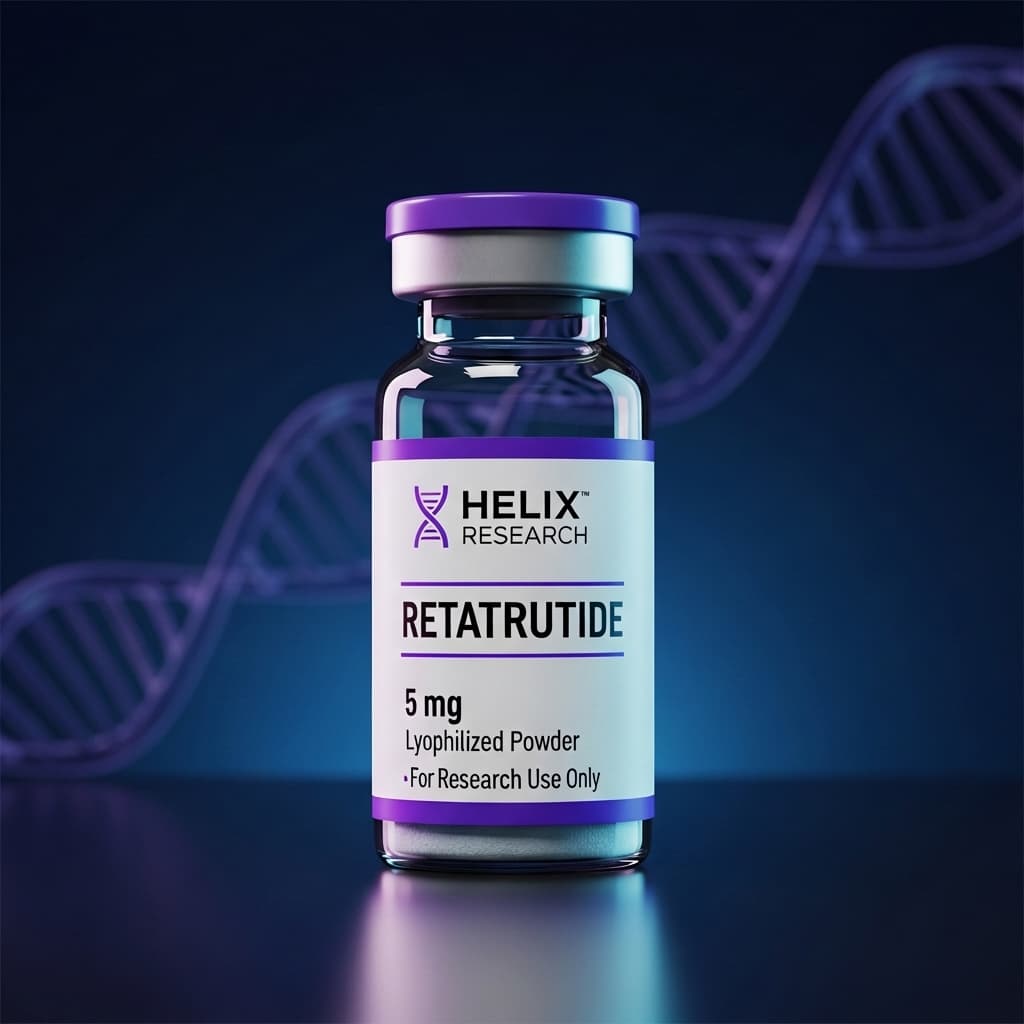
Retatrutide
CAS: 2381089-83-2
Agonista de triple receptor estudiado para una actividad metabólica mejorada
Retatrutide es un péptido de investigación en la categoría de GLP-1 / control de peso. Retatrutide es un agonista de triple receptor hormonal que activa simultáneamente los receptores GLP-1, GIP y glucagón (GCGR). MiPeptidos ofrece Retatrutide en 6 tamaños con 99.4% de pureza verificada y documentación analítica completa.
- Hasta 24% de pérdida de peso corporal
- Mayor quema de calorías
- Reducción de grasa hepática
- Reducción del apetito por 3 vías
Los estudios sugieren que la supresión del apetito comienza dentro de la primera semana, con algunos estudios que también notan mayor sensación de calor o energía por el componente termogénico del glucagón. Entre las semanas 8-12, la pérdida de peso generalmente se acelera más allá de lo que ofrecen los péptidos de doble vía. En ensayos clínicos, los participantes perdieron un promedio de 24% de peso corporal en la semana 48 — la mayor cantidad de cualquier péptido estudiado hasta la fecha. Los estudios reportan que las áreas de grasa resistente responden particularmente bien debido al mecanismo adicional de quema de calorías.
$30.59/vial · Everything you need to start
Sin spam. Cancela en cualquier momento.
Análisis de Pureza HPLC
Triple-Action Metabolic Reset.
24-week triple-agonist protocol — the most potent incretin-class compound in clinical development
Retatrutide (LY3437943) is a first-in-class triple GIP/GLP-1/glucagon receptor agonist developed by Eli Lilly. It represents the cutting edge of incretin-based therapy by adding glucagon receptor agonism to the dual GIP/GLP-1 mechanism of tirzepatide. In the Phase 2 trial, retatrutide 12mg achieved an unprecedented 24.2% mean weight loss at 48 weeks — the highest weight reduction ever reported for a pharmacological agent.
Resultados Publicados
Revisado por ParesResultados cuantificables de investigación clínica publicada.
Lo que Dicen los Expertos
4 MédicosProfesionales e investigadores líderes que han estudiado y prescrito este péptido.
Dr. Ania Jastreboff
Director, Yale Obesity Research Center
Associate Professor of Medicine and Pediatrics at Yale. Lead investigator of the retatrutide Phase 2 obesity trial. MD, PhD.
The magnitude of weight loss we observed with retatrutide at 24 weeks — 17.5% — continued to increase through 48 weeks to 24.2%. This suggests we haven't yet reached the plateau.
Gradual dose escalation over 24 weeks is essential. The glucagon receptor component adds metabolic benefit but also unique considerations for hepatic monitoring.
Fuente: Retatrutide Phase 2 trial (NEJM, 2023, PMID: 37351564)
Dr. Lee Kaplan
Director, Obesity, Metabolism and Nutrition Institute, Massachusetts General Hospital
Associate Professor of Medicine at Harvard Medical School. Gastroenterologist specializing in obesity pathophysiology. MD, PhD.
Triple receptor agonism is a game-changer. The glucagon component increases energy expenditure in ways that GLP-1 agonists alone cannot, and the 24% weight loss approaches surgical outcomes.
Monitor liver function tests during treatment — glucagon receptor activation increases hepatic lipid oxidation, which is beneficial but requires monitoring. Combine with structured exercise.
Fuente: Harvard Obesity Medicine commentary; NEJM editorial
Dr. Daniel Drucker
Professor of Medicine, University of Toronto; Lunenfeld-Tanenbaum Research Institute
One of the world's foremost experts on GLP-1 biology. Discovered GLP-1's insulinotropic properties. Canada Gairdner International Award recipient.
The triple agonist approach exploits complementary biology: GLP-1 for appetite, GIP for insulin sensitivity, and glucagon for energy expenditure. The clinical results validate decades of basic science.
Emphasizes that glucagon receptor co-agonism was historically considered counterintuitive for diabetes, but the balanced triple engagement produces net glycemic benefit alongside maximum weight loss.
Fuente: Cell Metabolism reviews; NEJM perspectives on incretin biology
Dr. Matthias Tschöp
CEO, Helmholtz Munich; Professor of Metabolic Diseases, Technical University of Munich
Pioneer of poly-agonist metabolic pharmacology. Conceptualized the multi-receptor approach that led to tirzepatide and retatrutide. Numerous high-impact publications in Nature and Cell.
We hypothesized that unimolecular poly-agonists engaging multiple metabolic receptors simultaneously would produce additive or synergistic effects. Retatrutide's clinical data confirms this hypothesis dramatically.
The glucagon component drives thermogenesis and liver fat clearance. This makes retatrutide particularly promising for MASH/NASH and metabolic syndrome beyond simple weight loss.
Fuente: Nature Reviews Drug Discovery (2018); Cell Metabolism poly-agonist reviews
Protocolo de Dosificación
4 FasesRégimen de dosificación paso a paso compilado de profesionales líderes e investigación clínica.
Lower starting dose than tirzepatide due to additional glucagon receptor activation. Establishes tolerability across all three receptor pathways. GI side effects typically mild at this dose.
First meaningful dose increase. Appetite suppression and early metabolic effects begin. Monitor liver enzymes at baseline and week 8. Glucagon-mediated thermogenesis may increase resting metabolic rate.
Intermediate dose with robust metabolic activity. Phase 2 showed 22.1% weight loss at 8mg by 48 weeks. Many research protocols stabilize here if tolerability is a concern.
Maximum studied dose. 24.2% weight loss at 48 weeks in Phase 2 — the highest ever for a drug. Weight loss curve was still declining at 48 weeks, suggesting further loss possible.
Research-grade lyophilized retatrutide: reconstitute 5mg vial with 1mL bacteriostatic water = 5mg/mL. For 1mg dose = 0.2mL (20 units). For 4mg dose = 0.8mL. Use insulin syringes for precise measurement.
Retatrutide is designed for continuous use based on Phase 2 data. No cycling data exists. Given the ongoing Phase 3 TRIUMPH program, long-term safety data is still being collected. Discontinuation protocols not yet established.
Lyophilized: store at -20°C. Reconstituted: refrigerate at 2-8°C, use within 30 days. Protect from light. The peptide is a large molecule sensitive to degradation — proper cold-chain storage is critical.
Subcutaneous injection only. Rotate injection sites weekly. Administer on the same day each week. In Phase 2, most GI events occurred during dose escalation; delaying escalation by 2-4 weeks if needed did not compromise final outcomes.
Cronología de Recuperación
Basado en observaciones de investigación publicada. Los resultados individuales varían. Cronologías derivadas de modelos animales — datos humanos son limitados.
Triple Receptor Activation & GI Adaptation
- All three receptor pathways (GIP, GLP-1, glucagon) begin activating
- Mild appetite reduction and early satiety from GLP-1R engagement
- Glucagon receptor activation begins increasing hepatic lipid oxidation
- GI adaptation period — nausea reported in ~20% at starting doses
- Typical weight loss: 2-4% of body weight
Base de investigación: Rosenstock et al. (2023) Phase 1; Jastreboff et al. (2023) NEJM Phase 2 (PMID: 37351564)
Dose Escalation & Multi-Pathway Metabolic Shift
- Dose escalation from 4mg to 8mg drives strong appetite suppression
- Glucagon-mediated thermogenesis measurably increases resting energy expenditure
- Fasting glucose, insulin, and triglycerides significantly improving
- Liver fat content reducing through glucagon-driven hepatic lipid oxidation
- Typical weight loss: 12-17% of body weight by week 16
Base de investigación: Jastreboff et al. (2023) NEJM (PMID: 37351564) — Phase 2 24-week data
Peak Dose & Continued Weight Loss Trajectory
- 12mg maximum dose producing peak metabolic effects across all three pathways
- Weight loss curve continues declining — no plateau reached at 48 weeks in Phase 2
- HbA1c reductions comparable to tirzepatide
- MASH/NASH improvements expected based on glucagon-mediated liver fat clearance
- Typical weight loss: 20-24% of body weight
Base de investigación: Jastreboff et al. (2023) NEJM (PMID: 37351564) — 48-week extension
Long-Term Maintenance & Ongoing Monitoring
- 24.2% mean weight loss at 48 weeks at 12mg — still declining
- 26% of participants lost ≥30% body weight in the highest dose group
- Long-term maintenance data awaiting Phase 3 TRIUMPH results
- Cardiovascular outcome data not yet available — TRIUMPH-4 is the planned CVOT
- Continued monitoring of liver enzymes and metabolic parameters recommended
Base de investigación: Jastreboff et al. (2023) NEJM (PMID: 37351564); TRIUMPH Phase 3 program (ongoing)
Mecanismo de Acción
4 vías biológicas distintas a través de las cuales opera este péptido.
Triple GIP/GLP-1/Glucagon Receptor Agonism
Simultaneously activates GIP, GLP-1, and glucagon receptors — the first compound to engage all three metabolic hormone pathways in a single molecule.
- GIP activation enhances insulin sensitivity and lipid metabolism
- GLP-1 activation drives appetite suppression and glucose-dependent insulin secretion
- Glucagon activation increases energy expenditure and hepatic lipid oxidation
- Triple engagement produces weight loss exceeding any dual or single agonist
Jastreboff et al. (2023) NEJM (PMID: 37351564); Coskun et al. (2022) Nature Medicine
Glucagon-Mediated Energy Expenditure
Glucagon receptor activation in the liver drives hepatic lipid oxidation and systemic thermogenesis, increasing energy expenditure independent of caloric intake.
- Glucagon activates hepatic fatty acid oxidation through cAMP/PKA signaling
- Increases resting energy expenditure through non-shivering thermogenesis
- Drives FGF21 release, which promotes browning of white adipose tissue
- This 'third arm' explains why retatrutide outperforms dual GIP/GLP-1 agonists
Day et al. (2021) Nature Reviews Drug Discovery
Hepatic Lipid Clearance
Glucagon receptor activation directly drives hepatic lipid oxidation and reduces liver fat content, making retatrutide particularly promising for MASH/NASH.
- Glucagon activates CPT1a for mitochondrial fatty acid oxidation in hepatocytes
- Phase 2 substudy showed dramatic liver fat reductions (full data forthcoming)
- Combined with GLP-1/GIP metabolic improvements for comprehensive liver benefit
- TRIUMPH-3 is specifically studying retatrutide for MASH
Phase 2 liver fat substudy data; TRIUMPH-3 design
Central Appetite Regulation
GLP-1 receptor activation in the hypothalamus suppresses appetite through POMC/CART upregulation and NPY/AgRP downregulation, amplified by GIP-mediated reward circuit modulation.
- GLP-1R activation in arcuate nucleus reduces hunger drive
- GIP-R activation may modulate mesolimbic reward pathways
- Combined central effects produce the most potent appetite suppression in any drug
- Patients report significantly reduced 'food noise' and cravings
SURMOUNT trial patient-reported outcomes; incretin neuroscience reviews
Investigación Publicada
5 estudios revisados por pares de PubMed. Haz clic en cualquier PMID para ver el estudio completo.
Triple-Hormone-Receptor Agonist Retatrutide for Obesity — A Phase 2 Trial
Jastreboff AM, Kaplan LM, Frías JP, Wu Q, Du Y, Gurbuz S, et al. — New England Journal of Medicine (2023)
Hallazgo Clave: Retatrutide 12mg achieved 24.2% mean weight loss at 48 weeks — the largest reduction reported for any anti-obesity medication. 26% of participants lost ≥30% body weight.
Retatrutide, a GIP, GLP-1 and glucagon receptor agonist, for people with type 2 diabetes: a randomised, double-blind, placebo and active-comparator controlled, parallel-group, phase 2 trial
Rosenstock J, Frías JP, Rodbard HW, et al. — The Lancet (2023)
Hallazgo Clave: In T2D patients, retatrutide 12mg reduced HbA1c by 2.02% and body weight by 16.94% at 36 weeks. Superior glycemic and weight outcomes versus the dulaglutide active comparator.
GIP/GLP-1/glucagon triple receptor agonist retatrutide for obesity: phase 1 dose-ascending and phase 2 dose-optimization study
Coskun T, Urva S, Roell WC, et al. — Nature Medicine (2022)
Hallazgo Clave: Phase 1: Retatrutide was well-tolerated up to 12mg weekly. Dose-dependent reductions in body weight of up to 8.96kg at 12 weeks. Pharmacokinetics support once-weekly dosing.
LY3437943, a novel triple GIP, GLP-1, and glucagon receptor agonist in people with type 2 diabetes: a phase 1b, multicentre, double-blind, placebo-controlled, randomised, multiple-ascending-dose trial
Rosenstock J, Frias JP, Rodbard HW, et al. — The Lancet (2022)
Hallazgo Clave: Phase 1b: Confirmed tolerability, pharmacokinetics, and dose-dependent metabolic effects. Established 12mg as the maximum dose for Phase 2/3 development.
Glucagon receptor agonism in the treatment of obesity
Day JW, Ottaway N, Patterson JT, et al. — Nature Reviews Drug Discovery (2021)
Hallazgo Clave: Comprehensive review establishing the scientific rationale for glucagon co-agonism: increased energy expenditure, hepatic lipid oxidation, and synergy with GLP-1-mediated appetite suppression.
Potencia tu Protocolo de Investigación
4 SinergiasLa investigación sugiere combinar Retatrutide con estos péptidos para mecanismos complementarios.

BPC-157 provides GI mucosal protection during retatrutide's dose escalation phase when GI side effects are most prevalent.
May enable smoother dose escalation with fewer GI-related dose delays, potentially reaching therapeutic doses faster.

With the most potent weight loss of any pharmacological agent, lean mass preservation becomes especially critical with retatrutide.
Critical for preserving metabolically active tissue when experiencing weight loss of this magnitude. Resistance training + GH support is essential.

MOTS-c enhances mitochondrial function and exercise capacity, complementing retatrutide's thermogenic glucagon component.
May enhance the energy expenditure component of retatrutide's triple mechanism while supporting exercise tolerance during caloric deficit.

Tesamorelin specifically targets visceral and hepatic fat reduction, synergizing with retatrutide's glucagon-mediated liver fat clearance.
Dual approach to visceral fat: glucagon-driven hepatic oxidation plus GH-mediated lipolysis. Particularly relevant for MASH/NASH-focused protocols.
Especificaciones
Cómo Funciona Retatrutide
Retatrutide is a triple hormone receptor agonist that simultaneously activates GLP-1, GIP, and glucagon (GCGR) receptors. GLP-1 and GIP agonism drive insulin secretion and appetite suppression, while glucagon receptor activation increases energy expenditure and hepatic lipid oxidation. This triple mechanism addresses multiple metabolic pathways for potentially superior weight loss and metabolic improvement over dual agonists.
Aplicaciones de Investigación
Precios
| Tamaño | Por Vial | Paquete de 10 | Ahorro |
|---|---|---|---|
5mg | $149.95 | $1274.58 | — |
10mg | $249.95 | $212.95 | — |
15mg | $349.95 | $297.95 | — |
20mgOferta | $139.95$240.00 | $1189.58 | 42% descuento |
30mg | $300.00 | $2550.00 | — |
60mgMejor Valor | $400.00 | $3400.00 | — |
Precios de paquete de 10 mostrados. Descuentos por volumen para 50+ viales — contáctenos.
Certificado de Análisis
Este COA es una muestra representativa. Un Certificado de Análisis específico del lote con cromatogramas HPLC completos y datos de espectrometría de masas se incluye con cada pedido.
Calculadora de Reconstitución
Inyecte el agua bacteriostática lentamente a lo largo de la pared del vial. Agite suavemente hasta disolver — nunca sacuda. Almacene la solución reconstituida a 2-8°C y use dentro de 30 días.
Reseñas de Clientes
Preguntas Frecuentes
Seguridad y Advertencias
Investigational compound — not approved for any use
Retatrutide is in Phase 3 clinical trials (TRIUMPH program). It has NO regulatory approval anywhere in the world. All use is purely investigational. Research peptide form carries additional quality uncertainty.
Thyroid C-cell tumors (class warning)
Like all GLP-1 receptor agonists, retatrutide carries a theoretical risk of thyroid C-cell tumors based on rodent data. CONTRAINDICATED with personal or family history of MTC or MEN 2.
Pancreatitis and hepatic risks
GLP-1-class pancreatitis risk applies. Additionally, glucagon receptor activation alters hepatic metabolism — liver function monitoring is essential. Transient ALT elevations observed in Phase 2.
Solo para Fines de Investigación y Educación. No es consejo médico. No para consumo humano. Consulte a un médico autorizado antes de tomar cualquier decisión relacionada con la salud.
Péptidos Relacionados
Up to 50% OffSemaglutide
Estudiado clínicamente para una reducción de peso constante — una vez por semana
Up to 60% OffTirzepatide
El agonista dual más estudiado para la reducción de peso
Up to 38% OffLiraglutide
GLP-1 diario estudiado para la regulación constante del apetito
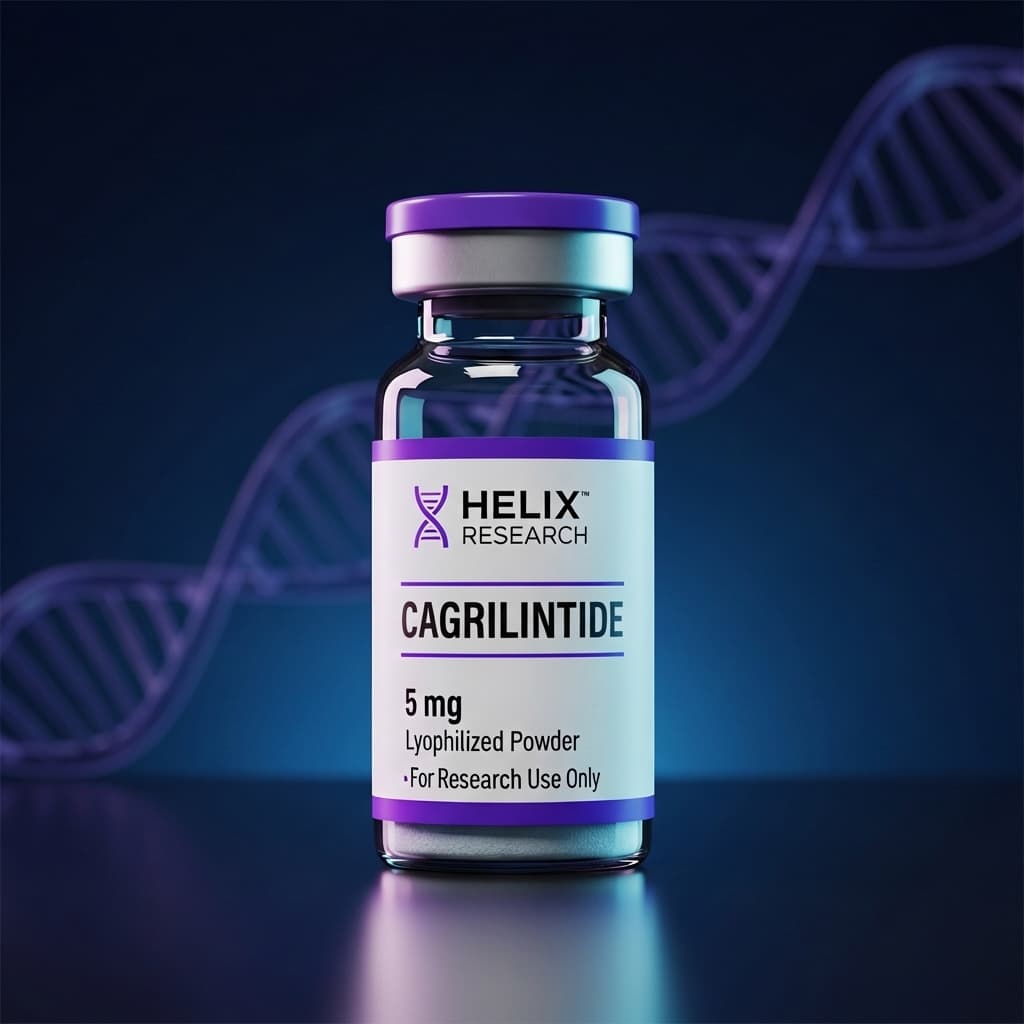
Up to 15% OffCagrilintide
Estudiado para vías de saciedad mediadas por amilina más allá del GLP-1