Oxytocin Acetate: Beyond the 'Love Hormone' in Research
If you've heard of oxytocin at all, it's probably through one of its popular nicknames — the "love hormone," the "bonding molecule," or occasionally the "cuddle chemical." And while those labels aren't entirely wrong, they barely scratch the surface of what this remarkable neuropeptide (a small protein-like molecule that neurons use to communicate) actually does in the body and brain. For researchers, oxytocin represents one of the most scientifically rich compounds available today — a molecule with documented roles spanning social behavior, stress regulation, inflammation, gut function, and beyond.
This article explores oxytocin acetate — the acetate salt form of synthetic oxytocin commonly used in laboratory research — with a focus on what published science actually tells us about its mechanisms, applications, and research value.
Introduction
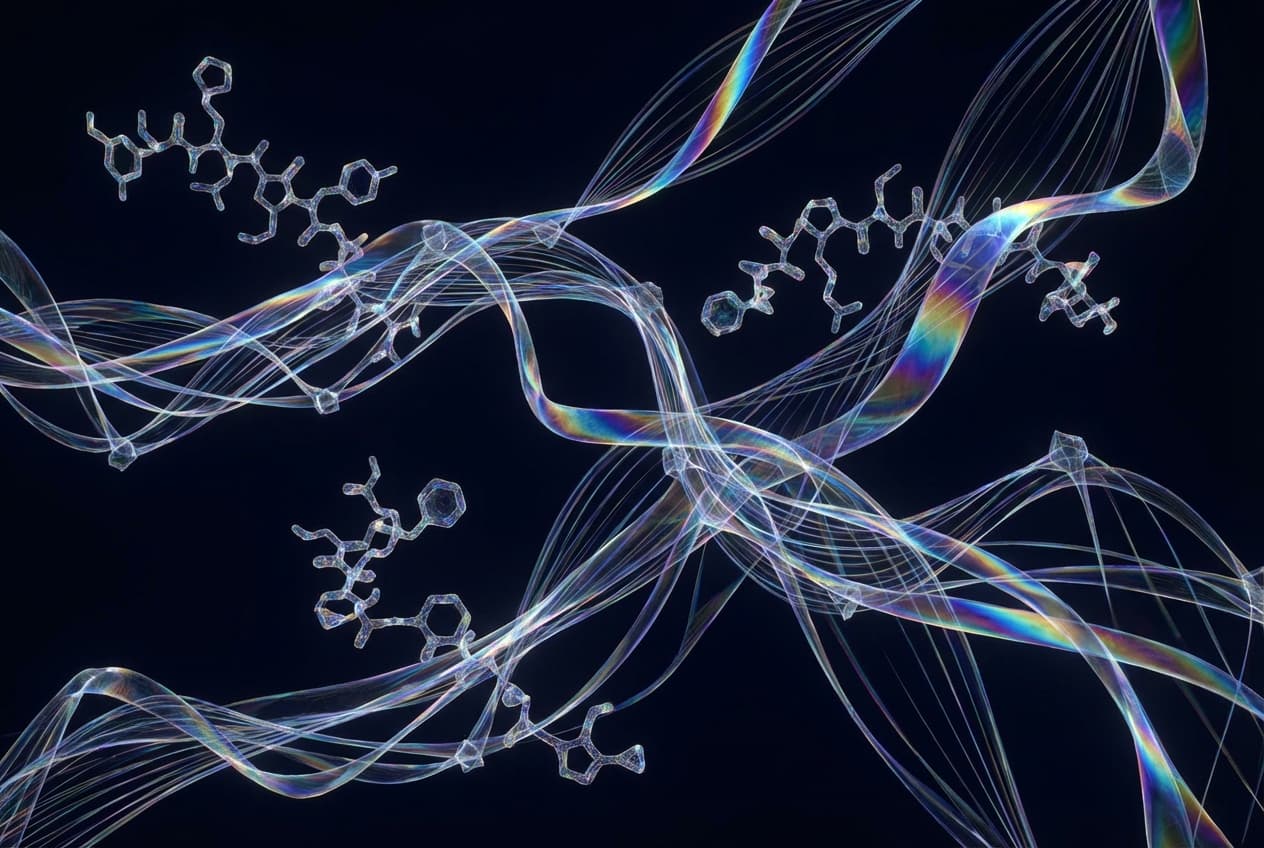
Oxytocin is a nonapeptide — a chain of exactly nine amino acids — synthesized primarily in the hypothalamus (a region deep in the brain responsible for hormonal regulation) and released into the bloodstream via the posterior pituitary gland. It was first isolated and synthesized in the 1950s by biochemist Vincent du Vigneaud, work that earned him the Nobel Prize in Chemistry in 1955. That makes oxytocin one of the first peptide hormones ever to be synthesized in a laboratory — a milestone in the history of biochemistry.
In its acetate salt form, oxytocin is stabilized for research use. The acetate counterion (CH₃COO⁻) improves the compound's hygroscopic stability — meaning it resists absorbing excess moisture from the air, which can degrade peptide integrity over time. This is why oxytocin acetate is the preferred form for research-grade preparations.
What makes this peptide so compelling to researchers isn't just its famous association with social bonding. Published data indicates that oxytocin receptors are distributed widely throughout the brain, peripheral nervous system, immune cells, the gastrointestinal tract, and even cardiac tissue. That distribution suggests functional roles far more diverse than its popular nickname implies.
Mechanism of Action
The Oxytocin Receptor
Oxytocin exerts its effects by binding to the oxytocin receptor (OXTR) — a member of the G protein-coupled receptor (GPCR) superfamily (a large class of cell-surface proteins that transmit signals from outside the cell to its interior). When oxytocin binds to OXTR, it triggers an intracellular signaling cascade primarily through Gq proteins, leading to increased intracellular calcium and activation of downstream pathways including phospholipase C and protein kinase C.
The result depends heavily on where this binding occurs:
- In the hypothalamus and limbic system: research suggests modulation of anxiety, fear responses, and social recognition
- In the brainstem: studies indicate influence on autonomic nervous system tone, including heart rate and stress reactivity
- In peripheral tissues: published data indicates roles in smooth muscle contraction, immune modulation, and gut motility
- In immune cells: oxytocin receptors have been identified on T cells, macrophages, and natural killer cells — suggesting immunomodulatory research potential
Central vs. Peripheral Signaling
One important distinction researchers work with is the difference between central oxytocin (acting within the brain and spinal cord) and peripheral oxytocin (acting in the body's organs and tissues). These two pools of oxytocin are largely regulated independently, which is why simply measuring blood levels of oxytocin doesn't always reflect what's happening in the brain.
This distinction matters enormously for research design, particularly when choosing between intranasal administration (intended to reach the central nervous system) and systemic delivery routes in animal model studies.
Research published in Neuroscience & Biobehavioral Reviews (Quintana et al., 2020) highlighted that the assumption intranasal oxytocin reliably reaches the brain remains scientifically contested, with evidence suggesting peripheral signaling may account for a significant portion of observed effects.
Published Research
Social Behavior and the Brain
The foundational association between oxytocin and social bonding is genuinely well-supported by preclinical research. Studies in prairie voles — rodents that form monogamous pair bonds, making them excellent models for studying social attachment — demonstrated that oxytocin signaling in the nucleus accumbens (a reward-processing region of the brain) is essential for pair bond formation. Blocking oxytocin receptors in this region prevented bonding even after mating, while administering oxytocin facilitated it (Young & Wang, 2004; PMID: 15565108).
In human neuroimaging studies, research suggests that oxytocin modulates activity in the amygdala (the brain's threat-detection center), generally reducing its reactivity to social stimuli perceived as threatening. This has made oxytocin a subject of sustained interest in social neuroscience.
A landmark study by Kosfeld et al. (2005, Nature; PMID: 15931222) found that intranasal oxytocin administration in human subjects increased trust in economic exchange games compared to placebo — a finding that sparked enormous interest in oxytocin's role in prosocial behavior and launched a decade of follow-up research.
It's worth noting that later research has complicated this picture considerably. Studies have demonstrated that oxytocin's effects on social behavior are context-dependent — it doesn't simply make social interactions more positive. Research suggests it can amplify both prosocial and in-group/out-group distinctions, highlighting the nuanced nature of its behavioral effects (De Dreu et al., 2010; PMID: 20044677).
Stress Response and the HPA Axis
One of the more compelling research areas involves oxytocin's interaction with the HPA axis (the hypothalamic-pituitary-adrenal axis — the body's primary hormonal stress response system). Published data indicates that oxytocin can attenuate cortisol release (the primary human stress hormone) in response to social stressors, and research in animal models has demonstrated direct inhibitory effects on corticotropin-releasing hormone (CRH) neurons.
A study published in Psychoneuroendocrinology examined oxytocin's role in buffering stress responses and found that social support-induced stress reduction correlated with endogenous oxytocin levels — supporting the hypothesis that oxytocin serves as a biological mediator of the well-documented "social buffering" effect (PMID: 22265195).
Research suggests that oxytocin's interaction with the HPA axis may represent a key mechanism by which social connection influences physiological stress responses at a hormonal level.
Inflammation and Immune Function
A less-publicized but growing body of literature examines oxytocin's immunomodulatory (immune-regulating) properties. Published data from both in vitro (cell culture) and in vivo (living organism) studies indicates that oxytocin can reduce the production of pro-inflammatory cytokines — signaling proteins that promote inflammation — including TNF-α, IL-6, and IL-1β.
A study published in Brain, Behavior, and Immunity (Clodi et al., 2008; PMID: 18164591) demonstrated that oxytocin administration reduced inflammatory markers in experimental models of cardiac stress, suggesting a potential cardioprotective mechanism worthy of further investigation.
Research in gut tissue has further documented oxytocin receptor expression in intestinal epithelial cells and enteric neurons, with studies suggesting roles in regulating intestinal permeability (the tightness of the gut lining) and gut motility. This positions oxytocin as a molecule of emerging interest in neuro-gastroenterology research.
Autism Spectrum Disorder Research Models
Perhaps no application of oxytocin research has generated more interest — or more complexity — than its investigation in autism spectrum disorder (ASD) models. The theoretical basis is straightforward: if oxytocin facilitates social cognition and bonding, and ASD involves differences in social processing, could modulating oxytocin signaling be relevant?
Early animal model research was promising. Studies in mouse models with OXTR gene knockouts (animals genetically engineered to lack functional oxytocin receptors) demonstrated significant social deficits, supporting the relevance of the oxytocin system to social behavior (Sala et al., 2011; PMID: 21527244).
Human clinical trials investigating oxytocin in ASD populations have produced mixed and inconclusive results**, with the largest randomized controlled trial to date (Sikich et al., 2021, NEJM; PMID: 34551228) finding no significant benefit of intranasal oxytocin over placebo in children and adolescents — underscoring the complexity of translating preclinical findings into clinical contexts.
This honest complexity is important. It reflects the current state of oxytocin research accurately: genuinely promising mechanistic science, paired with significant challenges in translational application.
Wound Healing and Tissue Research
An emerging area of investigation involves oxytocin's potential role in tissue repair and regeneration. Research suggests that oxytocin receptors are expressed on myofibroblasts (cells involved in wound contraction and healing) and stem cells in various tissues. Published data from animal studies indicates that oxytocin may influence the differentiation of mesenchymal stem cells (multipotent cells capable of becoming bone, cartilage, or fat cells), which has generated interest in musculoskeletal and regenerative biology research contexts.
3 compounds bundled · Save 10%
Practical Research Information
Chemical Properties
| Property | Details |
|---|---|
| Full Name | Oxytocin acetate salt |
| Molecular Formula | C₄₃H₆₆N₁₂O₁₂S₂ · xC₂H₄O₂ |
| Molecular Weight | ~1007.19 g/mol (free peptide) |
| Sequence | Cys-Tyr-Ile-Gln-Asn-Cys-Pro-Leu-Gly-NH₂ |
| Disulfide Bond | Between Cys¹ and Cys⁶ |
| CAS Number | 6233-83-6 |
| Appearance | White to off-white lyophilized powder |
The disulfide bridge (a covalent bond between two sulfur atoms on the cysteine residues) is essential to oxytocin's three-dimensional structure and biological activity. This structural feature also makes oxytocin somewhat vulnerable to reducing conditions in solution, which researchers should account for in experimental design.
Solubility
Oxytocin acetate is water-soluble, which is one of its more convenient properties for research purposes. It dissolves readily in:
- Sterile water or physiological saline (0.9% NaCl) — the standard first-choice solvents
- Phosphate-buffered saline (PBS) at neutral pH
- Dilute acetic acid (0.1%) — useful when aqueous solubility needs enhancement at higher concentrations
Researchers generally avoid organic solvents such as DMSO for oxytocin, as these are unnecessary given its water solubility and may affect structural integrity.
Storage and Stability
Proper storage is critical for maintaining peptide integrity in research preparations:
- Long-term storage: −20°C in lyophilized (freeze-dried) form, protected from light and moisture
- Working solutions: Prepare fresh or store at 4°C for short periods (typically ≤48–72 hours); avoid repeated freeze-thaw cycles
- Reconstituted solutions: More vulnerable to degradation than lyophilized powder; use within 24–48 hours or aliquot and freeze immediately after preparation
- pH sensitivity: Optimal stability in slightly acidic to neutral pH (4.5–7.0); highly alkaline conditions accelerate degradation
Peptide degradation often occurs before any visible change in appearance. Researchers should follow established storage protocols rigorously and consider periodic HPLC purity verification (High-Performance Liquid Chromatography — a method for measuring compound purity) for sensitive experimental applications.
Research Concentrations and Dosing Considerations
Published animal model research has employed a wide range of research doses depending on the route of administration and experimental model. For reference, studies in rodent models have utilized central (intracerebroventricular) research doses in the nanogram range, while peripheral systemic research doses are typically in the microgram-per-kilogram range. Researchers should consult primary literature relevant to their specific model system for appropriate research dose ranges.
Research Considerations
Context Dependency of Oxytocin Effects
One of the most important lessons from the oxytocin literature is that this peptide does not produce uniform, predictable effects across contexts, individuals, or species. Research has demonstrated that oxytocin's behavioral and physiological effects can be modulated by:
- Social context: The presence or absence of conspecifics (members of the same species) significantly alters oxytocin's effects in animal models
- Sex differences: Published data indicates meaningful differences in oxytocin system function between male and female subjects, likely related to interactions with estrogen signaling
- Baseline state: Research suggests that oxytocin effects may be more pronounced in individuals with lower baseline endogenous oxytocin tone
- Receptor polymorphisms: Genetic variations in the OXTR gene influence receptor sensitivity and have been associated with individual differences in social behavior in published research
These factors mean that researchers designing oxytocin studies should carefully consider their model system, control conditions, and the broader literature when interpreting findings.
Methodological Considerations in Oxytocin Research
The field has grappled with several methodological challenges that researchers should be aware of:
Measurement challenges: Reliably measuring oxytocin levels in plasma and cerebrospinal fluid (CSF) has been historically difficult due to the peptide's short half-life (approximately 3–5 minutes in plasma) and the sensitivity requirements of available assays. Enzyme-linked immunosorbent assay (ELISA) methods have shown variable reliability; mass spectrometry-based methods are now considered the gold standard for oxytocin quantification in published research.
Replication issues: A number of high-profile oxytocin findings from earlier research have faced challenges in replication, leading the field toward larger sample sizes, pre-registration of study protocols, and more rigorous methodological standards. This is a healthy scientific evolution, not a reason to dismiss the field.
Species translation: Oxytocin system organization varies meaningfully across species. Findings in prairie voles, rats, mice, and non-human primates do not always translate predictably to human biology — a reality that makes careful cross-species comparison essential.
Regulatory and Ethical Framework
Researchers working with oxytocin acetate should be familiar with the institutional and regulatory requirements applicable in their jurisdiction, including IACUC (Institutional Animal Care and Use Committee) approval for animal research protocols and appropriate IRB (Institutional Review Board) oversight for any human subjects research. Research-grade peptide compounds are distinct from pharmaceutical-grade preparations and are intended exclusively for laboratory research applications.
Disclaimer
For research purposes only. Not for human consumption.
Oxytocin acetate, as described in this article, is a research-grade compound intended solely for use in laboratory and preclinical research settings by qualified researchers. This article is provided for educational and informational purposes only. Nothing in this article constitutes medical advice, and the compound discussed has not been evaluated by the FDA or equivalent regulatory bodies for use in diagnosing, preventing, or addressing any medical condition. All research involving this compound should be conducted in accordance with applicable institutional guidelines, ethical standards, and regulatory requirements. Researchers are responsible for ensuring compliance with all relevant laws and regulations in their jurisdiction.