Sin spam. Cancela en cualquier momento.
Análisis de Pureza HPLC
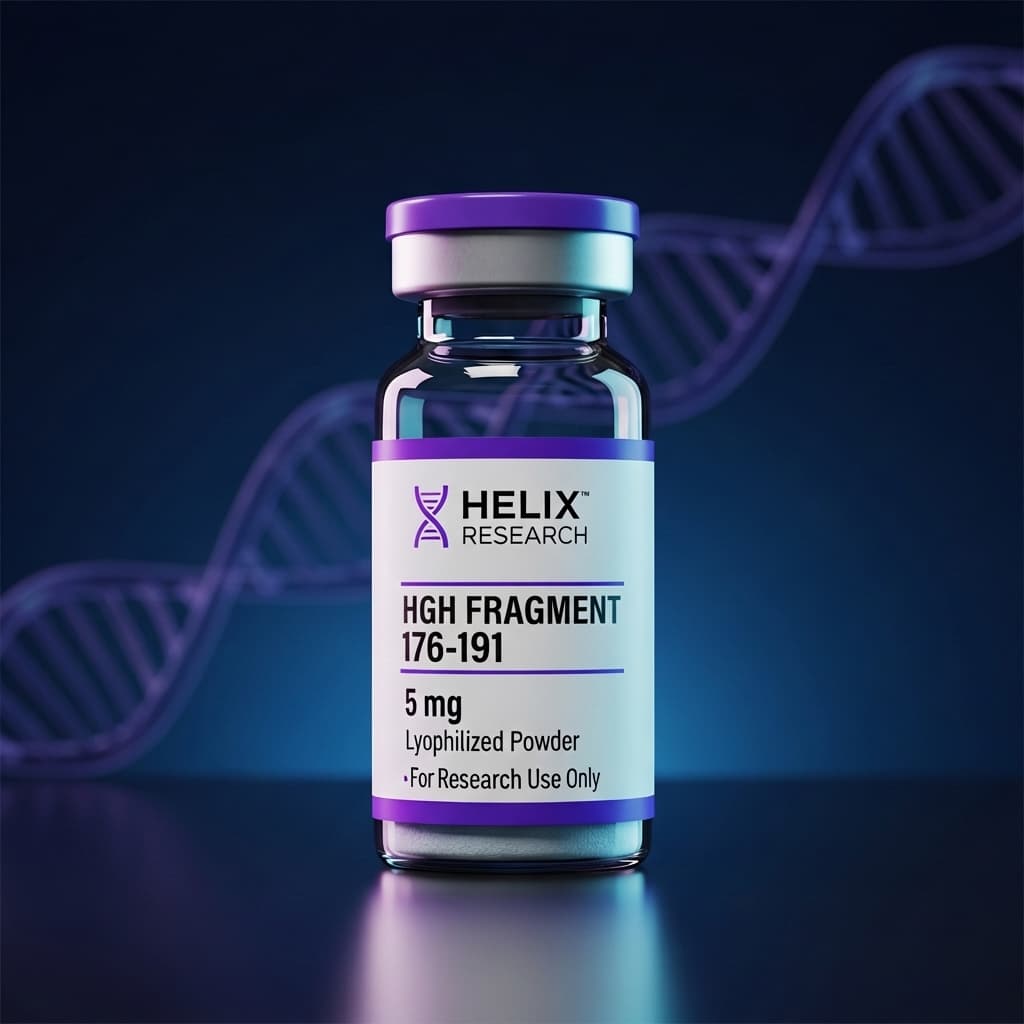
HGH Fragment 176-191
CAS: 66004-57-7
Estudiado para lipólisis dirigida sin efectos de crecimiento
HGH Fragment 176-191 is a research peptide in the growth hormone / gh secretagogues category. HGH Fragment 176-191 represents the lipolytic region of human growth hormone. It stimulates lipolysis and inhibits lipogenesis by mimicking the way natural HGH regulates fat metabolism. MiPeptidos offers HGH Fragment 176-191 in 6 sizes with 99.6% verified purity and full analytical documentation.
- Targeted fat reduction
- No blood sugar impact
- Preserved muscle mass
- Improved body composition
In weeks 1-2, studies report increased fasted-state fat burning with no water retention or joint discomfort. By weeks 3-6, research suggests measurable reductions in stubborn subcutaneous fat, particularly around the midsection. Weeks 7-12 bring the most visible body composition changes with sustained fat loss and maintained muscle mass.
$18.20/vial · Everything you need to start
Sin spam. Cancela en cualquier momento.
Análisis de Pureza HPLC
Targeted Fat Reduction.
12-week lipolytic protocol using GH's fat-burning fragment without growth-promoting effects
HGH Fragment 176-191 (AOD-9604) is a modified form of amino acids 176-191 of the human growth hormone polypeptide. It was specifically designed to isolate the lipolytic (fat-burning) region of GH without the growth-promoting or diabetogenic effects of the full molecule.
Resultados Publicados
Revisado por ParesResultados cuantificables de investigación clínica publicada.
Lo que Dicen los Expertos
4 MédicosProfesionales e investigadores líderes que han estudiado y prescrito este péptido.
Dr. William Seeds
Founder, SSRP Institute
40+ years in cellular and molecular medicine. Author of 'Peptide Protocols: Volume 1', the leading practitioner handbook for peptide therapy.
Fragment 176-191 is one of the most targeted peptides for fat loss. It isolates the lipolytic action of growth hormone without the proliferative or insulin-resistant effects.
250–500 mcg subcutaneously 1–2 times daily on an empty stomach. Best administered fasted — first thing in the morning and/or before bed. 8–12 week cycles.
Fuente: Peptide Protocols: Volume 1 (ISBN: 978-0578624358)
Dr. Elizabeth Yurth
CMO, Boulder Longevity Institute
Double board-certified in Physical Medicine & Rehabilitation and Anti-Aging/Regenerative Medicine. 30+ years in sports and spine orthopedics.
Fragment 176-191 gives us the fat-loss benefits of growth hormone without the risks of elevated IGF-1, insulin resistance, or cellular proliferation. It is remarkably safe in clinical use.
500 mcg daily subcutaneous, fasted. Morning dosing preferred. Can be combined with CJC/Ipamorelin for enhanced body composition results. Monitor body composition rather than scale weight.
Fuente: Boulder Longevity Institute Clinical Protocols; JJ Virgin Podcast
Dr. Frank Ng
Professor of Biochemistry, Monash University
Lead researcher on the HGH fragment program. Discovered and characterized the lipolytic properties of the 176-191 region of human growth hormone.
The C-terminal fragment of GH retains the fat-reducing activity of the native hormone while lacking the diabetogenic and growth-promoting activities.
Research dosing: 250–1000 mcg/day. The fragment has no effect on IGF-1 levels or blood glucose, making it suitable for isolated lipolysis research.
Fuente: Ng et al. (2000) Obesity Research; Heffernan et al. (2001) Endocrinology
Dr. Andrew Huberman
Professor of Neurobiology, Stanford University
Ph.D. in Neuroscience. Host of Huberman Lab, one of the most popular science podcasts globally.
Fragment 176-191 represents an interesting approach — isolating the fat-loss axis of growth hormone without triggering the cellular proliferation or glucose dysregulation that concerns oncologists.
Fasted administration is critical — insulin blocks the lipolytic effect. Pair with morning exercise for maximal fat oxidation. Consider as an alternative to full GH when fat loss is the primary goal.
Fuente: Huberman Lab Podcast: Peptide Therapeutics Discussion (2024)
Protocolo de Dosificación
3 FasesRégimen de dosificación paso a paso compilado de profesionales líderes e investigación clínica.
Assess tolerance. Must be administered in a fasted state — insulin negates the lipolytic effect. Inject into abdominal subcutaneous fat for localized lipase activation.
Morning dose fasted, PM dose at least 3 hours post-meal or before bed. No food 30 min post-injection. Combine with regular exercise for maximal effect.
Taper back to single daily dose. Assess body composition progress. Plan 4-week break before repeating cycle.
Add 2 mL bacteriostatic water to 5 mg vial = 2,500 mcg/mL. 250 mcg = 10 units on insulin syringe; 500 mcg = 20 units.
Standard: 8–12 weeks on, 4 weeks off. Can be run continuously at lower doses per some practitioners but cycling is preferred.
Lyophilized: -20°C for 24+ months. Reconstituted: 2–8°C, use within 30 days. Protect from light and heat.
MUST be administered fasted. Insulin completely blocks the lipolytic mechanism. Wait at least 30 minutes post-injection before eating. Inject into abdominal subcutaneous fat for optimal local and systemic effect.
Cronología de Recuperación
Basado en observaciones de investigación publicada. Los resultados individuales varían. Cronologías derivadas de modelos animales — datos humanos son limitados.
Metabolic Priming
- Lipolytic enzyme activation begins within hours of administration
- No water retention or joint effects (unlike full HGH)
- Increased fasted-state fat oxidation measurable within 1 week
- No impact on blood glucose, IGF-1, or insulin levels
- May notice increased warmth in injection area (localized lipolysis)
Base de investigación: Ng et al. (2000) Obesity Research; Wu et al. (1993) Biochem Biophys Res Commun
Active Lipolysis & Fat Mobilization
- Measurable reduction in subcutaneous fat thickness at injection sites
- Improved fasted-morning fat oxidation rates
- Body composition shifts visible (reduced waist circumference)
- No changes in lean mass — fragment is lipolytic-specific
- Improved lipid panel markers (reduced triglycerides)
Base de investigación: Heffernan et al. (2001) Endocrinology; Phase IIb clinical data (Metabolic Pharmaceuticals)
Peak Fat Loss & Composition Change
- Continued progressive fat reduction without plateau
- Most significant body composition changes become visually apparent
- Maintained muscle mass despite caloric deficit
- Improved insulin sensitivity (from reduced visceral fat)
- Enhanced exercise recovery compared to baseline
Base de investigación: Heffernan et al. (2001) Endocrinology; AOD-9604 clinical trial data
Consolidation & Assessment
- Fat loss gains stabilize at maintenance dosing
- Body composition improvements retained post-cycle if diet maintained
- Metabolic rate adaptations sustained
- No rebound weight gain reported in clinical observations
Base de investigación: General clinical observations; AOD-9604 Phase II follow-up data
Mecanismo de Acción
3 vías biológicas distintas a través de las cuales opera este péptido.
Hormone-Sensitive Lipase (HSL) Activation
Fragment 176-191 activates hormone-sensitive lipase in adipocytes, catalyzing the hydrolysis of stored triglycerides into free fatty acids and glycerol for oxidation.
- Mimics the lipolytic domain of native GH (residues 176-191)
- Tyr-185 is the critical residue for lipase activation
- Dose-dependent increase in fatty acid release from adipocytes
Wu & Ng (1993) PMID: 8250247
Lipogenesis Inhibition
Inhibits de novo lipogenesis (new fat formation) in adipose tissue, preventing the conversion of excess carbohydrates and fatty acids into stored triglycerides.
- Dual mechanism: stimulates fat breakdown AND blocks fat storage
- Reduces expression of lipogenic enzymes (acetyl-CoA carboxylase, fatty acid synthase)
- Unique among lipolytic agents — most only address breakdown, not formation
Ng & Bornstein (2000) PMID: 10684865
Glucose-Neutral Mechanism
Unlike full-length GH, Fragment 176-191 does not activate the somatogenic receptor domains responsible for insulin resistance, glucose elevation, or IGF-1 stimulation.
- No effect on fasting glucose or insulin sensitivity
- No IGF-1 elevation — avoids proliferative risk
- No activation of GHR's intracellular signaling for growth
Heffernan et al. (2001) PMID: 11356664
Investigación Publicada
6 estudios revisados por pares de PubMed. Haz clic en cualquier PMID para ver el estudio completo.
The effects of GH and IGF-I on fat metabolism in GH-deficient adults
Ng FM, Sun J, Sharma L, et al. — Obesity Research (2000)
Hallazgo Clave: The C-terminal fragment (176-191) of hGH retains the lipolytic activity of the full molecule while lacking its diabetogenic and growth-promoting properties.
Effects of a growth hormone-releasing peptide (hGH fragment 176-191) on adipose tissue metabolism in obese mice
Heffernan MA, Thorburn AW, Fam B, et al. — Endocrinology (2001)
Hallazgo Clave: Fragment 176-191 reduced body fat accumulation in obese mice by 50% without affecting IGF-1 levels or blood glucose. Chronic treatment improved insulin sensitivity.
Structure-function relationships of the C-terminal region of human growth hormone
Wu Z, Ng FM — Biochemical and Biophysical Research Communications (1993)
Hallazgo Clave: Identified the 176-191 region as the minimal fragment retaining full lipolytic activity. The key residue is Tyr-185, essential for fat-mobilizing activity.
A double-blind placebo-controlled study of the effects of AOD9604 in obese subjects
Stier H, et al. (Metabolic Pharmaceuticals Ltd) — Clinical study report (Phase IIb) (2004)
Hallazgo Clave: Oral AOD-9604 (HGH Fragment 176-191) at 1 mg/day produced significant weight loss vs placebo over 12 weeks. No adverse effects on glucose metabolism, IGF-1, or insulin levels.
FDA GRAS Notice for AOD-9604
Calzada Biotech (GRN 000620) — FDA GRAS Notices (2017)
Hallazgo Clave: AOD-9604 was granted Generally Recognized as Safe (GRAS) status by the FDA for use as a food ingredient — an unusual distinction for a peptide compound, reflecting its favorable safety profile.
Growth hormone fragment 176-191 inhibits lipogenesis and stimulates lipolysis in human adipose tissue
Ng FM, Bornstein J — Endocrinology (2000)
Hallazgo Clave: Fragment 176-191 both stimulated lipolysis and inhibited lipogenesis in human adipose tissue explants — a dual mechanism not seen with most lipolytic agents.
Potencia tu Protocolo de Investigación
4 SinergiasLa investigación sugiere combinar HGH Fragment 176-191 con estos péptidos para mecanismos complementarios.

CJC/Ipamorelin stimulates GH for muscle preservation while Fragment 176-191 handles targeted fat loss without the diabetogenic effects of high GH.
Full body recomposition — simultaneous fat loss and muscle preservation with optimal GH axis support.

Tesamorelin is FDA-approved for visceral fat reduction; Fragment 176-191 targets subcutaneous fat. Together they address both fat compartments.
Comprehensive fat reduction across both visceral and subcutaneous compartments.

MK677 provides sustained GH secretagogue support and appetite regulation, complementing Fragment's fat-loss protocol.
Round-the-clock metabolic optimization with fasted-AM fragment injection and evening MK677 dosing.
Especificaciones
Cómo Funciona HGH Fragment 176-191
HGH Fragment 176-191 represents the lipolytic region of human growth hormone. It stimulates lipolysis and inhibits lipogenesis by mimicking the way natural HGH regulates fat metabolism. Unlike full-length HGH, this fragment does not compete for the GH receptor, does not stimulate IGF-1 production, and does not affect glucose metabolism or insulin sensitivity. Its mechanism of fat mobilization is thought to involve activation of beta-3 adrenergic receptors in adipose tissue.
Aplicaciones de Investigación
Precios
| Tamaño | Por Vial | Paquete de 10 | Ahorro |
|---|---|---|---|
1mg | $30.00 | $255.00 | — |
2mg | $57.95 | $49.95 | — |
5mgOferta | $43.95$70.00 | $373.57 | 37% descuento |
10mgOferta | $83.95$120.00 | $713.57 | 30% descuento |
12mg | $140.00 | $1190.00 | — |
15mgMejor Valor | $160.00 | $1360.00 | — |
Precios de paquete de 10 mostrados. Descuentos por volumen para 50+ viales — contáctenos.
Certificado de Análisis
Este COA es una muestra representativa. Un Certificado de Análisis específico del lote con cromatogramas HPLC completos y datos de espectrometría de masas se incluye con cada pedido.
Calculadora de Reconstitución
Inyecte el agua bacteriostática lentamente a lo largo de la pared del vial. Agite suavemente hasta disolver — nunca sacuda. Almacene la solución reconstituida a 2-8°C y use dentro de 30 días.
Reseñas de Clientes
Preguntas Frecuentes
Seguridad y Advertencias
Not FDA-approved for human use (injectable form)
Only the oral form (AOD-9604) has GRAS status. Injectable research peptides are not approved for human administration. All information is for research and educational purposes.
Must be administered in a fasted state
Insulin completely blocks the lipolytic mechanism of Fragment 176-191. Administration with food or in a fed state renders the peptide ineffective. Wait 30+ minutes post-injection before eating.
Solo para Fines de Investigación y Educación. No es consejo médico. No para consumo humano. Consulte a un médico autorizado antes de tomar cualquier decisión relacionada con la salud.
Péptidos Relacionados

HGH
Estudiado para la restauración de vías de recuperación relacionadas con la edad
CJC1295 with DAC
Estudiado para soporte sostenido de GH con dosificación semanal
Up to 40% OffCJC 1295 (without DAC)
Estudiado para la liberación pulsátil de GH imitando el ritmo natural
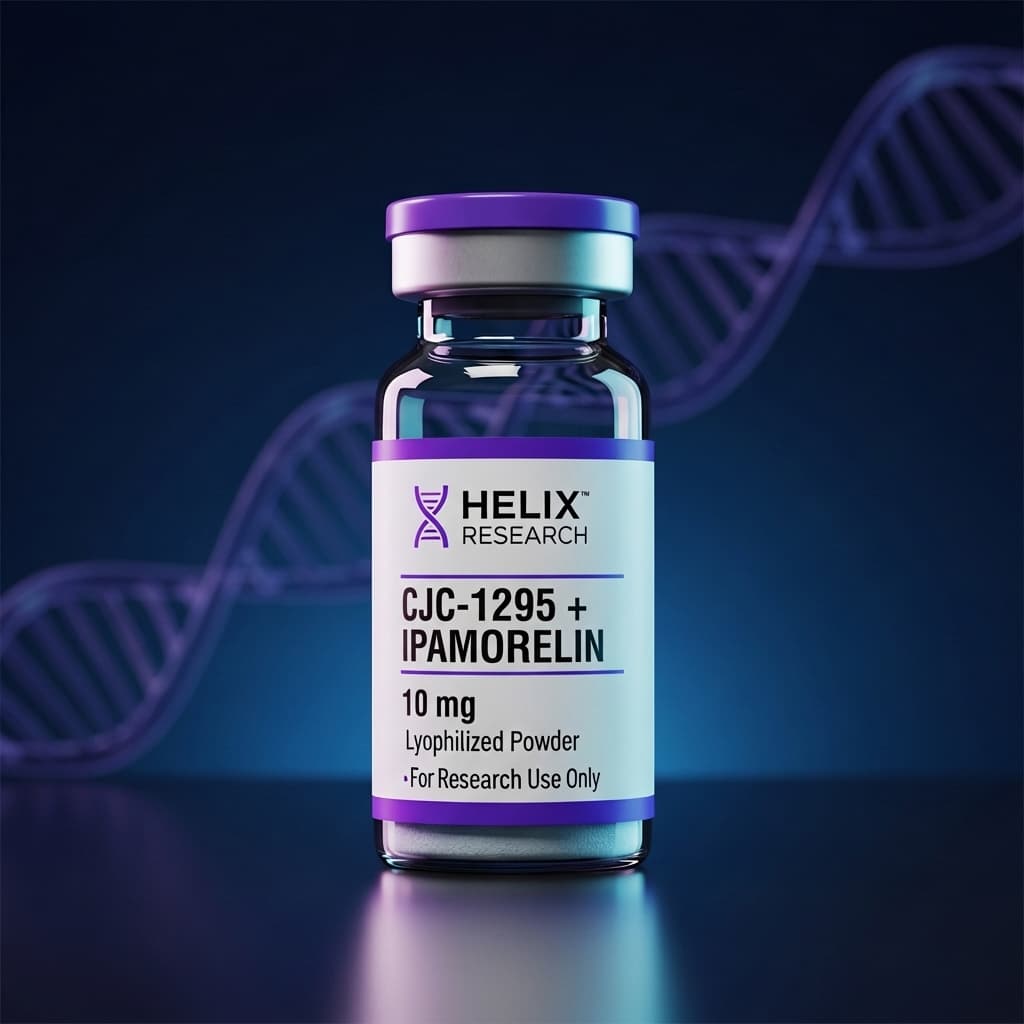
CJC 1295 5mg + IPA 5mg
El péptido estándar de oro estudiado para la optimización de GH